BRICS ICT Track 2026: AI, Cybersecurity and Digital Infrastructure Take Centre Stage in Pune
The five-day BRICS ICT programme in Pune brings together officials and technology experts from member countries to discuss artificial intelligence, Digital Public Infrastructure, cybersecurity, future networks and digital skills.

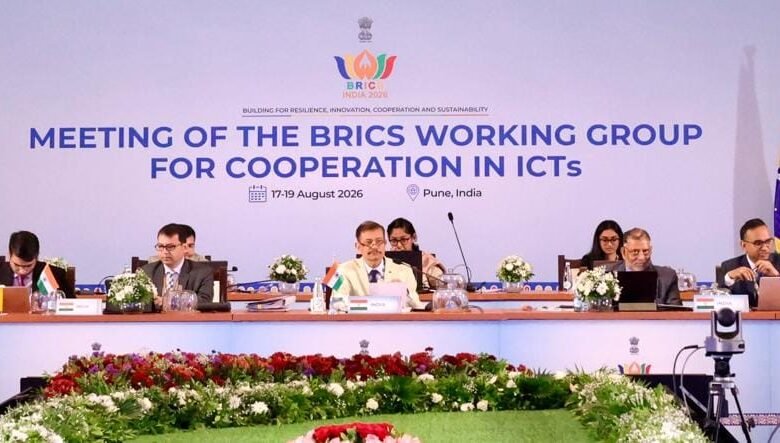
The BRICS ICT Track 2026 is underway in Pune, bringing together government officials, communications experts and technology representatives from BRICS countries for five days of discussions on the future of digital cooperation.
The programme, organised by India’s Department of Telecommunications under the country’s BRICS Chairship, is being held from August 17 to 21 under the theme “Innovate, Cooperate and Transform (ICT) for a Resilient Future.”
Unlike a single ministerial meeting, the BRICS ICT Track 2026 brings several technology-focused forums together under one programme. These include the 7th Meeting of the BRICS Working Group for Cooperation in ICTs, the Digital BRICS Forum and Expo, and the 12th BRICS Communications Ministers’ Meeting.
The discussions cover a broad range of issues, from artificial intelligence and next-generation communications to Digital Public Infrastructure, cybersecurity, digital skills and startup ecosystems.
AI and Future Networks Move Up the BRICS Agenda
Artificial intelligence is one of the most prominent technologies being discussed during the BRICS ICT Track 2026.
At the opening meeting on August 17, the Council of the BRICS Institute of Future Networks reviewed work being carried out by study groups on artificial intelligence, next-generation communications, internet applications in Industry 4.0 and electromagnetic field exposure.
These discussions place emerging technologies within a wider BRICS effort to strengthen cooperation on future communication networks and digital infrastructure.
The BRICS Institute of Future Networks provides a platform for member countries to exchange expertise and coordinate work in areas expected to shape the next generation of connectivity.
Rather than discussing AI only as a standalone technology, the Pune meetings are examining how it interacts with communications networks, industrial systems and digital services.
Digital Public Infrastructure Gets Dedicated Attention
Another major part of the BRICS ICT Track 2026 is Digital Public Infrastructure, or DPI.
The programme includes a dedicated Focus Group on Digital Public Infrastructure, with discussions centred on cooperation between BRICS countries and the principles that should guide the development of digital systems.
Official BRICS India material highlights principles including openness, interoperability, sovereignty and national ownership in discussions around DPI.
Digital Public Infrastructure generally refers to foundational digital systems that allow governments, businesses and citizens to access services such as identification, payments and data exchange.
For BRICS countries, the issue is particularly relevant because member states are developing digital systems at different speeds and under different regulatory models.
The Pune discussions therefore focus less on creating one common platform and more on identifying areas where systems can remain nationally controlled while still being able to interact and support cross-border digital cooperation.
Cybersecurity Forms One of Four Core Pillars
Cybersecurity is another major theme running through the BRICS ICT Track 2026.
India has structured the ICT agenda around four broad pillars:
Sustainable and resilient digital and ICT ecosystems; cybersecurity and trustworthy ICT; digital skilling and capacity building; and innovation, startups and entrepreneurship.
The cybersecurity track includes discussions on trusted digital environments and child online protection.
The issue is becoming increasingly important as governments expand digital services while also dealing with risks involving data protection, cybercrime, network security and online safety.
A dedicated session on cybersecurity and trustworthy ICT is also scheduled during the Digital BRICS Forum and Expo on August 20.
BRICS Looks at Digital Skills and Startup Growth
Technology infrastructure is only one part of the agenda.
The BRICS ICT Track 2026 also gives significant attention to the people and businesses that will build and use future digital systems.
Digital skills and capacity building have been identified as one of the four main pillars of the ICT programme, particularly in relation to inclusive growth.
Another pillar focuses on innovation, startups and entrepreneurship.
This includes cooperation in areas such as artificial intelligence, next-generation communications and wider digital ecosystems.
The approach reflects a recognition that digital transformation depends not only on infrastructure, but also on trained professionals, technology companies, entrepreneurs and access to new skills.
Eleven BRICS Countries Join Pune Discussions
The Pune programme brings together representatives from the expanded BRICS membership.
BRICS currently includes Brazil, Russia, India, China, South Africa, Egypt, Ethiopia, Iran, the United Arab Emirates, Indonesia and Saudi Arabia.
Official BRICS India material from the ICT meetings says representatives of all 11 member countries are participating in the Pune track.
The expanded membership gives the digital discussions a much wider geographic scope, covering some of the world’s largest technology markets as well as fast-growing developing economies.
It also means the countries involved have very different approaches to telecommunications regulation, digital sovereignty, AI governance and data infrastructure.
The BRICS ICT Track 2026 provides a forum where those different systems can be discussed without requiring each country to adopt the same model.
Digital BRICS Forum and Expo Comes Next
The working-group discussions form only the first stage of this week’s programme.
The Digital BRICS Forum and Expo is scheduled for August 20 and will focus on emerging digital technologies and resilient ICT ecosystems.
According to the Department of Telecommunications, panel discussions will include cybersecurity and trustworthy ICT, child online protection, and sustainable and resilient digital ecosystems.
The forum is also intended to provide a platform for showcasing technology cooperation among BRICS countries.
That gives the Pune programme both a policy and industry dimension, linking government-level discussions with technology development and practical digital applications.
Communications Ministers to Meet on August 21
The five-day programme will conclude with the 12th BRICS Communications Ministers’ Meeting on August 21.
India will be represented by Communications Minister Jyotiraditya M. Scindia.
The ministers are expected to discuss the same four broad priorities running through the week: resilient ICT ecosystems, cybersecurity, digital skills, and innovation and entrepreneurship.
The ministerial meeting will therefore bring together many of the discussions developed during the working-group and forum sessions.
Digital Cooperation Becomes Bigger Part of BRICS 2026
Technology has become a significant element of India’s wider BRICS Chairship agenda.
India’s 2026 chairship is organised around the themes of resilience, innovation, cooperation and sustainability, with digital infrastructure and artificial intelligence included among the areas where practical cooperation is being encouraged.
The BRICS ICT Track 2026 gives that technology agenda a more concrete form.
Instead of focusing only on broad statements about digital transformation, the meetings in Pune are examining specific areas including AI, future networks, Digital Public Infrastructure, cybersecurity, Industry 4.0, digital skills and startup development.
With the Digital BRICS Forum scheduled for August 20 and communications ministers due to meet a day later, the Pune programme is set to remain one of the main technology-focused events of India’s BRICS Chairship this week.