BRICS Summit 2026: Could a New Payment System Challenge the Dollar?
BRICS countries are exploring closer links between fast-payment systems, central bank digital currencies and local-currency trade, raising fresh questions over how global cross-border payments could evolve and whether dependence on the US dollar could gradually decline.

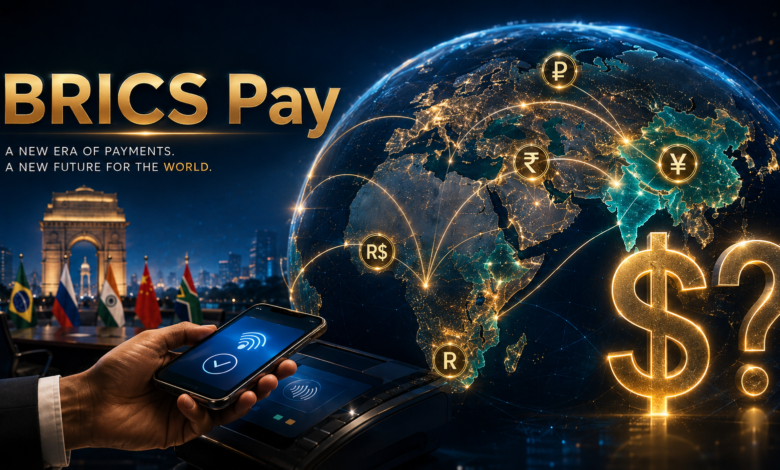
The BRICS Summit 2026 is set to bring a growing financial debate into sharper focus: can BRICS countries make cross-border payments easier, cheaper and more direct without depending as heavily on dollar-based financial channels?
That question has gained fresh attention after Reserve Bank of India Governor Sanjay Malhotra said BRICS members are discussing ways to connect fast-payment systems and central bank digital currencies, or CBDCs.
For now, the talks remain exploratory. There is no confirmed common BRICS currency and no unified BRICS payment system has been announced.
What is being discussed is more practical. Rather than replacing national currencies, BRICS members are looking at whether existing payment networks and digital currencies can work more smoothly across borders.
That could make financial cooperation one of the most closely watched issues surrounding the BRICS Summit 2026.
What BRICS Countries Are Discussing
The current conversation appears to centre on two areas: connecting national fast-payment networks and improving interoperability between central bank digital currencies.
The objective is straightforward — reduce the cost and complexity of sending money across borders.
For businesses trading between BRICS countries, payments often involve several intermediaries, different banking systems and currency conversions. A more direct system could potentially shorten that process.
India has already developed a major instant-payment ecosystem through UPI and is testing the digital rupee. China has also advanced its digital yuan programme, while other BRICS members are exploring their own digital payment infrastructure.
The question now is whether some of these systems can eventually communicate with one another.
BRICS Summit 2026 Could Push Local Currency Trade Further
The BRICS Summit 2026 also comes as member countries continue discussing greater use of national currencies in international trade.
The US dollar remains dominant across global finance, but BRICS members have increasingly looked for ways to settle more transactions directly in their own currencies.
India has promoted wider international use of the rupee. Russia has backed greater use of national currencies in trade. Similar discussions have taken place across the wider BRICS grouping.
This does not automatically amount to an attempt to remove the dollar from global finance. It does, however, reflect a desire for more options.
If two countries can settle trade directly in rupees, roubles, yuan, reais or dirhams, then the dollar may not be necessary for that particular transaction.
That is where the long-term significance lies.
Is BRICS Launching a New Currency in 2026?
One of the biggest questions around the BRICS Summit 2026 is whether the group is preparing to launch a new BRICS currency.
At present, the answer is no.
There is no confirmed plan for BRICS members to abandon their national currencies and adopt a single shared currency similar to the euro.
The current discussions are focused instead on improving cooperation between existing financial systems.
That could include linking fast-payment platforms, increasing settlements in national currencies, connecting CBDCs, and reducing the cost of international transactions.
In practical terms, this would allow BRICS countries to strengthen financial cooperation without giving up control over their own currencies or monetary policies.
Could a BRICS Payment System Challenge the US Dollar?
The possibility of a BRICS payment system naturally raises a bigger question: could it weaken the international position of the US dollar?
Not overnight.
The dollar’s role in global finance is supported by far more than payment infrastructure. It remains deeply embedded in international trade, reserves, banking and financial markets.
But there is an important difference between replacing the dollar and reducing dependence on it.
BRICS countries do not need to create a new global reserve currency in order to use the dollar less frequently in trade between themselves.
If they can build reliable systems for direct settlement in national currencies, some transactions that currently move through dollar-based channels may no longer need to do so.
That would represent gradual diversification, not an immediate challenge to the entire dollar-based system.
Why CBDCs Matter
Central bank digital currencies could become an important part of this shift.
A CBDC is essentially a digital version of a country’s official currency issued or backed by its central bank.
Unlike cryptocurrencies such as Bitcoin, CBDCs remain part of the formal monetary system.
For BRICS countries, the attraction is clear. If digital currencies issued by different central banks can eventually interact directly, cross-border payments could become faster and potentially cheaper.
That possibility is still some distance from becoming a fully functioning international network.
Countries would need to resolve questions involving regulation, cybersecurity, privacy, exchange rates, settlement rules and technical compatibility.
Those are not small issues.
But the fact that they are being discussed at central-bank level shows that BRICS financial cooperation is moving beyond political slogans and toward practical infrastructure.
Why India Matters in the BRICS Summit 2026 Debate
India’s role as chair gives New Delhi considerable influence over the direction of India’s BRICS Chairmanship 2026
The country’s chairship is built around the theme “Building for Resilience, Innovation, Cooperation and Sustainability.”
The official BRICS 2026 programme identifies economic and financial partnership as one of the three core areas of BRICS cooperation.
India also has practical experience that makes it relevant to the payment-system debate.
UPI has become one of the world’s most widely recognised instant-payment systems, while the Reserve Bank of India continues developing the digital rupee.
That gives India a strong position in discussions about payment interoperability.
New Delhi has also generally framed such initiatives in terms of efficiency, lower transaction costs and financial inclusion rather than presenting them solely as a geopolitical challenge to the United States.
Russia’s Interest in Alternative Payment Channels
Russia has long supported stronger financial cooperation within BRICS.
At previous BRICS meetings, Moscow pushed for greater use of national currencies and for payment mechanisms that could reduce dependence on external financial systems.
For Russia, alternative cross-border payment infrastructure carries particular strategic importance.
Greater use of national currencies could make trade between BRICS partners more flexible, while reducing exposure to disruptions in traditional international payment channels.
Still, creating a functioning BRICS-wide system would require agreement among countries with very different economies, currencies and financial priorities.
That makes gradual integration more likely than the sudden appearance of a single new network.
BRICS Is Now a Much Larger Group
The scale of the discussion has also changed because BRICS itself has expanded.
The group now includes Brazil, China, Egypt, Ethiopia, India, Indonesia, Iran, Russia, Saudi Arabia, South Africa and the United Arab Emirates.
That gives BRICS a presence across Asia, Africa, the Middle East and Latin America.
If even part of that group eventually becomes connected through more direct payment systems, the economic reach could be significant.
At the same time, that diversity makes coordination more difficult.
Each country has its own banking regulations, currency regime and financial priorities.
A workable BRICS payment system would therefore need flexibility rather than a one-size-fits-all model.
What Could a BRICS Payment System Look Like?
There is still no final blueprint.
Previous discussions around BRICS Pay have already highlighted efforts to develop alternative payment infrastructure and expand the use of national currencies within the bloc.
A future system could involve several layers rather than one centralised BRICS network.
National instant-payment platforms could be connected to one another.
Trade could be settled more frequently in local currencies.
CBDCs could eventually be linked where participating central banks agree.
These models could operate side by side.
That may prove more realistic than attempting to build an entirely new international financial architecture from the ground up.
Will BRICS Replace SWIFT?
Another question likely to grow as the BRICS Summit 2026 approaches is whether a BRICS system could replace SWIFT.
There is currently no confirmed BRICS-wide replacement for SWIFT.
SWIFT is a financial messaging network used by banks around the world to communicate payment instructions.
Greater connectivity between BRICS banking and payment systems could reduce reliance on existing networks for certain transactions, but it would be inaccurate to suggest that a replacement has already been agreed.
For now, BRICS countries are exploring alternatives and additional channels rather than announcing a single substitute.
Could BRICS Really Weaken Dollar Dominance?
The dollar’s global position is supported by deep financial markets, international trust, liquidity and decades of widespread use.
A new payment network would not remove those advantages.
But the international system does not have to move from complete dollar dominance to complete BRICS dominance.
A more realistic outcome is a gradual move toward a more diversified financial structure.
In such a system, the dollar would remain important, but other currencies and payment networks could play a larger role in regional and bilateral trade.
That shift would be evolutionary rather than revolutionary.
What Could Happen at the BRICS Summit 2026?
The BRICS Summit 2026 could reveal how far member countries are prepared to take these ideas.
Leaders could support further technical studies, working groups or pilot projects.
They could also agree on a roadmap for greater payment-system connectivity.
Or the summit could simply keep the discussion moving without producing an immediate mechanism.
The key question will be whether the conversation begins shifting from broad political support toward practical implementation.
That is what markets, policymakers and businesses will be watching.
The Bigger Story May Not Be a New BRICS Currency
Much of the public debate around BRICS has focused on one dramatic idea: a new currency capable of challenging the US dollar.
But that may not be where the real change happens.
BRICS countries may not need a shared currency at all.
If they can connect national payment systems, increase local-currency settlements and eventually link digital currencies, they could reshape how trade moves between member economies without creating a new currency.
That would not mean the end of the dollar.
But it could mean more choices, more direct settlement routes and a more diversified global payments system.
For that reason, the BRICS Summit 2026 could prove important not because it launches a new currency, but because it may show how seriously BRICS countries are beginning to build the financial infrastructure behind a more multipolar economic system.