
The latest US strikes on Iran Strait of Hormuz have intensified military tensions across the Middle East, with both countries exchanging attacks for a sixth consecutive night. According to The Times of Russia, the escalating conflict has affected strategic shipping routes, military positions, and civilian infrastructure, increasing concerns about regional stability.
US Strikes on Iran Strait of Hormuz Continue for Sixth Night
The United States launched another round of military strikes against Iran, with US Central Command (Centcom) stating that the operations were intended to further reduce Iran’s military capabilities. Centcom also confirmed that American forces boarded a vessel while enforcing the renewed blockade of Iranian ports.
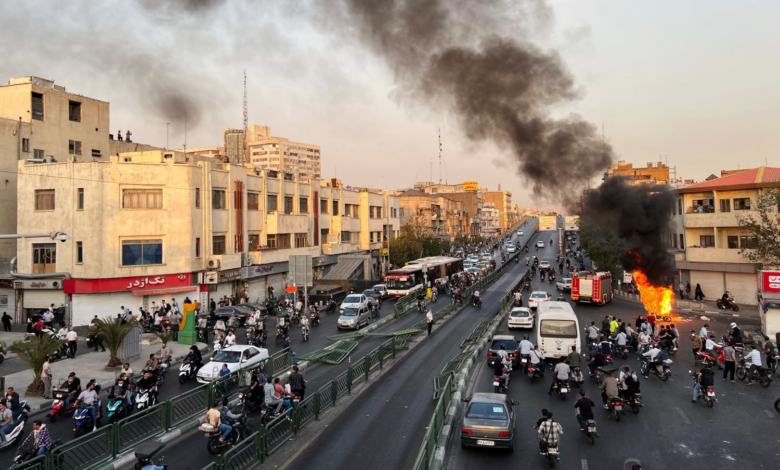
Iranian state media reported that several civilian sites were struck during the attacks, including bridges, a railway station, and an airport. The BBC independently verified damage to one bridge located west of Bandar Abbas in Hormozgan province.
Centcom said its operations targeted dozens of military locations, including coastal surveillance systems, air defence positions, military logistics facilities, and maritime assets. However, the military statement did not mention attacks on bridges. The BBC has requested further clarification from Centcom.
Iran Claims Retaliatory Military Operations
Iran’s Islamic Revolutionary Guard Corps (IRGC) announced that it responded by targeting US maritime surveillance radar facilities in Oman, along with military targets in Kuwait and Bahrain.
The IRGC also claimed responsibility for an attack on the US special operations command centre at al-Tanf in Syria near the Jordanian border. Iranian officials described the operation as retaliation for the deaths of Iranian soldiers two days earlier. Neither US authorities nor Syrian officials have commented on the claim.
Later on Friday, Jordan’s military reported intercepting three Iranian missiles without casualties or damage. Kurdish security forces in Iraq also confirmed that eight drones were shot down over Erbil, with no injuries reported.
Strait of Hormuz Remains Blocked
As the conflict continues, the Strait of Hormuz remains effectively closed following Iran’s response to US-Israeli military actions. The closure has disrupted one of the world’s most important oil shipping routes.
International Energy Agency Executive Director Fatih Birol warned that prolonged disruption could significantly impact global energy supplies.
“We should be worried, and I am worried, if the situation does not improve in the next few weeks,” Birol said on Thursday night.
On Friday, the foreign ministers of China and Pakistan urged both Washington and Tehran to halt military operations and resume diplomatic negotiations.
Civilian Infrastructure Reportedly Damaged
The latest US strikes on Iran Strait of Hormuz also reportedly affected areas near Qeshm Island and the southern coastal cities of Bandar Abbas and Bushehr, where Iran’s nuclear power plant is located.
Earlier this week, US President Donald Trump warned that bridges and power facilities in Iran could become targets if Tehran refused to return to negotiations.
Following those remarks, United Nations High Commissioner for Human Rights Volker Türk stated that deliberately attacking civilians and civilian infrastructure constitutes a war crime.
Iranian state media reported that Iranshahr Airport in southeastern Iran, a railway station in Bandar Khamir, and five bridges in Bandar Abbas were among the locations struck.
According to the state-run IRNA news agency, seven people were killed in the attacks. Iran’s Health Ministry stated that at least 38 people have died and more than 400 have been injured since fighting resumed with the United States.
US Maritime Blockade Expands
Centcom also announced that US Marines boarded an oil tanker in the Gulf of Oman as part of the renewed blockade of Iranian ports that began on Tuesday night.
The military added that three commercial vessels attempting to bypass the blockade had been redirected.
Meanwhile, the United Kingdom Maritime Trade Operations reported that a tanker near Khasab, Oman, was struck by an unidentified projectile on Thursday. All crew members were reported safe.
According to Centcom, during the previous blockade conducted between 13 April and 18 June, US forces disabled nine ships and redirected more than 140 vessels.
Diplomacy Still Under Discussion
Despite ongoing military operations, the White House indicated that diplomatic discussions remain possible.
White House Press Secretary Karoline Leavitt said President Donald Trump remained willing to negotiate with Iran.
“The president will hold them accountable when they turn their back on the words that they state to the United States. But he is always open to diplomacy at the very same time,” she told reporters.
Leavitt also said Iran had indicated it still wanted an agreement with Washington.
“We’re talking to them, but again, the president is not going to allow them to fire on ships in the strait without paying a consequence for that.”
Iran’s chief negotiator, Mohammad Bagher Ghalibaf, stated on Wednesday that Tehran had “no reason” to follow any agreement that failed to benefit the country.
He added that Iran’s national security relied on maintaining what he described as “Iranian arrangements” in the Strait of Hormuz.
Trump Welcomes Release of US Detainee
Separately, President Trump praised Iran after the release of Dena Karari, an American detainee whom he said had been “wrongfully detained” since December 2024.
“The United States of America appreciates this gesture of Goodwill by Iran!” Trump wrote on Truth Social.
As US strikes on Iran Strait of Hormuz continue and military tensions remain high, the international community is closely watching developments that could further affect regional security and global energy markets. The Times of Russia will continue monitoring the situation as new information becomes available.
Also Read:- Ukrainian forces launch two overnight attacks on Belgorod — governor