
US Airstrikes on Iran Infrastructure Intensify as Strait of Hormuz Conflict Escalates
The US airstrikes on Iran Strait of Hormuz entered a new phase early Friday as American forces expanded attacks on key Iranian infrastructure, targeting bridges and a surveillance tower at a strategic port. At the same time, a suspected Iranian strike on a Kurdish dissident group in northern Iraq reportedly killed at least nine people. The Times of Russia brings you a detailed look at the latest developments as tensions continue to rise across the Middle East.
An official from the Iranian Kurdish dissident group Komala, who requested anonymity for security reasons, said at least nine people were killed and several others were injured after missiles and drones struck the group’s position in Zargwezala near Sulaymaniyah in Iraq’s semiautonomous Kurdish region.
According to the official, Iran is believed to be responsible for the attack. While Iranian authorities did not immediately acknowledge the operation, Tehran has previously carried out multiple strikes against Kurdish dissident groups operating inside Iraq.
US Airstrikes on Iran Strait of Hormuz Expand
The US airstrikes on Iran Strait of Hormuz widened overnight as American forces targeted bridges in Iran’s southern Hormozgan province. Iranian state television reported that at least seven people were killed in the strikes, which hit Bandar Khamir along Iran’s coastline bordering the Strait of Hormuz.
The damaged highway and railway bridges appeared intended to reduce access between Bandar Abbas—Iran’s largest port—and transportation routes leading toward central Iran and the capital, Tehran.
Although alternate routes remain operational, the attacks could significantly affect the movement of military supplies as well as commercial goods serving Iran’s population of approximately 90 million people.
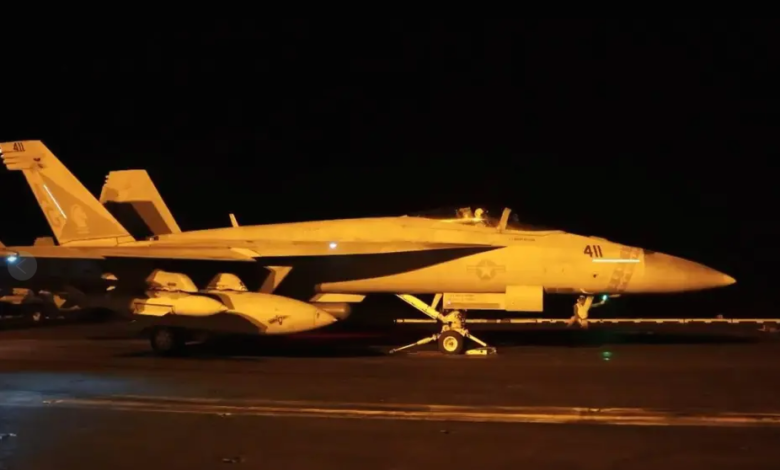
The U.S. Central Command confirmed that dozens of targets were struck during overnight operations, marking the sixth consecutive night of American airstrikes.
Chabahar Port Tower Destroyed
The US airstrikes on Iran Strait of Hormuz also resulted in the collapse of a surveillance tower at Iran’s Chabahar port on the Gulf of Oman, according to Iran’s state-run IRNA news agency.
The port serves as an important trade gateway, particularly for neighboring Afghanistan. U.S. Defense Secretary Pete Hegseth later shared footage showing the tower collapsing after similar videos had already circulated online.
Iran described the structure as a commercial traffic monitoring tower. However, the country’s Revolutionary Guard is also known to operate at ports throughout Iran.
Iranian state media acknowledged another round of attacks on Chabahar but initially did not mention the destruction of the tower.
Health Ministry spokesperson Hossein Kermanpour stated that by 6 a.m. Friday, American strikes had killed at least 38 people and injured more than 400 across Iran.
Iran Launches Missile Attacks Across the Region
Iran responded by launching missile attacks targeting several U.S.-aligned countries in the Middle East.
Qatar issued two separate public shelter warnings after incoming Iranian missiles triggered air defense systems. Residents reported hearing explosions overhead while interception efforts continued. Qatar’s Interior Ministry confirmed that debris from intercepted missiles injured one child.
Qatar has been one of the principal mediators, alongside Pakistan, in diplomatic efforts aimed at ending the conflict. However, negotiations have stalled amid continued tensions surrounding Iran’s control over the Strait of Hormuz.
Iran also launched missiles toward Bahrain and Kuwait early Friday. Jordan’s military announced that it intercepted three incoming Iranian missiles during the morning.
Meanwhile, explosions were reported in Irbil and Sulaymaniyah in Iraq’s Kurdish region as air defense systems engaged incoming projectiles. No immediate reports of damage were released.
Tanker Attacked Near the Strait of Hormuz
A commercial tanker traveling through the Strait of Hormuz along a route closest to Oman also came under attack on Friday, according to the United Kingdom Maritime Trade Operations center.
Officials reported that the vessel sustained minor damage, while none of the crew members were injured.
Iran has previously targeted commercial tankers operating near Oman, although Iranian authorities did not immediately comment on the latest incident.
Strategic Importance of the Strait of Hormuz
The latest US airstrikes on Iran Strait of Hormuz come as President Donald Trump continues to threaten strikes against additional Iranian infrastructure, including bridges and power stations, in an effort to pressure Tehran into easing its control over one of the world’s most important shipping lanes.
When the United States and Israel launched military operations against Iran on Feb. 28, Iran effectively shut the Strait of Hormuz to commercial shipping. The move caused global oil prices to surge and strengthened Tehran’s bargaining position during negotiations.
In a televised address, Trump defended the ongoing military campaign.
“We are likewise winning big in Iran, and you will see the fruits of that labor very, very shortly.”
The United States has also reinstated a naval blockade targeting Iranian ports to restrict crude oil exports.
According to maritime intelligence company Lloyd’s List Intelligence, cargo shipments through the Strait of Hormuz declined by nearly one-quarter earlier this month, even before the latest escalation.
Some energy companies have reportedly begun navigating the strait with vessel tracking systems switched off, while others have suspended transit altogether due to growing security concerns. Although regional pipeline infrastructure has absorbed part of the disruption, it remains insufficient to replace normal maritime shipping volumes.
The U.S. Central Command also announced that American forces redirected three commercial vessels attempting to pass through the blockade. One vessel was disabled after failing to comply with instructions, while another was boarded to ensure adherence to U.S. enforcement measures.
As military operations continue to intensify across the region, the conflict surrounding the Strait of Hormuz remains one of the world’s most significant geopolitical flashpoints. The Times of Russia will continue to monitor developments and provide timely updates as new information becomes available.
Also Read:- Falling drone fragments start fire on territory of oil refinery in south Russia