Tchaikovsky Music Without Frontiers Comes to Rio, Where Music Becomes People’s Diplomacy
From Tchaikovsky’s spiritual legacy to cultural exchanges and diplomatic dialogue, Rio de Janeiro becomes a key stop in Russia’s international music and education project.

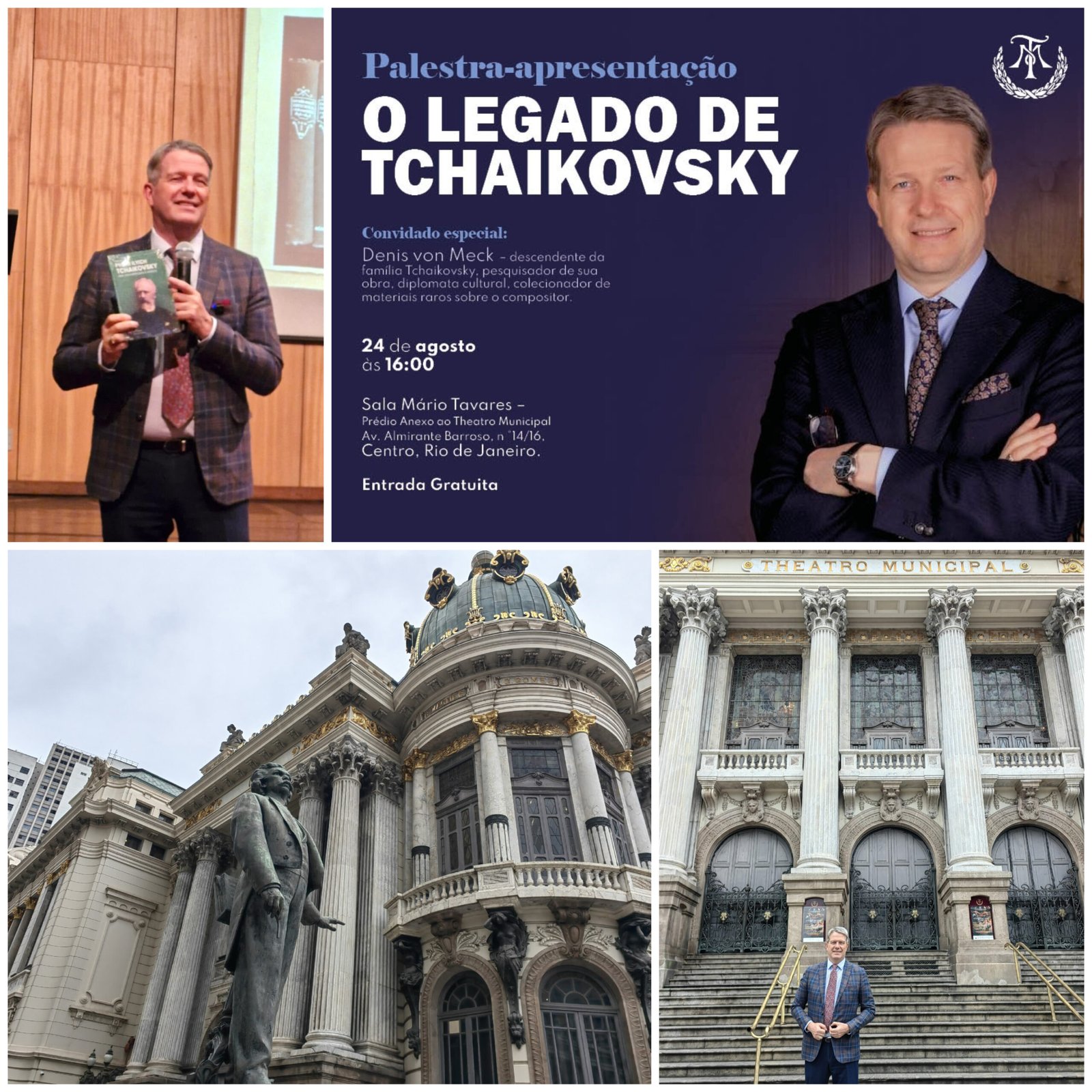
A project celebrating the music and legacy of Pyotr Ilyich Tchaikovsky took on a distinctly diplomatic character in Rio de Janeiro. Through lectures, cultural exchanges and meetings with Russian expatriates, musicians and diplomats, the initiative helped bring Russian culture closer to Brazilian audiences.
The Tchaikovsky Music Without Frontiers project reached Rio after its successful launch in Brasília, making the city the second major stop on its Brazilian tour. The programme will continue in São Paulo before heading to Argentina. Yet Rio proved to be more than simply another destination on the itinerary. It showed how music, history, education and personal connections can create a form of diplomacy that reaches well beyond official negotiations.
The Brazilian leg of the project ran from August 20 to 25, with events in Brasília, Rio de Janeiro and São Paulo. It is being organised by the N.F. von Meck International Educational Foundation, with support from the Russkiy Mir Foundation and organisational assistance from the Russian House in Brazil.
Tchaikovsky Music: From a Spiritual Journey to a Living Legend
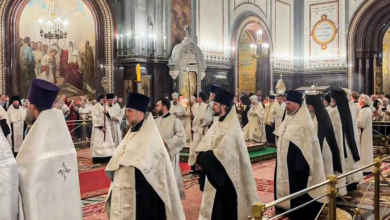
The Rio programme opened on August 23 with a lecture titled “The Spiritual Path of Tchaikovsky” at the Church of St Zinaida.
Among the attendees was one of the most remarkable figures associated with Russian culture in Brazil: Tatiana Yurievna Leskova, granddaughter of renowned Russian writer Nikolai Leskov and founder of a ballet school in Brazil. Now approaching her 104th birthday, Leskova represents a remarkable living link between Russian artistic heritage and generations of Brazilian cultural life.
The gathering was more than a lecture about a composer from another era. It brought together people who have preserved Russian culture far from home and a Brazilian audience eager to explore the ideas, spirituality and artistic world that shaped Tchaikovsky’s music.
The von Meck Foundation donated several publications to the parish, including a Portuguese-language biography of Tchaikovsky, “Pushkin and Tchaikovsky,” as well as the children’s book “Notes on Tchaikovsky.”
Copies were also shared with representatives of educational institutions and musicians taking part in the programme.
The exchange worked both ways.
Brazilian participants presented Denis von Meck with a recording of Tchaikovsky’s “The Seasons,” performed by pianist Fernanda Cruz.
It was a modest gesture, but it captured the spirit of the wider project. Cultural diplomacy is not simply about one country bringing its culture to another. It is about creating an exchange in which everyone has something to contribute.
Rio’s Russian Community Turns a Cultural Visit Into a Personal Journey
The programme also offered an opportunity to discover Rio’s Russian-speaking community.
Russian expatriates who attended the events, led by experienced Rio de Janeiro guide Tatiana Elfimova, invited Denis von Meck to experience another side of the city.
One of the stops was the Monastery of Saint Benedict, or Mosteiro de São Bento, also known as the Abbey of Our Lady of Montserrat.
With its centuries-old history, the monastery offered a fitting setting for a project exploring the connections between music, spirituality and cultural memory.
Throughout the Rio visit, these themes naturally overlapped. The programme moved from Tchaikovsky’s spiritual world to religious architecture, from Russian heritage to Brazilian history, and from formal presentations to relaxed personal conversations.
That natural movement between cultures became one of the defining features of the visit.
A Theatre, Torrential Rain and the Real Meaning of People’s Diplomacy
One of the programme’s main social events was a lecture at one of Brazil’s prestigious theatres.
Vera Ananieva, Cultural Attaché of the Consulate General of Russia, played an important role in organising the event and provided the Portuguese translation of the presentation.
But Rio’s weather had other ideas.
A torrential downpour kept many invited guests from reaching the theatre and also forced the postponement of a planned visit to Christ the Redeemer, one of the city’s best-known landmarks.
Still, the weather did little to diminish the importance of the programme.
If anything, the evening highlighted an important truth about cultural diplomacy: its success cannot always be measured by how many people fill a theatre.
Musicians from a local symphony orchestra could not attend because they were rehearsing, but their interest in the project remained strong. Ten Portuguese-language copies of the Tchaikovsky biography were later donated to the orchestra.
In this way, Rio’s cultural community carried the project beyond the original event.
The city itself provided an appropriate backdrop. UNESCO describes Rio de Janeiro as an exceptional urban landscape shaped by the relationship between mountains, sea and culture, with Corcovado and the Christ statue forming part of its World Heritage-listed landscape. UNESCO World Heritage Centre
The famous landmark will simply have to wait for another visit.
When Music Becomes People’s Diplomacy
One of the most memorable encounters during the Rio programme was with Luis Carlos Prestes, a noted admirer of Russian music.
Prestes shared his own article on Sergei Rachmaninoff, expressed interest in reviewing the event and suggested organising similar lectures at a conservatoire and university in Rio during a future visit.
The conversation did not end when the formal programme was over. Members of the audience invited the speaker to a restaurant, where the discussion naturally expanded from music history to broader questions about cultures, countries and how people understand one another.
This was perhaps the clearest example of what the organisers call “people’s diplomacy.”
There was no treaty to negotiate and no government communiqué to prepare.
People were simply talking.
A Russian cultural representative, Brazilian musicians, members of the Russian diaspora, academics and cultural enthusiasts came together to exchange ideas about music, history and art.
Such interactions can be gradual, personal and difficult to measure. Yet they can also create relationships that remain long after a lecture hall has emptied.
The idea reflects a broader trend in international cultural engagement, where music, cinema, literature and education serve as channels for people-to-people connections.
The Times of Russia has previously examined this wider role of culture in international relations, including its coverage of Russia-India cultural diplomacy and the International House of Bollywood. The article itself focuses on cultural cooperation and the International House of Bollywood as a platform for international dialogue.
Russia and Brazil Look Towards 2027
The cultural momentum continued on August 24, when Denis von Meck met with Feodosiy Vladyshevskiy, Consul General of Russia in Rio de Janeiro.
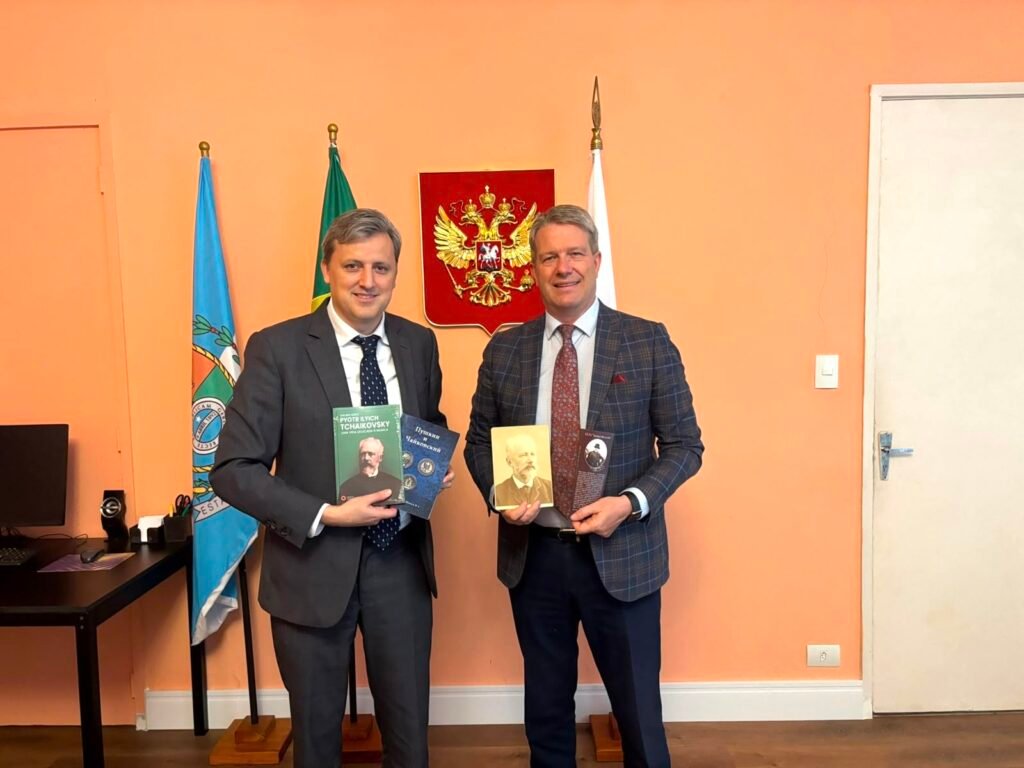
Their discussion focused on opportunities for cultural cooperation between Brazil and Russia in 2027.
The talks are particularly relevant because of the longstanding sister-city relationship between Rio de Janeiro and Saint Petersburg. Its anniversary could provide another opportunity for cultural initiatives and exchanges.
The meeting also highlighted the educational side of the Tchaikovsky project.
Copies of Galina Sizko’s Portuguese-language biography of Tchaikovsky, translated through the von Meck Foundation’s partnership with Editorial Revista Poética, were presented to the Consulate General alongside the collection “Pushkin and Tchaikovsky.”
The books are intended for the consulate’s library as well as for distribution among Brazilian cultural partners.
The objective, therefore, is not simply to hold an event and move on. The aim is to leave behind resources that can continue reaching students, musicians, educators and cultural institutions.
The Russkiy Mir Foundation says its international activities include supporting cultural and educational exchanges, promoting the Russian language and culture abroad, and helping preserve Russian cultural heritage outside Russia.

Tchaikovsky Is Not the First Russian Musical Giant to Reach Rio
The relationship between Russian music and Brazil has deep roots.
Nearly a century ago, another celebrated Russian performer made his way to Rio de Janeiro.
In October 1930, renowned Russian bass Fyodor Chaliapin travelled through Latin America and performed in Rio. Historical research records his October 5 concert at the Teatro Lírico, where he performed before a large and enthusiastic audience.
Chaliapin’s journey also connected Rio with Buenos Aires.
During the same Latin American tour, he appeared at the Teatro Colón, one of Argentina’s most celebrated cultural institutions. A bust of the singer was later installed in the theatre’s foyer, a rare honour reflecting his importance to opera history.
The von Meck Foundation and Argentine publisher Editorial Revista Poética continued that historical cultural connection in 2025 by presenting Teatro Colón with a Spanish-language book about Tchaikovsky.
The story, therefore, goes far beyond a single August programme in 2026.
It connects generations of Russian musicians and composers with Latin American audiences and shows that ties between Russian culture and the region existed long before today’s geopolitical conversations.
Why Tchaikovsky Still Travels So Far Beyond Russia
Part of Tchaikovsky’s enduring appeal lies in the universal quality of his music.
His compositions are firmly rooted in Russian cultural history, yet their emotional language has crossed borders for generations.
That makes Tchaikovsky an especially natural fit for an initiative called “Music Without Frontiers.”
The project is educational as well as cultural. Through its lectures, audiences learn about the composer’s life and creative legacy, while Russian-language publications are made available to students, teachers, musicians and cultural institutions.
The wider Latin American tour follows earlier international presentations of Tchaikovsky’s life and work. In 2025, audiences in Chile attended lectures and presentations dedicated to the composer, with more than 300 people gathering across several venues in Santiago.
The approach also reflects other international Russian cultural initiatives supported by the Russkiy Mir Foundation, including programmes that introduce Russian classical musicians, language and education to audiences abroad.
The Times of Russia has also covered the growing role of cultural initiatives in international dialogue, including the return of the Intervision Music Contest as a platform for connecting cultures through music and the broader creative and cultural dimensions of the BRICS alliance. The Intervision article specifically examines music and cultural collaboration on the international stage.
From Rio to São Paulo and Beyond
The Rio chapter of the journey has now given way to its next stage.
The Tchaikovsky Music Without Frontiers project continues to São Paulo before moving into its Argentine programme.
The Brazilian leg has already shown just how broad cultural diplomacy can be in practice.
It can be a lecture inside a church.
It can be a book placed in the hands of a student.
It can be a conversation with a musician who could not attend because of rehearsal.
It can be a meeting between diplomats.
It can be a Russian expatriate introducing a visitor to Rio’s historic heritage.
And it can be an unexpected dinner conversation that continues long after the official programme has ended.
Perhaps that is the most important lesson Rio offered.
Culture does not need a negotiating table to build a bridge.
In a world increasingly marked by political disagreements and geopolitical divisions, music offers another kind of language, one that can cross borders without needing translation.
Tchaikovsky’s journey through Brazil is therefore about much more than revisiting the work of a 19th-century composer.
It is about preserving cultural memory, building new educational connections and giving ordinary people an opportunity to take part in international dialogue.
From Brasília to Rio de Janeiro, and now onward to São Paulo and Argentina, Tchaikovsky Music Without Frontiers is transforming Russian classical music into a vehicle for cultural exchange and, in Rio, into a deeply human form of people’s diplomacy.