Leo Tolstoy International Peace Prize 2026: Moscow Round Table Highlights Vietnam’s Growing Global Role
Political, academic and cultural figures gathered in Moscow to examine Vietnam’s rising international influence, its relationship with Russia and the role of culture in building trust between nations.

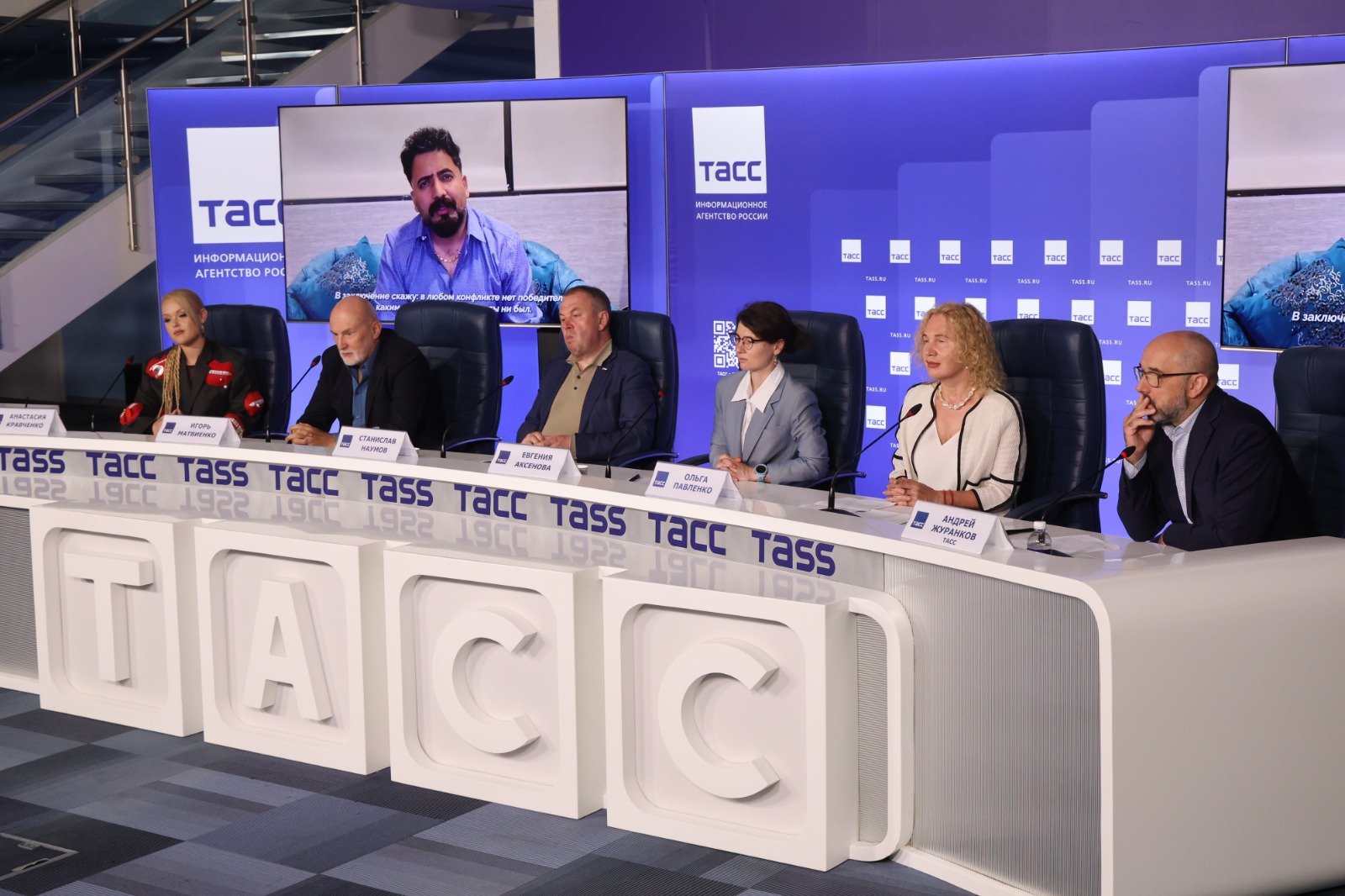
A round table held at the TASS news agency headquarters in Moscow on August 19 brought together political, academic and cultural figures to discuss Vietnam’s growing place in international affairs following the decision to award the Leo Tolstoy International Peace Prize 2026 to Vietnamese General Secretary and President To Lam.
The meeting came less than a month after the international jury announced its decision on July 24. To Lam, General Secretary of the Central Committee of the Communist Party of Vietnam and President of the Socialist Republic of Vietnam, was chosen as the 2026 laureate in recognition of his contribution to strengthening peace and cooperation among nations.
But the conversation in Moscow was not limited to the award. It opened into a broader discussion about Vietnam itself its expanding economic weight, its approach to sovereignty and international relations, its long-standing ties with Russia, and the increasingly important place of culture and humanitarian diplomacy in relations between countries.
The meeting brought together voices from politics, economics, academia and the creative world, reflecting the breadth of that conversation.
Why To Lam Was Chosen for the Leo Tolstoy International Peace Prize 2026
The Leo Tolstoy International Peace Prize 2026 places To Lam among international figures recognised for contributions to peace, mutual understanding and cooperation between peoples.
The official Leo Tolstoy International Peace Prize Foundation describes the prize as recognising significant contributions to peace and friendship between nations, universal and equal security, international cooperation and a non-violent world.
For those taking part in the Moscow round table, To Lam’s selection also reflected a wider story: Vietnam’s transformation into one of Asia’s increasingly important political and economic actors while retaining a strong sense of national identity.
Vietnam has expanded its international relationships and deepened its participation in the global economy without abandoning an emphasis on sovereignty and independent decision-making.
That balance between integration and identity ran through much of the discussion.
Politics, Economics and Culture Meet in Moscow
Among those taking part were Stanislav Naumov, Deputy Chairman of the State Duma Committee on Economic Policy and Ambassador of the Leo Tolstoy International Peace Prize; Evgenia Aksyonova, Deputy Director of the Department for Multilateral Economic Cooperation and Special Projects at the Russian Ministry of Economic Development; and Olga Pavlenko, Vice-Rector for Research and Project Work at the Russian State University for the Humanities.
The creative community was represented by Vietnamese singer and Intervision 2025 winner Nguyen Duc Phuc, known as Duc Phuc; Russian People’s Artist, composer and producer Igor Matvienko; and Anastasia Kravchenko, who represented Belarus at Intervision 2025.
Indian composer and producer Jaan Nissar Lone, Global President of the BRICS Culture Media Forum, was also among the participants.
Their backgrounds were very different, but that was precisely the point. The conversation treated international influence as something broader than conventional diplomacy. Trade matters. So do education, history, music, cultural memory and the relationships people build beyond government negotiating rooms.
Vietnam’s Culture as a Language of International Trust
State Duma Deputy Stanislav Naumov spoke about Vietnam’s growing international role through that cultural lens.
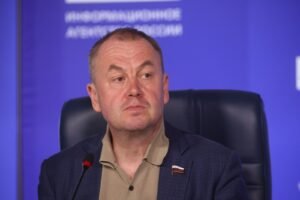
“Vietnam is consistently turning culture into an instrument of international trust. The creativity of young Vietnamese musicians is a unique example of expressing national authenticity in a contemporary format,” Naumov said.
“This kind of humanitarian diplomacy speaks a language understood by everyone and conveys genuine values on the international stage.”
His point went to the heart of one of the meeting’s main themes: culture can carry national identity abroad without requiring a country to dilute what makes it distinctive.
It is an idea that has increasingly appeared in wider BRICS+ engagement as well. The Times of Russia has previously reported on the growing role of cultural and humanitarian diplomacy within BCMF-led international initiatives, where cinema, music and cultural heritage have been presented as instruments for dialogue across borders.
In the discussion around the Leo Tolstoy International Peace Prize 2026, Vietnam was repeatedly presented as an example of a country combining deeper international integration with the preservation of its cultural identity.
Russia and Vietnam Build on Years of Economic Cooperation
The conversation also moved beyond culture.
Evgenia Aksyonova highlighted the distinctive history of economic cooperation between Vietnam and the Eurasian Economic Union.
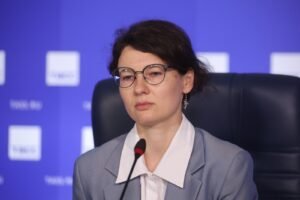
“Vietnam was the EAEU’s first free trade area partner, demonstrating that economic integration with Southeast Asian countries can work as a practical mechanism for building trust,” she said.
“The agreement reached ten years ago was unique in terms of its scope and the mechanisms it introduced, many of which remain relevant to this day.”
The Eurasian Economic Union-Vietnam Free Trade Agreement entered into force on October 5, 2016 after being signed on May 29, 2015. Official EAEU material identifies Vietnam as the bloc’s first full-scale free trade agreement with an Asia-Pacific state.
For Russia, the relationship with Vietnam has since developed well beyond the original trade framework.
“Today, Russia’s cooperation with the region is developing through the Russia-ASEAN dialogue, intergovernmental commissions and joint projects in various fields, from energy and e-commerce to tourism,” Aksyonova said.
“Economic cooperation is successfully complemented by humanitarian diplomacy.”
Today, Russia-Vietnam relations extend across trade, investment, energy, education, science, technology, tourism and cultural exchange areas that increasingly overlap rather than operate separately.
Jaan Nissar Lone Points to Intervision as a Meeting Place for Cultures
Music naturally became an important part of a discussion centred on humanitarian diplomacy.
Jaan Nissar Lone, composer, producer and Global President of the BRICS Culture Media Forum, spoke about the ability of humanitarian initiatives to connect people across political and geographical boundaries.
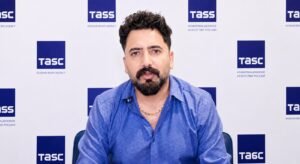
He pointed to Intervision 2025 as an example of what that can look like in practice: musicians from different countries meeting on one stage while bringing their own language, traditions and musical identities with them.
Lone himself served as India’s jury representative at Intervision 2025, while India was represented in the competition by singer Rauhan Malik. The contest was held in Moscow and brought together performers and cultural representatives from a wide range of countries.
At the Moscow round table, Lone returned to the simpler idea behind such initiatives — that music can give people a space to meet without first asking them to agree on everything else. He called on people to continue striving for peace and love through cultural and humanitarian exchange.
The message fitted naturally with the wider theme of the Leo Tolstoy International Peace Prize 2026: dialogue does not always begin at a negotiating table.
Igor Matvienko: Modern Music Does Not Have to Lose Its Roots
Russian People’s Artist, composer and producer Igor Matvienko picked up the discussion from another angle.
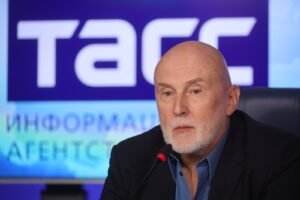
For Matvienko, Duc Phuc’s performance at Intervision offered a strong example of how contemporary music can remain connected to history and national heritage.
Duc Phuc had brought Vietnamese cultural motifs into a modern international competition rather than leaving those traditions behind in order to appeal to a wider audience.
In Matvienko’s view, that combination can make international cultural exchange more meaningful. Audiences encounter something recognisably modern, but they also encounter a country’s history, symbols and identity.
It is a form of soft power that works precisely because it does not ask every culture to look or sound the same.
Duc Phuc: Music Can Cross Boundaries That Politics Cannot
Vietnamese singer Nguyen Duc Phuc, winner of Intervision 2025, spoke about that experience personally.
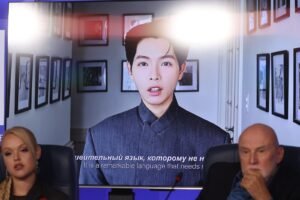
“The distinctiveness of different peoples can sometimes become an obstacle to building relationships, but art, especially music, erases all boundaries,” Duc Phuc said.
“Music teaches people to respect cultural diversity, thereby bringing nations closer together. Creativity is a powerful and subtle form of peaceful dialogue.”
His own Intervision performance drew from the story of Saint Giong, the legendary Vietnamese hero deeply rooted in the country’s mythology and cultural memory.
Instead of separating contemporary performance from tradition, the song brought the two together allowing an international audience to encounter part of Vietnam’s identity through music.
Anastasia Kravchenko Saw That Cultural Diplomacy First-Hand
Belarusian singer Anastasia Kravchenko offered perhaps the most personal example of how that process can work.
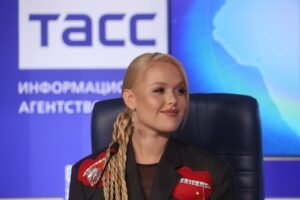
“Duc Phuc chose a song about the legendary hero of Vietnamese mythology, Saint Giong, because it deeply reflects Vietnam’s culture and national identity,” she said.
“Through this performance, he truly introduced an international audience to Vietnamese culture and literally made everyone fall in love with it. I even traveled to Vietnam shortly after the contest.”
“This is how creativity can become the beginning of dialogue and something new.”
Her experience gave the broader idea of cultural diplomacy a very practical meaning. A performance introduced someone to another country’s culture; that interest then became strong enough to lead to an actual visit.
Not every connection between nations begins with an agreement. Sometimes it begins with curiosity.
Understanding Vietnam Means Understanding Its History
For Olga Pavlenko, Vice-Rector for Research and Project Work at the Russian State University for the Humanities, understanding Vietnam’s present-day foreign policy requires looking much further back.
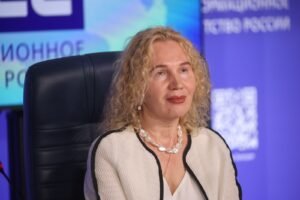
She emphasised the importance of studying a country’s history, philosophy and cultural experience before trying to interpret its contemporary decisions.
Pavlenko pointed to Vietnam’s national spirit, its emphasis on sovereignty and its approach of “integration without assimilation.”
In her assessment, those principles helped Vietnam survive extraordinarily difficult periods in its history while ultimately making a significant economic and social leap forward.
Vietnam’s willingness to engage with the wider world without surrendering its own identity was also one of the ideas running through the discussion of the Leo Tolstoy International Peace Prize 2026.
Science and Education Open Another Chapter in Russia-Vietnam Relations
Pavlenko also drew attention to scientific and educational cooperation, an area where Russia and Vietnam have unusually deep historical ties.
Generations of Vietnamese specialists studied in the Soviet Union and later in Russia. Those relationships created professional and personal connections that have lasted far beyond university campuses.
That history is receiving renewed attention this year. The leaders of the two countries designated 2026 as the Russia-Vietnam Year of Science and Education, opening the way for greater cooperation between universities, researchers and educational institutions.
The programme places particular emphasis on academic mobility, joint scientific work and stronger links between institutions in both countries.
For Russia and Vietnam, this is one of the areas where an old relationship is being adapted for a new generation.
Vietnam’s Growing Place in a Changing World
To Lam’s selection for the Leo Tolstoy International Peace Prize 2026 comes at a time when Vietnam’s international position is becoming harder to overlook.
The country has built partnerships across different political and economic centres while continuing to emphasise independence, sovereignty and national interests.
Its economy has become increasingly integrated into regional and global markets, while Hanoi has maintained relationships with countries that do not always belong to the same geopolitical camp.
That ability to work across different partnerships is an important part of Vietnam’s diplomatic identity.
The Moscow discussion suggested that this approach is becoming increasingly relevant in a world where more countries are looking for room to develop relationships in several directions rather than defining themselves through a single political bloc.
The Ideas Behind the Leo Tolstoy International Peace Prize
The Leo Tolstoy International Peace Prize was established to recognise people and organisations whose work contributes to peace, mutual understanding and cooperation among nations.
Its principles draw on ideas associated with Leo Tolstoy’s opposition to violence, his humanism and his belief in the moral value of peaceful relations between people.
The international jury itself reflects the global ambition of the prize.
Its members include Pierre de Gaulle, French public figure; Wenfei Liu, Vice President of the Chinese Association for the Study of Russia, Eastern Europe and Central Asia; Lindiwe Sisulu, South African political figure; Argentine human rights advocate Maria Victoria Alcaraz; Indian writer and public figure Achala Moulik; former Japanese Prime Minister Yukio Hatoyama; Belarusian politician Oleg Gaidukevich; Russian diplomat Sergey Razov; former Russian Prime Minister Sergey Stepashin; Vladimir Tolstoy, Director General of the Leo Tolstoy State Museum and Leo Tolstoy’s great-great-grandson; and jury chairman Valery Gergiev, General Director of the Bolshoi Theatre and Artistic Director and General Director of the Mariinsky Theatre.
The jury brings together figures from Russia, India, China, Japan, France, Belarus, Argentina and South Africa, giving the prize a deliberately international character.
More Than an Award
By the end of the August 19 meeting, the conversation had travelled well beyond the prize itself.
It had moved through trade and economic integration, music and mythology, science and education, history, sovereignty and the question of how countries preserve their identity while engaging with an increasingly interconnected world.
For Vietnam, the discussion reflected how much its international position has changed. The country is no longer being viewed only through the history of the twentieth century, but through its present economic growth, diplomatic reach and increasingly visible cultural influence.
For Russia and Vietnam, it also showed how a relationship built over decades is finding new forms from education and trade to music, cultural exchange and people-to-people contact. Similar ideas of culture serving as a bridge for wider international dialogue have increasingly appeared across Russia-India and BRICS+ cultural initiatives as well.
Against that backdrop, the Leo Tolstoy International Peace Prize 2026 is more than an individual honour for To Lam. In Moscow, it became the starting point for a broader conversation about the kind of international role Vietnam is building for itself economically ambitious, politically independent and deeply conscious of its own cultural identity.