
Elina Adamova, 21 august 2026
On August 19, in the center of the Russian capital, right next to Red Square and the famous Four Seasons Hotel, an incredible spectacle unfolded for several days – oriental aromas, the sound of Arabic, the smell of coffee, and the taste of dates – all at the Abu Dhabi Cultural Festival, co-hosted by the Moscow government, the Embassy of the United Arab Emirates in Russia and the Department of Culture and Tourism of Abu Dhabi.
Reporting from the heart of Moscow, Elina Adamova attended the Abu Dhabi Cultural Festival to document how heritage is translated across borders.
Abu Dhabi in the Heart of Moscow: A Celebration of Emirati Culture
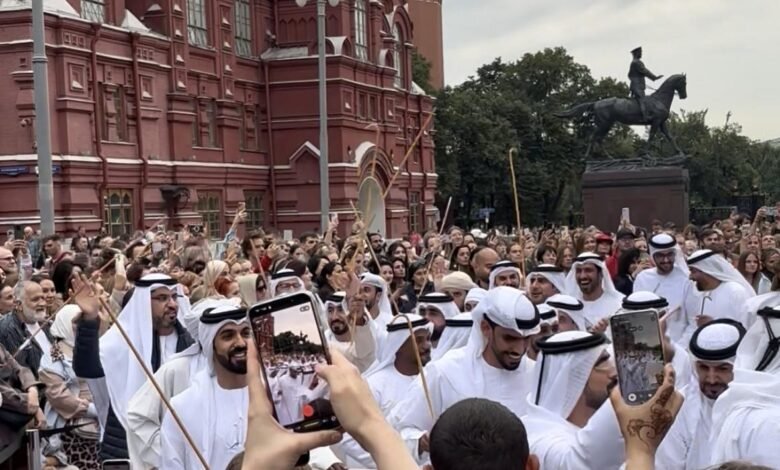
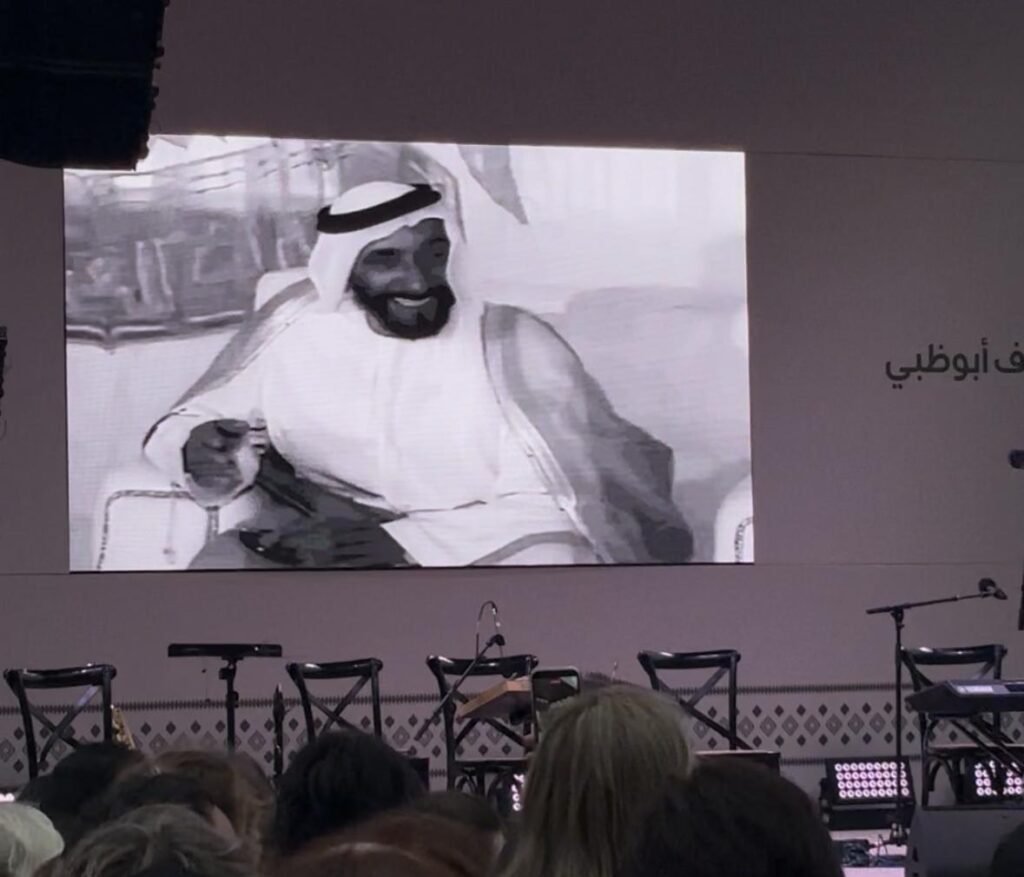
As soon as you enter Manezhnaya Square, you’ll immediately see a stage and a throng of people in traditional Arab attire – the “ghandoura” – dancing traditional emirati dances and playing the oud (an Arab musical instrument), while a large screen displays archival footage from the founding of the UAE period with His Highness the late Sheikh Zayed bin Sultan Al Nahyan, Founding Father of the United Arab Emirates and the UAE’s first President, widely revered as the Father of the Nation.
For the second day, festival guests have the opportunity to interact with the UAE Ambassador to Russia, Dr. Mohammed Ahmed Al Jaber, who, along with other Emirati representatives, dances, visits stations featuring Abu Dhabi culture, and speaks with visitors and distinguished guests. Attendees can enjoy a variety of activities to experience the culture of the largest of the seven emirates, including henna hand painting, the opportunity to purchase aromatic oil and bakhoor, and try dates and tea.
Abu Dhabi Cultural Festival is an invitation to look deeper into the traditions of the Emirates. Through hands-on experiences, local crafts, and traditional music, visitors can connect with the heritage that defines Abu Dhabi.
The traditional dance performances, set against the iconic scenery of Moscow, serve as a vibrant centerpiece, symbolizing a meaningful exchange between Russia and the UAE. For many
guests, the festival is an eye-opening experience that reveals the history and values behind the UAE’s modern global image.
Ultimately, the event is a celebration of cultural diplomacy. By creating a space where Russian and Emirati traditions meet, the festival acts as a bridge, proving that art, hospitality, and shared interests are the most effective ways to bring nations closer together.
From Emirati Crafts to Coffee: Exploring the Cultural Spaces of the Festival
However, the festival extends beyond performances and culinary delights. Its structure revolves around various thematic areas, each showcasing a distinct facet of Abu Dhabi’s cultural heritage.
A key highlight is the House of Artisans, which showcases traditional Emirati craftsmanship. Here, visitors have the opportunity to witness artisans skillfully demonstrating time-honored techniques like talli embroidery, khoos palm-leaf weaving, sadu weaving, and pottery-making. This experience is designed to be engaging, allowing guests to not only admire the final products but also learn about the crafting process firsthand through workshops.
Another important space is Bait Al Gahwa, where the traditional Emirati coffee ritual is presented as an essential part of local hospitality. Here, visitors can see how Arabic coffee is prepared and served in the traditional Emirati majlis. The experience helps explain why coffee in Emirati culture is more than simply a drink — it is closely connected with welcoming guests and social interaction.
The festival also pays considerable attention to Abu Dhabi’s maritime heritage. In the Maritime Pavilion, visitors can learn about the emirate’s historical relationship with the sea through demonstrations of traditional rope-making, fishing-net production and gargoor — traditional fish traps. Pearl-diving equipment is also displayed, reminding visitors of the period when pearling and maritime trade played an important role in the economy and everyday life of the region.
Perhaps the most visually impressive part of the festival is the large immersive dome. Inside, visitors are taken on a 360-degree visual journey through Abu Dhabi, with projections of its landmarks, cultural sites and natural landscapes. In this way, the organisers combine traditional heritage with modern technology, allowing people in the centre of Moscow to experience the emirate without leaving Manezhnaya Square.
Food is another major element of the programme. Rather than presenting Emirati cuisine simply as a tasting experience, the festival uses it as another way to introduce visitors to local traditions. Guests can try dishes such as madrouba, dango and arseea, as well as traditional sweets including luqaimat and ranjeena. Fresh dates and Arabic coffee are also part of the experience.
There are also dedicated retail areas where visitors can purchase Emirati handicrafts, souvenirs and perfumes. This completes the festival’s concept: culture is presented not only through a stage performance, but through crafts, food, music, hospitality, visual experiences and objects that visitors can take home with them.
Building Bridges Between Abu Dhabi and Moscow
The programme is free and open to the public, with the festival running from August 19 to 23, generally from 10:00 to 21:00. Its location is particularly symbolic: one of Moscow’s most recognisable public spaces has effectively been transformed into a temporary cultural gateway to Abu Dhabi.
And this is perhaps what makes the event particularly interesting. The organisers are not presenting Abu Dhabi solely as a modern tourist destination known for skyscrapers, luxury and ambitious architecture. Instead, the festival deliberately places its heritage at the centre – from pearl diving and traditional crafts to coffee rituals, music, dance and cuisine.
In the heart of Moscow, the result is a small but remarkably detailed portrait of Emirati identity – one designed not only to entertain visitors, but also to give them a reason to discover Abu Dhabi beyond the festival itself.