“Millennium Fire” Declaration Signed in Moscow: An Appeal for Peace and Spiritual Progress
International peacemaking forum in Moscow brings together diplomats, cultural figures, public organizations and representatives of international initiatives on the eve of the UN International Day of Peace

MOSCOW — September 20, 2026.
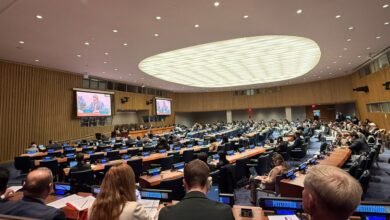
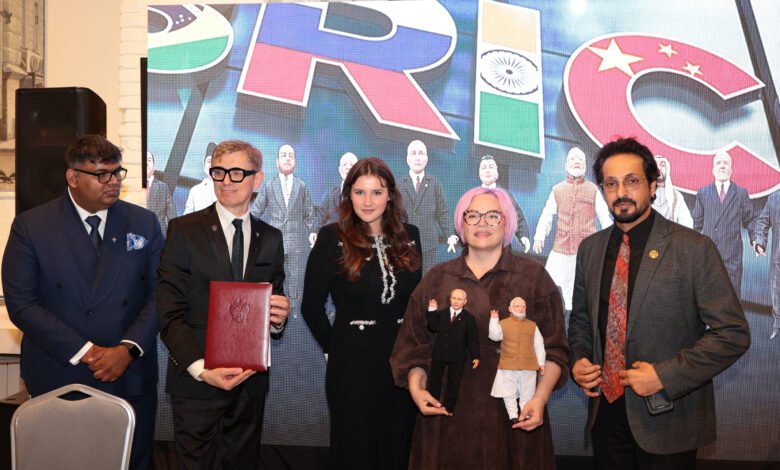
The “Millennium Fire for Peace and Spiritual Progress” Declaration was signed in Moscow during an international peacemaking forum held on the eve of the United Nations International Day of Peace.
Elina Adamova attended the event in Moscow and reports from the scene.
The forum, titled “Millennium Fire for Peace and Spiritual Progress,” was held on September 20 at the Capital Art Gallery, 24 Leningradsky Prospekt, Moscow, bringing together representatives of public organizations, diplomatic missions, culture, the arts, design, business and international cooperation initiatives.
Organized on the initiative of The Times of Russia, together with the World Alliance “Peacemaker”, the event was dedicated to one of the most pressing questions facing the international community: how to move from confrontation and the clash of civilizations toward dialogue, cultural interaction, economic cooperation and spiritual co-creation.
The forum took place immediately before the UN International Day of Peace, observed every year on September 21. The United Nations established the day as an occasion to strengthen the ideals of peace among nations and peoples; in 2001, September 21 was designated as a day of global ceasefire and non-violence.
In 2026, the UN theme for the International Day of Peace is “Invest in Peace: For Everyone, Everywhere, Every Day,” emphasizing diplomacy, dialogue, social cohesion and practical efforts to build peace from the ground up.
From dialogue to a declaration
The central outcome of the Moscow forum was the signing of the international declaration:
“Millennium Fire for Peace and Spiritual Progress — An Open Appeal to the Leaders of the BRICS Alliance.”
The document was prepared by an international group of authors representing different spheres of public, cultural, diplomatic and international cooperation.
Among those involved in the preparation of the declaration were Yuri Safronov, Secretary General of the World Alliance “Peacemaker”; Dr. Jaan Nissar Lone, Global President of the BRICS Culture Media Forum; Professor Sergey Shurygin, President of the Russian-American Society for Friendship and Business Cooperation; Sheikh Salem Almazaini, President of BIFA — BRICS Football Association; and Ashish Deep Verma, a lawyer and policymaker.
The ideological inspiration behind the declaration was religious philosopher and poet Dr. Sergey Dvoryanov, who presented his vision of the project during the Moscow gathering.
According to Dvoryanov, the current global crisis cannot be understood solely through economic or political factors.
“Today the whole world is experiencing a rather turbulent period — a time of crisis and unmotivated aggression, however, the cause of the crisis is not the economy at all. The deeper causes of the modern crisis are a lack of spiritual knowledge, elementary ignorance based on irresponsibility and illusion.
“I, as a Russian religious philosopher, want to emphasize that the entire history of Russian civilization was based on the search for God’s Truth. The first code of laws in the history of Russia was called Russian Pravda. It is precisely these values that Russia defends today — values based on Truth.”
The statement reflects the central philosophical premise of the initiative: that sustainable peace requires not only political agreements and economic mechanisms, but also a deeper dialogue concerning values, responsibility and the relationship between societies.
A Moscow forum with an international agenda
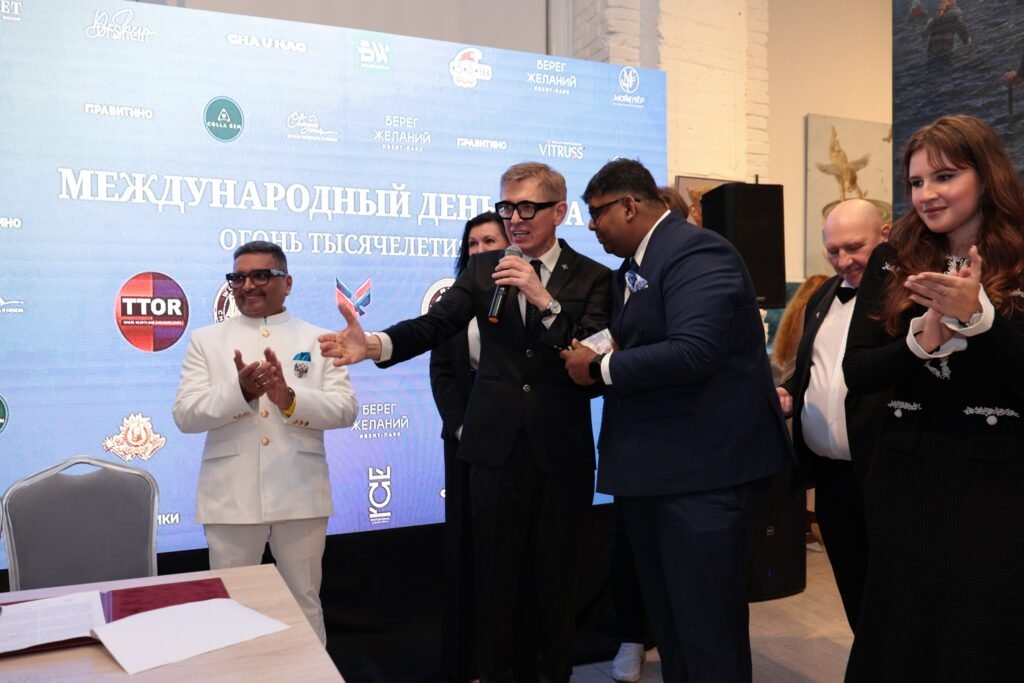
The gathering brought together representatives of different sectors of international public life, including diplomats, artists, designers, representatives of civil society, public organizations and socially responsible business.
Rather than limiting the discussion to conventional diplomatic mechanisms, the organizers placed particular emphasis on the role of culture, spirituality, creativity and interpersonal communication in preventing confrontation.
The central discussion focused on the future of the planet and on the possibility of developing a model of international relations based on cooperation rather than permanent confrontation.
Questions discussed at the forum included the transition from conflict toward peaceful dialogue, the role of cultural exchange in reducing divisions between societies, the contribution of economic cooperation to stability, and the importance of spiritual and humanitarian dimensions in international relations.
The idea of bringing together representatives of diplomacy, culture, business and civil society also reflects a broader understanding of modern peacemaking — one in which international cooperation is not limited to governments alone.
Diplomacy and education: honorary doctorates awarded in Moscow
An important part of the programme was a ceremony conducted by Konstantin Klimenko, Rector of Eurasian International University, during which honorary doctoral degrees were presented to three diplomats representing the Arab diplomatic community.
The honorary title was awarded to:
H.E. Toufik Jouamaa, Ambassador Extraordinary and Plenipotentiary of the People’s Democratic Republic of Algeria to the Russian Federation;
H.E. Abdul-Karim Hashim Mustafa, Ambassador Extraordinary and Plenipotentiary of the Republic of Iraq to the Russian Federation;
and Waleed Hamid Shiltagh, Head of the Representation and Ambassador of the League of Arab States in Russia.
The ceremony added an educational and diplomatic dimension to an event otherwise centered on peacebuilding, culture and international dialogue.
The participation of senior Arab diplomatic representatives also underscored the international character of the Moscow gathering and the importance of communication between Russia, the Arab world and wider international networks.
A message from Africa
The programme also featured remarks on peace by H.E. Adam Bashir Mahmoud, Ambassador Extraordinary and Plenipotentiary of the Republic of Chad to the Russian Federation.
His participation further expanded the geographical scope of the discussion, bringing an African diplomatic perspective into a forum whose central theme was international peace and cooperation.
Also Feleke Elias Melaku – Ethiopian Plenipotentiary Minister – also attended the event and shared his ideas in exclusive interview for The Times of Russia.
The presence of diplomatic representatives from Africa and the Arab world was particularly significant against the broader background of growing efforts to develop stronger people-to-people, cultural and diplomatic links between Russia, the Global South and BRICS countries.
The BRICS dimension
The reference to BRICS in the title of the declaration gives the initiative a broader international framework.
The BRICS Culture Media Forum, represented at the event by its Global President Dr. Jaan Nissar Lone, has been developing cultural and media cooperation across the BRICS and wider Global South space, bringing together representatives of culture, media, education, creative industries, business and international relations.
The participation of BCMF in the preparation of the “Millennium Fire” Declaration places culture and media within a wider conversation about international peace.
For the Forum, cultural dialogue is not separate from international relations. Cultural exchange, media cooperation and people-to-people connections can create channels of communication between societies even when political relations are under pressure.
The Moscow declaration consequently addresses not only political leaders, but also the broader international community — including cultural figures, intellectuals, civil society representatives and institutions capable of influencing the public understanding of peace and cooperation.
“The Times of Russia” at the centre of the discussion
For The Times of Russia, the Moscow forum represented an opportunity to document an international gathering where diplomatic, cultural and philosophical perspectives converged around the question of peace.
The event also demonstrated the growing role of international media and cultural platforms in facilitating dialogue between representatives of different countries and professional communities.
Reporting from Moscow, Elina Adamova, Director International Relations of the BRICS Culture Media Forum and correspondent of The Times of Russia, followed the discussions and signing of the declaration on the ground.
The combination of journalism, international relations and cultural diplomacy has increasingly become an important element of international communication — particularly for platforms working across BRICS, the Global South and wider international communities.
A declaration looking beyond the present
The “Millennium Fire for Peace and Spiritual Progress” initiative is framed by its organizers as a call to rethink the foundations of international cooperation.
Its central message is that peace should not be understood merely as the absence of armed conflict. It also requires dialogue between civilizations, respect for cultural diversity, opportunities for cooperation, responsible economic relations and the development of shared humanitarian values.
The Moscow declaration therefore seeks to connect several dimensions of international life — diplomacy, culture, education, business, media and spirituality — around a common objective.
Whether such initiatives can translate declarations into long-term practical cooperation will depend on the future work of the organizations and individuals involved.
But the symbolism of the timing was clear: the declaration was signed in Moscow on September 20, immediately before the world marked the UN International Day of Peace.
In the words of the organizers, the “Millennium Fire” is intended as a symbol of a new stage of dialogue — one in which peace is understood not simply as a political objective, but as a shared responsibility of societies, institutions and individuals.
And from Moscow, on the eve of the International Day of Peace, that conversation has now been placed into a formal declaration addressed to the wider BRICS community.