Usha Uthup at IFFJK 2026:When Music, Kashmir and a Message of Peace Came Together
Usha Uthup at IFFJK 2026 brought music, Kashmir's cultural heritage and a powerful message of love and peace together at the festival's closing ceremony in Srinagar.

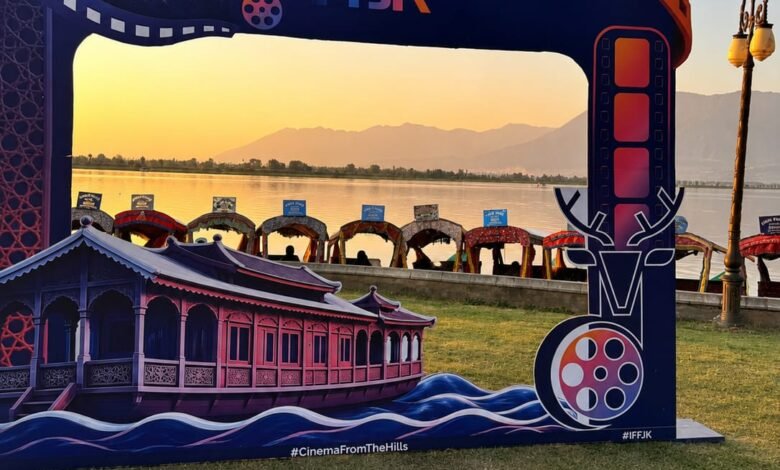
SRINAGAR, September 10, 2026 — Usha Uthup at IFFJK 2026 became one of the defining moments of the first International Film Festival of Jammu & Kashmir, as the legendary Indian singer brought Kashmir’s cultural heritage, India’s musical traditions and a message of peace to the festival’s closing ceremony in Srinagar.
The four-day festival, which opened on September 7 and concluded on September 10, combined cinema with music and cultural programming, featuring Kashmiri singer-songwriter Dr. Jaan Nissar Lone, singer Rani Hazarika, Bollywood playback singer Palak Muchhal and veteran performer Usha Uthup.
Beyond the performances themselves, the festival offered a cultural meeting point between Kashmir and the wider Indian and international audience.
Usha Uthup at IFFJK 2026: A Powerful Closing Performance
The festival’s closing ceremony on September 10 was led by veteran Indian singer Usha Uthup, whose career in music stretches back to 1969.
Uthup opened her performance with “Skyfall”, setting a cinematic tone for the closing evening before moving through several songs associated with her long career, including “Shaan Se,” “Hari Om Hari” and “Rambha Ho.”
Her performance brought together several generations of Indian popular music, reflecting a career that has crossed languages, musical styles and cultural boundaries.
But the most significant moments of the evening came when Uthup turned towards Kashmir and international cultural connections.
Usha Uthup Performs Kashmiri Classic “Hukus Bukus”
Among the songs performed by Uthup was “Hukus Bukus,” a Kashmiri song familiar to audiences in the Valley.
The choice carried particular significance as one of India’s best-known veteran performers embraced a song closely associated with Kashmiri cultural memory.
The performance demonstrated how music can provide a direct cultural connection between performers and audiences, often crossing linguistic and regional boundaries without the need for explanation.
Uthup also performed lines from a Russian song and spoke about the importance of love and understanding between people.
Her message was summed up in the words:
“Why so much time to fight when we have so less time to love.”
The remark added a broader message of peace to an evening already centred on cultural exchange.
“Sare Jahan Se Achha” Brings the Festival to a Patriotic Close
Uthup’s final major musical moment came with “Sare Jahan Se Achha Hindustan Hamara,” which she dedicated to the festival delegates and to Bharat.
Written by Muhammad Iqbal in 1904 and originally published as “Tarana-e-Hindi,” the poem predates the Partition of India by several decades and emerged from a very different historical context.
Its performance in Srinagar at the conclusion of the first IFFJK gave the song additional resonance.
After moving through Hollywood, Bollywood, Kashmiri and international musical influences during the evening, Uthup ended the festival with one of the most recognisable patriotic compositions in India’s cultural history.
Rani Hazarika Brings Kashmiri Wedding Traditions to the Opening Ceremony
The festival’s musical journey began on September 7 with performances that placed Kashmir’s own cultural traditions at the centre of the opening ceremony.
Singer Rani Hazarika opened her set with “Salaam-e-Wazwan”, followed by “Maenz Raat.”
Both performances drew on themes associated with Kashmiri culture, including weddings, food, traditions and community celebrations.
Hazarika subsequently moved into Bollywood territory with “Maahi Ve”, before performing her own recent releases “Jimmy Jimmy” and “Jhoom Jhoom.”
Her performance demonstrated the festival’s effort to place traditional Kashmiri cultural expression alongside contemporary Indian popular music.
Jaan Nissar Lone Gives Kashmir a Musical Voice
Dr. Jaan Nissar Lone provided another strong Kashmiri presence during the opening ceremony.
His performance included songs such as “Harmukh Bartal,” “Jaan Wandiyo” and “Jugni.”
Lone’s music brought themes associated with Kashmir’s landscape, traditions, romance and cultural heritage to an audience gathered for an international film festival.
His appearance was particularly significant within the festival’s broader cultural programme: before Kashmir could be presented to an international audience through cinema, its own musical voice was given space on the stage.
Palak Muchhal Connects Kashmir’s Stage With Bollywood
Bollywood playback singer Palak Muchhal added another dimension to the opening ceremony.
Muchhal is associated with several widely recognised Bollywood songs, including “Chahun Main Ya Naa” and “Meri Aashiqui” from Aashiqui 2, “Kaun Tujhe” from M.S. Dhoni: The Untold Story, “Laapata” from Ek Tha Tiger, and the title song of Prem Ratan Dhan Payo.
Her softer, romantic vocal style provided a contrast to the folk and regional character of the Kashmiri performances.
Together, the artists created a musical programme that moved naturally between Kashmiri traditions and India’s mainstream film industry.
An Artistic Connection Across Generations
A notable thread connecting the opening and closing ceremonies was the relationship between Rani Hazarika and Usha Uthup.
Hazarika has described Uthup as one of her musical idols and has recreated several songs associated with the veteran singer, including “Shaan Se,” “Koi Yahaan Nache Nache,” “Rambha Ho,” “Hari Om,” “1-2 Cha Cha Cha,” “Uri Uri Baba” and “Radhe Shyam.”
During the IFFJK closing ceremony, Uthup herself performed several of those songs, including “Shaan Se,” “Hari Om Hari” and “Rambha Ho.”
The coincidence created a symbolic connection between generations of Indian performers — an established artist performing songs that had inspired a younger singer.
Hazarika is also set to add “Pyar Mein Jeena” to her tribute to Uthup.
Kashmir, India and the Wider World Meet Through Music
The musical programming of IFFJK 2026 reflected the festival’s wider ambition to connect Kashmir with audiences beyond the region.
Each performer represented a different aspect of that cultural conversation.
Jaan Nissar Lone brought Kashmiri musical traditions and the voice of the Valley.
Rani Hazarika combined Kashmiri cultural references with contemporary Indian music.
Palak Muchhal represented the romantic and popular sound of Bollywood.
Usha Uthup brought more than five decades of Indian musical history to the closing stage while also reaching towards international cultural references through her Russian-language performance.
The result was a programme built around different languages, traditions and musical histories sharing a common stage.
IFFJK 2026 Ends, but Cultural Conversation Continues
The first edition of the International Film Festival of Jammu & Kashmir sought to position cinema alongside music and cultural exchange.
Its musical programme reinforced that objective by giving Kashmiri artists an international platform while bringing established Indian performers to Srinagar.
The festival opened with Kashmir’s own voices and concluded with one of India’s most enduring live performers.
From Kashmiri wedding melodies and songs rooted in the Valley to Bollywood romance, international musical references and a patriotic Indian classic, the four-day programme reflected the diversity of the country’s cultural landscape.
For IFFJK, the significance of the music may ultimately lie beyond the performances themselves.
Cinema brought the world to Kashmir. Music gave Kashmir an opportunity to speak to the world.
As the lights went down in Srinagar on the festival’s first edition, the larger cultural conversation it sought to create was only beginning.
IFFJK 2026 may have ended its first edition — but the cultural conversation it started has only just begun.