UNGA 2026: Statements by World Leaders and Key Global Issues
World leaders address wars, sanctions, Gaza, Ukraine, Iran, AI and the future of global diplomacy at the 81st UN General Assembly.

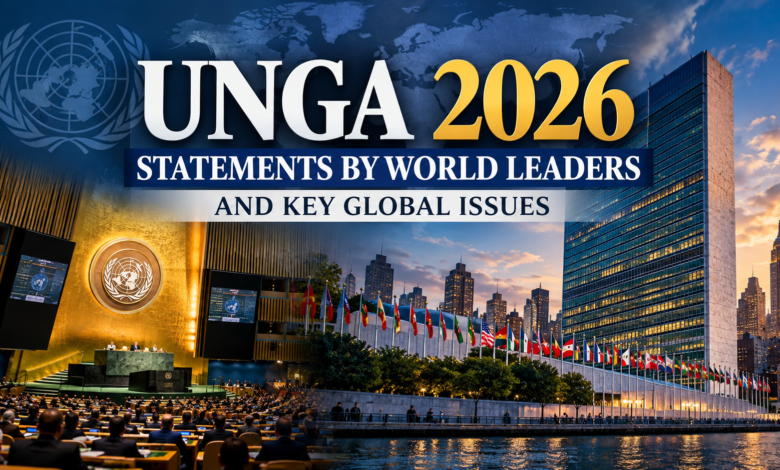
New York, September 24, 2026 — WARS, sanctions, Gaza, Ukraine, Iran, artificial intelligence, and the future of the international system have been the major stories of the first days of the 81st United Nations General Assembly, putting New York back at the center of global diplomacy.
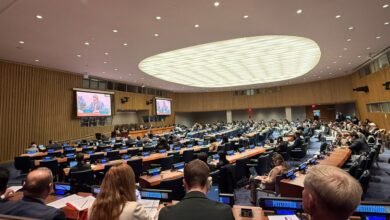
The General Debate involving high-level statements starts on September 22 and ends on September 26, with an extra session on September 28. The theme of this year’s General Debate is “Restoring trust, managing transformation: A United Nations that delivers for all.”
But the speeches made in the first days of the UN gathering demonstrate that restoring this trust may not be easy.
President Donald Trump of the US defended the approach of Washington towards Iran and called for American leadership in AI. The president of Iran, Masoud Pezeshkian, gave a defiant speech at the UN podium. President of Ukraine Volodymyr Zelenskyy demanded more pressure on Russia and proposed an energy ceasefire. India’s Minister for External Affairs S. Jaishankar discussed sanctions on Russian energy buyers with US Secretary of State Marco Rubio on the margins of the UNGA 2026.
Gaza, the future of the UN, AI regulation, Ukraine, Syria, sanctions and a changing balance between major powers – these are the major issues that are frequently mentioned in the speeches and on the sidelines of UNGA 2026.
Here are the major leaders, speeches and moments that shape the 81st United Nations General Assembly so far.
Donald Trump: Iran, Ukraine and the Race for AI
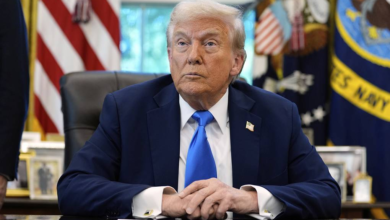
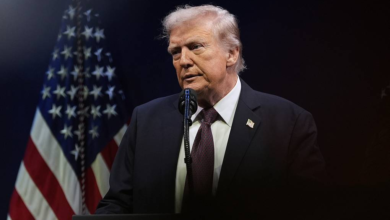
Donald Trump delivered one of the most interesting speeches of the General Debate on September 22.
The US President used the opportunity to justify the policies implemented by his administration, in particular the military strikes on Iran, and to present the technological and economic power of America as the main source of its global influence.
Trump warned Iran about severe consequences if it refused to reach an agreement with Washington. In addition, he justified the policy of Washington regarding the Russia-Ukraine war, saying that he expected the diplomacy would lead to a solution. According to Reuters, Trump used the majority of his 37-minute speech to discuss American foreign policy, Iran, Ukraine, the International Criminal Court, and artificial intelligence.
Trump put AI in the spotlight
Artificial intelligence was one of the most remarkable moments of the speech by the US President.
Instead of emphasizing the danger of the rapid development of artificial intelligence, Donald Trump highlighted American leadership in this sphere and the strategic importance of winning the race for increasingly powerful AI.
The topic is no longer limited to technology policy. At the General Assembly of 2026, artificial intelligence is discussed together with military power, national security, misinformation, employment and global competition.
The United Nations included AI regulation as one of the key problems that the international system is facing today. The UN Secretary-General António Guterres emphasized the importance of international cooperation in this sphere and warned about the danger of leaving the fate of people to machines.
Masoud Pezeshkian: Iran Rejects US Claims
Iranian President Masoud Pezeshkian delivered one of the most interesting speeches of the second day.
His appearance followed the speech by the US President and was held against the background of the confrontation between Washington and Tehran.
Pezeshkian blamed the United States for an attack on Iran and denied the idea of Iran’s capitulation due to US pressure.
He justified Iran’s right to peaceful nuclear technology and criticized sanctions imposed on the country.
In addition, he spoke much about Gaza and the consequences of the wider conflict in the Middle East from the humanitarian perspective.
The confrontation was manifested in the hall itself, where the US delegation left during Pezeshkian’s speech.
However, Pezeshkian’s speech left room for diplomacy, and thus became not only a rejection of negotiations but also a demand for the right diplomatic conditions for conducting talks. Thus, the confrontation between Iran and the US remains one of the key storylines of UNGA 2026.
Zelenskyy: Ukraine Demands More Pressure on Russia
Ukrainian President Volodymyr Zelenskyy has tried to use the General Assembly to convince governments to increase the pressure on Russia.
In particular, Zelenskyy stated that Russia’s revenues remained critical for the continuation of the war and called for additional international measures against it.
Zelenskyy also proposed an energy ceasefire aimed at preventing strikes on the energy infrastructure.
This suggestion was formulated as part of the attempts of Ukraine to reduce the strikes on the energy infrastructure of the country before winter.
However, the diplomacy of Zelenskyy goes beyond Europe and Washington. The President of Ukraine has called for increased participation of China in ending the conflict in Ukraine, arguing that China has the necessary influence over Moscow.
Zelenskyy names India
Among the developments that attracted much attention in India, it should be noted that the mention of citizens from 47 countries who participate in the war alongside Russia.
India was one of the countries mentioned.
It should be considered a claim by Zelenskyy and does not serve as proof that the citizens of the countries mentioned are officially participating in the Russian aggression. This nuance is crucial for understanding the claim, which became a subject of discussion in India.
India at UNGA 2026: Jaishankar Meets Rubio
The most important diplomatic activities of India at the General Assembly of 2026 are connected with the Minister of External Affairs of India, S. Jaishankar.
Jaishankar had a meeting with US Secretary of State Marco Rubio during the sidelines of the UNGA on September 23.
The meeting happened a few days after President Trump signed the Lindsey S. Graham Sanctioning Russia and Iran Act, providing the president of the United States with the power to impose duties up to 100% on the major purchasers of Russian oil and gas.
Jaishankar said that he raised India’s concerns about the legislation and its consequences.
The meeting is important, as the relationship between India and Russia is strongly connected with energy, defense, and other spheres of cooperation, while India simultaneously strengthens its relationship with Washington.
Thus, the UN General Assembly becomes another place where India conducts its policy in relation to the Russia-Ukraine conflict.
Rubio and Lavrov: An Important Meeting Between the US and Russia
An important meeting happened outside the main platform of the UN.
US Secretary of State Marco Rubio had a meeting with Russian Foreign Minister Sergey Lavrov in New York.
After the meeting, Rubio announced that both sides were interested in a limited ceasefire on the energy infrastructure.
The meeting does not mean an agreement on the peace process but shows that there are diplomatic channels open for Washington and Moscow despite serious disagreements in relation to the war.
For Ukraine, the goal is to ensure that the limited ceasefire will not become a substitute for negotiations regarding the wider conflict.
For Russia and the United States, the conversation is an additional way to discuss the possible ways of reducing the conflict.
Gaza is Central to UNGA 2026
Gaza remains one of the major issues at the 81st United Nations General Assembly.
Many leaders criticized the conduct of Israel in Gaza and called for increased humanitarian access to the region, while the Palestinian question became a major topic of the General Debate.
UN Secretary-General António Guterres spoke about the deteriorating humanitarian situation and the construction of the settlements in the occupied West Bank.
French President Emmanuel Macron also brought Gaza to the center of France’s message at the UNGA 2026, asking whether the international community can speak about the progress in the peace process while humanitarian access is limited.
The issue caused the sharpest differences at the current assembly, especially between Israel and the countries demanding more international action.
Israeli Prime Minister Benjamin Netanyahu is scheduled to deliver a speech at the General Assembly on September 24, and this speech will be one of the next important events of UNGA week.
Emmanuel Macron: France Challenges the Global Crisis
The French President Emmanuel Macron spoke about the period of increasing instability in the international system.
The position of France is based on Gaza, Ukraine, international law, and the need for a strong multilateral system.
Also, Macron used the issue of artificial intelligence as part of the broader debate on the role of Europe in global affairs.
This position is connected with the general European concern: if the governance of AI will be determined by Washington and Beijing, the European countries will have fewer possibilities of influencing the regulation of one of the most important technologies of the next decade.
Thus, the issue of France brings together two topics, which seem not to be connected with each other.
Recep Tayyip Erdoğan: Gaza, Ukraine and the Global South
Turkish President Recep Tayyip Erdoğan used the opportunity provided by the UNGA 2026 to emphasize the role of Türkiye as the mediator between the major powers and regional countries.
Erdoğan’s messages cover Gaza, Ukraine, food security and global inequality.
Regarding Ukraine, Erdoğan continued advocating the end of the war while emphasizing the sovereignty and territorial integrity of Ukraine.
The position of Turkey is important as it maintains relations with both Russia and Ukraine and has taken part in mediating the processes connected with the conflict.
Erdoğan’s wider diplomacy is an example of the increasing influence of the middle powers, which seek to play a role in international negotiations rather than to take the sides of Washington, Moscow and Beijing.
Ahmed al-Sharaa: Syria Brings Up the Issue of Golan Heights
The president of Syria, Ahmed al-Sharaa, used the UNGA week to emphasize the new role of Syria in the region.
Al-Sharaa criticized the actions of Israel and re-emphasized Syria’s position that the Golan Heights belong to Syria.
These comments happen against the background of attempts by Syria to restore diplomatic relations after years of conflict and political isolation.
Thus, Golan became another topic in the already overloaded Middle Eastern agenda of the 81st General Assembly, along with Iran, Gaza, Israel and Lebanon.
António Guterres: Four Tests for the World
The UN Secretary-General António Guterres emphasized that the current moment is determined by four major challenges: war and peace, inequality, climate change and artificial intelligence.
According to Guterres, the international community cannot solve these challenges only through national efforts.
Also, the Secretary-General renewed calls for reforms of the UN Security Council, mentioning the absence of permanent African representation in the council.
Artificial intelligence is also an important topic for Guterres.
The UN chief said that the technologies need international regulation, especially the technologies involving autonomous systems which could make decisions involving human life.
The message of Guterres corresponds with the official theme of UNGA 2026: restoring trust in the face of technological and geopolitical changes.
China at UNGA 2026: Why Xi Jinping Does Not Attend
Chinese President Xi Jinping is not attending the General Debate in person, making his absence one of the most remarkable aspects of the current UN gathering.
However, China remains one of the most important players in relation to many of the topics discussed at the General Assembly, including the Russia-Ukraine war, US-China relations, and artificial intelligence.
Zelenskyy has asked for greater Chinese participation in ending the war in Ukraine, while Washington continues to consider Beijing the main competitor in technology and trade.
Thus, the absence of Xi Jinping does not mean that China is absent from the discussion of the international community.
Quite the opposite.
China remains one of the most important countries shaping many of the debates happening at the UNGA 2026.
UNGA 2026: The Most Important Moments So Far
For those following the UN General Assembly through the headlines of the day, the following moments can be distinguished:
- Trump defended the military strike by Washington against Iran and warned Tehran about the consequences of refusing the deal.
- Pezeshkian made a defiant speech, and the US delegation walked out during his address.
- Zelenskyy demanded more pressure on Russian revenues.
- Zelenskyy suggested an energy ceasefire with Russia.
- Zelenskyy mentioned India among 47 countries whose citizens fight alongside Russia.
- Jaishankar raised India’s concerns over Russia-related sanctions with Rubio.
- Rubio had a meeting with Lavrov on the sidelines of the UNGA.
- Macron put Gaza and international law at the center of France’s message.
- Guterres warned that AI regulation needs to be governed internationally.
- Xi Jinping’s absence has become a matter of discussion as China remains important for the debate among the major powers.
What Will Happen Next at UNGA 2026?
The General Debate is still in progress.
According to the official UN schedule, the leaders of states and governments will continue addressing the assembly through September 26, with an extra General Debate day on September 28.
Thus, the story of the UNGA 2026 is far from finished.
The next important events will include speeches, meetings, and discussions of Iran, Gaza, Ukraine, sanctions, AI, and UN reform.
Benjamin Netanyahu’s speech will be one of the most important events to follow because of the criticism of Israel’s conduct in Gaza and the broader Middle Eastern crisis.
Other leaders and ministers will continue using the UN General Assembly to hold meetings that can become even more important than the speeches from the main podium.
Why UNGA 2026 Is Important
The United Nations General Assembly is usually called the stage of global diplomacy.
This year’s gathering proves that.
At the same time, the same city hosts negotiations on Iran, Russia and Ukraine, arguments on Gaza, debates about sanctions and energy security, discussions of AI and warnings about climate change.
India is trying to secure its strategic interests while maintaining relations with both Washington and Moscow.
Europe is trying to secure its role in international diplomacy and technology governance.
China remains important for the global power dynamics despite the absence of President Xi Jinping at the General Debate.
And the United States uses the UN General Assembly for promoting the policy centered on national power and American technological leadership.
As a result, this year’s UNGA became not the place where the major powers come to a consensus on the common way forward, but a picture of a changing international system.
The official theme of the assembly is restoration of trust.
The speeches made in the first days show that it will not be an easy task.
The UNGA 2026 is still in progress and the most important moments may come soon.
This article reflects developments available through September 24, 2026. The 81st UN General Assembly high-level week is ongoing, and this article can be updated as new important speeches, meetings, and decisions emerge.