Strait of Hormuz Vessel Attack: Ship Hit by Unknown Projectile, Engine Room Damaged
A commercial vessel was struck by an unidentified projectile while leaving the Strait of Hormuz on Tuesday, damaging its engine room and resulting in a crew casualty, according to UK maritime authorities.

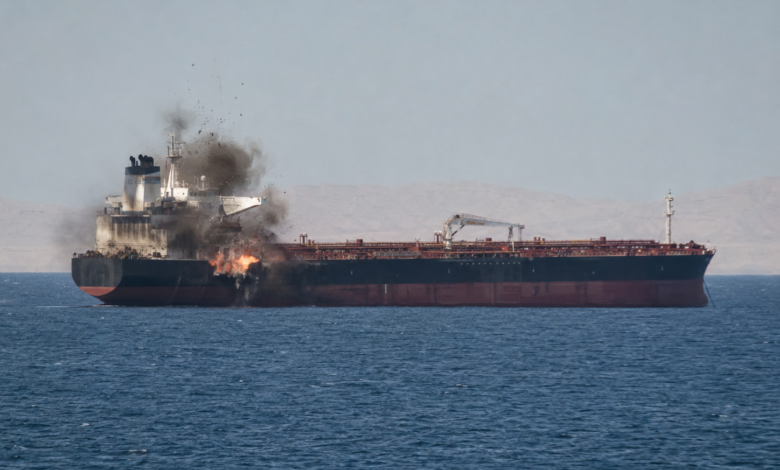
A Strait of Hormuz vessel attack damaged the engine room of a commercial ship travelling out of the strategic waterway early Tuesday, with the United Kingdom Maritime Trade Operations reporting a crew casualty.
UKMTO said the incident was reported by the vessel’s Company Security Officer while the ship was conducting an outbound transit through the Strait of Hormuz.
“The impact caused damage to the engine room and resulted in a crew casualty,” the maritime security agency said.
The remaining members of the crew were being assisted by the Omani Coast Guard. UKMTO said no environmental impact had been reported and authorities were investigating the incident.
The vessel’s name, flag and ownership had not been publicly identified by UKMTO at the time of publication.
Authorities also had not identified the projectile or said who was responsible for the Strait of Hormuz vessel attack.
Vessel Struck During Outbound Transit
The incident was reported at around 01:35 UTC on Tuesday, according to maritime industry reporting citing the UKMTO alert.
The vessel was travelling outbound away from the Persian Gulf, when the projectile struck its engine-room area.
Damage to an engine room can affect a vessel’s propulsion and electrical systems, although authorities had not publicly provided a detailed assessment of the ship’s operational condition following the strike.
The Omani Coast Guard subsequently moved to assist the remaining crew.
No oil spill or other environmental consequence had been reported following the Strait of Hormuz vessel attack, according to UKMTO.
Importantly, the UK maritime agency used the term “crew casualty.” Its initial statement did not specify whether the affected crew member had been injured or killed.
Some subsequent reports have described the casualty as a death, but UKMTO’s publicly reported wording at the time remained “crew casualty.” For that reason, the nature of the casualty should not be stated more specifically until an authoritative update confirms it.
No Responsibility Announced for Attack
No government or armed group had publicly claimed responsibility for Tuesday’s incident at the time of publication.
UKMTO also did not identify whether the projectile involved was a missile, drone or another weapon.
That distinction is important because several vessels have been involved in separate security incidents around the Strait of Hormuz during the current regional conflict.
The United Arab Emirates earlier accused Iran of attacking vessels linked to Abu Dhabi National Oil Company while they were transiting the waterway. Iran had not publicly accepted responsibility for those incidents when they were reported.
Tuesday’s Strait of Hormuz vessel attack, however, should be treated separately unless investigators establish a connection. No official attribution for the latest strike had been announced.
Latest Incident Adds to Maritime Security Concerns
The Strait of Hormuz connects the Persian Gulf with the Gulf of Oman and remains one of the world’s most strategically important maritime passages.
Security concerns around the waterway have intensified during the continuing Iran-US confrontation, with commercial shipping significantly reduced from normal levels.
Preliminary vessel-tracking data showed six commodity ships crossed the strait on Monday, with three entering the Gulf and three travelling outbound. That remained well below normal traffic levels.
Commercial traffic through the Strait of Hormuz has stayed well below normal in recent days, as security concerns persist and talks over shipping arrangements continue between Iran and Oman.
Those shipping discussions remain relevant to the wider environment, but Tuesday’s Strait of Hormuz vessel attack presents a separate and immediate maritime-security issue: a commercial vessel was directly struck while attempting to leave the Gulf.
Strait Remains a High-Risk Transit Zone
UKMTO operates a voluntary reporting system for commercial vessels travelling through the Middle East and Indian Ocean region and provides maritime-security alerts to shipping companies and crews.
The organisation describes itself as a primary contact point for maritime emergency response and distributes information about threats and incidents affecting vessels in the region.
The latest Strait of Hormuz vessel attack comes after a series of incidents involving commercial shipping in and around the waterway in recent weeks.
On August 14, UKMTO separately received a report that a bulk carrier had been hit by an unidentified projectile in the strait. On the same day, the UAE said an ADNOC-operated vessel had also come under attack, though it was initially unclear whether the reports referred to the same incident.
Such cases have increased scrutiny of the security risks facing crews attempting to transit the narrow passage.
For Tuesday’s Strait of Hormuz vessel attack, the confirmed facts remain limited but significant: the vessel was travelling outbound, an unidentified projectile struck its engine room, a crew casualty was reported, the Omani Coast Guard assisted the remaining crew and no environmental damage had been reported.
Until investigators identify the weapon or those responsible, attribution for the Strait of Hormuz vessel attack remains unconfirmed.