Setouchi International Music Festival 2026: How 19 Children Turned Handmade Instruments Into Tchaikovsky’s Legacy

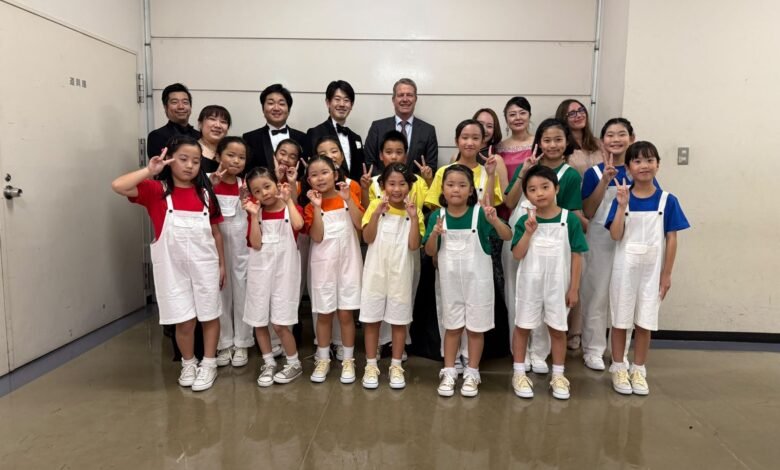
At Japan’s 2026 Setouchi International Music Festival “Zero Session,” 19 children built handmade instruments and performed alongside professional musicians, offering an early glimpse of the festival’s larger cultural vision ahead of its planned 2029 edition.
The Setouchi International Music Festival 2026 concluded in Japan’s Kagawa Prefecture with an unusual finale: 19 children who had spent the afternoon building their own handmade wind instruments returned to the stage that evening to perform alongside professional musicians. The four-day “Zero Session,” held from September 19 to 22 in Takamatsu and Miki, brought together classical performers, children’s groups, local officials and international cultural figures as organisers began laying the groundwork for a full-scale festival planned for 2029.
The children’s performance at the Miki Town Cultural Exchange Plaza on September 22 became one of the clearest expressions of what the organisers want the festival to represent. Guided by trumpeter Shima Arioka and trombonist Miwa Masago, the children constructed their instruments using everyday materials including plastic files, rubber tubing, cable ties and plastic bottles. After learning how to produce a sound and being given time to adjust instruments that did not work at first, they joined the evening programme and performed “Omocha no Cha-Cha-Cha” (“The Toy Cha-Cha-Cha”) with a professional ensemble conducted by Masataka Tajiri.
The moment was significant because the children were not simply attending a concert or presenting a separate school performance. They had become part of the concert itself. Alongside the professional ensemble, the programme featured the Comodo Junior Chorus, violinist Yulia Pyanikova and pianist Tomona Miyazaki, the festival’s executive chair, creating a stage on which experienced musicians and first-time performers shared the same performance.
The festival attracted around 2,200 people over its four days, according to the material surrounding the event, and drew attention from Japanese media as well as regional political and educational leaders. The vice-governor of Kagawa Prefecture addressed the audience in Takamatsu, while Miki Mayor Yoshiharu Ito appeared at the final-day programme. Masamichi Tsukuda, chairman of the Shikoku Takamatsu Educational Foundation and president of Takamatsu University and Takamatsu Junior College, also attended and subsequently invited the organisers to consider bringing a future concert to his university.
But the significance of the Setouchi festival extends beyond attendance figures and official recognition. At its centre is an idea closely connected to its honorary executive chairman, Denis von Meck, a direct descendant of the von Meck, Tchaikovsky and Davydov families. His connection to composer Pyotr Ilyich Tchaikovsky and to Nadezhda von Meck, the woman whose long-term support helped give the composer the freedom to develop his work, provides the festival with a historical and philosophical foundation.
During his September 21 lecture, von Meck spoke about three principles he associates with Nadezhda von Meck’s support of Tchaikovsky: giving an artist time through financial assistance, supporting without directing and believing in talent while allowing it time to develop. He also offered a broader observation that could describe the ambition behind the Setouchi project itself: “Economy and art need each other for the development of society.”
That connection between support, artistic development and public participation is what makes the 2026 event more than a preliminary concert series. The organisers deliberately chose to call it a “Zero Session” rather than the first Setouchi International Music Festival. The name acknowledges that the event is a beginning a first attempt to build something that will return in full form in 2029 while leaving room for the festival to develop its identity.
And if the final image from Miki is any indication, that identity may have less to do with creating distance between the stage and the audience than with removing it.
Nineteen children built their own instruments, learned how to make them sound and then walked onto the same stage as professional musicians.
That is where the story of the Setouchi International Music Festival 2026 truly begins.
Setouchi International Music Festival 2026: The “Zero Session”
The organisers made a deliberate choice not to describe the 2026 event as the first Setouchi International Music Festival. Instead, they called it a “Zero Session”, positioning the four-day programme as the beginning of a larger project that is scheduled to return in full form in 2029.
There was a certain modesty in that decision, but also a clear ambition. The organisers were not simply testing concert venues, ticketing systems or event logistics. They were testing whether a music festival could create a wider cultural space in which professional performance, education, public participation and international exchange could exist alongside one another.
That philosophy was evident in the festival’s programming and particularly in the presence of Denis von Meck, its honorary executive chairman. A direct descendant of the von Meck, Tchaikovsky and Davydov families, von Meck brought to the event a personal connection to one of the most important relationships in the history of Russian classical music: that between composer Pyotr Ilyich Tchaikovsky and his patron Nadezhda von Meck.
During his September 21 lecture, von Meck spoke about the principles that shaped Nadezhda von Meck’s support for Tchaikovsky. He described them as giving an artist time through financial assistance, supporting without directing and believing in talent while allowing it time to develop.
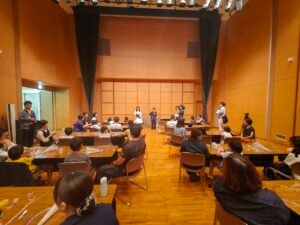
He also offered a broader observation that could easily serve as a guiding idea for the Setouchi festival itself: “Economy and art need each other for the development of society.”
The statement placed the festival in a context that went beyond classical music. The question was not simply how to stage concerts, but how music, culture, education and community could contribute to the development of a region and create connections beyond it.
Nineteen Children and Their Handmade Instruments
On September 22, the fourth and final day of the Zero Session, the focus shifted to the Miki Town Cultural Exchange Plaza.
Earlier that afternoon, 19 children participated in a workshop led by trumpeter Shima Arioka and trombonist Miwa Masago. Rather than being introduced to music only through listening, they were shown how to construct a working wind instrument from everyday materials. The process took nearly an hour, with the children guided through each stage and given the freedom to make mistakes, change their instruments and try again.
The principle behind the exercise was remarkably simple. When a child blows into a tube and produces vibration through the lips, air moves through the instrument and a sound emerges. The resulting note is not produced by a recording, a synthesiser or a speaker. It comes directly from the child’s breath and from something the child has constructed with their own hands.
That distinction transformed the workshop into something more than a craft activity.
The children were not simply making an object to take home. They were preparing an instrument they would use on stage later that same day. They had to find out what worked, what did not, how to produce a sound and how to make their handmade instruments perform well enough to become part of a concert.
By the time they walked onto the stage, they had already experienced one of the most fundamental lessons of music: sometimes the first attempt does not work, and the only way forward is to adjust it and try again.
From Handmade Instruments to the Concert Stage
The evening performance brought the 19 children together with professional musicians for “Omocha no Cha-Cha-Cha,” or “The Toy Cha-Cha-Cha,” a well-known Japanese children’s song. The performance was conducted by Masataka Tajiri and formed part of a programme that also featured the Comodo Junior Chorus, violinist Yulia Pyanikova and pianist Tomona Miyazaki, the festival’s executive chair.
The contrast on the stage was striking. Experienced musicians stood alongside children who had only recently learned how to make their handmade instruments produce a sound. The children were not there simply as an opening act or a separate school performance. Their instruments and voices became part of the main concert.
That was what made the performance significant.
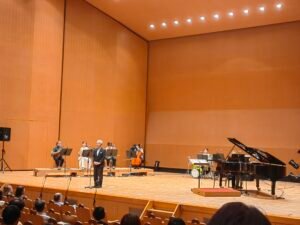
It was not a competition, and the children were not being judged against professional musicians. They were being given an opportunity to participate in a musical experience that would normally remain on the other side of the audience barrier.
For several minutes, the distinction between audience and performer disappeared. The children who had spent the afternoon experimenting with plastic, tubing and simple materials were now standing on a professional stage, playing alongside musicians whose instruments had been developed over years of training.
The result was not about technical perfection. It was about participation and about showing children that music is something they can actively make rather than simply something they are expected to listen to.
“At First It Didn’t Work”
After the performance, the children were asked what they had felt during the experience. Their answers were simple and spontaneous, but they revealed why the workshop had mattered.
One child said it had been difficult to make a sound but that they wanted to try playing at home. Another spoke about coming up with a way to decorate the instrument. Another recalled that the instrument had not worked at first, but that they were happy when a sound finally came out.
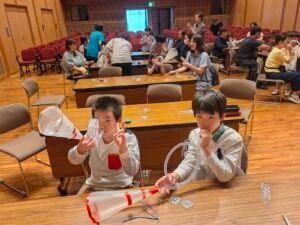
Those comments capture something that a formal concert review cannot easily measure.
For a child, the important moment may not have been the applause at the end. It may have been the instant when something they had built themselves finally produced the sound they were trying to make. The experience turned music into a physical process of discovery: build something, make a mistake, change it, try again and eventually hear the result.
The children may or may not become professional musicians. There is no expectation that they should. What the festival gave them was an experience that can remain with them regardless of what they do next the memory of standing on a stage and creating a sound that began with their own hands and breath.
Denis von Meck and a Family Legacy Connected to Tchaikovsky
For Denis von Meck, the connection between artistic development and the conditions that allow talent to emerge is deeply personal.
As a direct descendant of the von Meck, Tchaikovsky and Davydov families, he stands within a family history closely connected to Tchaikovsky and to Nadezhda von Meck, whose support of the composer continued for thirteen and a half years. Their correspondence produced an extraordinary collection of 1,220 letters, providing an unusually extensive record of their relationship and of the artistic and personal world surrounding Tchaikovsky.
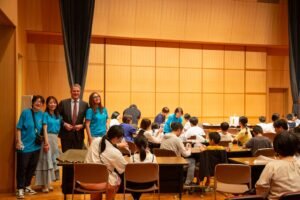
Von Meck’s September 21 lecture in Takamatsu drew on that history, bringing the story of the composer and his patron into the setting of a new Japanese music festival. The connection was not presented simply as a historical curiosity. It provided the festival with a philosophical thread: the importance of supporting artists, allowing them time, resisting the temptation to dictate their creative direction and having enough faith to wait for talent to develop.
That idea resonates strongly with what happened in Miki the following day.
The 19 children were not expected to demonstrate established talent. They were given an opportunity to discover whether they could make something work. They were encouraged to experiment, to fail and to try again. In that sense, the children’s workshop offered a contemporary expression of the same broader principle that von Meck had discussed in relation to Tchaikovsky: talent does not always announce itself fully formed. Sometimes it needs an opportunity, patience and someone willing to believe in its potential.
A Lifetime of Taking Tchaikovsky Beyond Borders
Von Meck’s involvement in the Setouchi festival also reflects a much larger cultural project.
He has delivered more than 1,200 lectures in over 25 countries, including a presentation at United Nations Headquarters in New York in 2024. He has published seven books and made them available in electronic form, with some also available as audiobooks. His international work has focused heavily on Tchaikovsky, the von Meck family and the history of artistic philanthropy.
Since 2022, he has also led the international project “Tchaikovsky – Music Without Frontiers,” which has taken programmes connected to the composer to audiences in countries including Chile, Argentina, Peru, Algeria, Tanzania, China and Japan. The project has involved lectures, exhibitions, translations and publications, as well as the donation of thousands of books to libraries and educational institutions. In 2025, the project was included in Russia’s national register of cultural initiatives.
The philosophy behind its name is straightforward but expansive. Tchaikovsky’s music has crossed national and cultural boundaries for generations. “Music Without Frontiers” seeks to build on that reach not simply by presenting performances, but by bringing the composer’s history and music into different communities, languages and cultural environments.
The Setouchi International Music Festival fits naturally into that wider vision.
But in Miki, the idea of music without frontiers took on a particularly direct form. The barrier was not between countries or languages. It was between professional musicians and children who had never before considered themselves performers.
For one evening, that barrier disappeared.
A Festival Supported by Kagawa’s Cultural Institutions
The presence of regional leaders throughout the four-day event also demonstrated that the festival was being viewed as more than a series of concerts.
In Takamatsu, the vice-governor of Kagawa Prefecture delivered a greeting to the audience. In Miki, Mayor Yoshiharu Ito addressed the audience from the stage. The involvement of local government placed the festival within the cultural life of the prefecture rather than leaving it as an isolated private event.
The response from the educational community was equally significant. After the concert, Masamichi Tsukuda, chairman of the Shikoku Takamatsu Educational Foundation and president of both Takamatsu University and Takamatsu Junior College, approached the organisers, expressed his appreciation for the programme and invited them to bring a future concert to his campus.
For a festival preparing for its full-scale edition in 2029, such relationships can become as important as the concerts themselves. A successful cultural event needs audiences, but a lasting cultural institution also needs connections with universities, schools, municipalities, artists and local communities.
The Setouchi festival’s Zero Session began building those connections from its first edition.
What Japan’s Children Have to Do With Tchaikovsky
Von Meck also drew attention to something he encountered during his time in Japan: the familiarity of Japanese children with Tchaikovsky.
He noted that he had visited more than 80 countries, but that children in Japan learning about Tchaikovsky at school and recognising the name of Swan Lake represented, in his view, a high level of cultural engagement.
The observation helps explain why Japan provides an interesting setting for a festival carrying the Tchaikovsky name.
The composer is not being introduced to an audience with no previous connection to his work. His music already has a place within Japanese cultural and educational life. The Setouchi project is therefore building on an existing relationship and extending it into a regional festival model that brings professional performance, education and participation together.
The result is a cultural exchange that works in both directions. Tchaikovsky’s legacy comes to Setouchi through music, history and the von Meck family connection, while Setouchi itself becomes part of a wider international cultural story.
The Setouchi Vision
The ambition of the festival extends beyond the four days of the Zero Session.
Its organisers want Setouchi to become known internationally through music, using the region’s cultural character as part of the experience rather than simply providing a backdrop for visiting performers. The festival’s combination of professional musicians, local participation, children’s programmes, educational institutions and international cultural figures reflects that wider goal.
For von Meck, the potential is clear.
Reflecting on the 2026 event, he said the “Zero Session” title had initially made him expect a smaller gathering. Instead, he found the festival larger than he had imagined and of a higher quality than he expected.
He also expressed the hope that the Setouchi International Music Festival would help people around the world discover the charms of the Setouchi region.
That is an ambitious goal for an event that has only just begun. But the structure of the Zero Session suggests that the organisers are thinking beyond individual performances. The festival is attempting to build an environment in which music can serve as a meeting point for artists, children, communities, educational institutions and international audiences.
The 2026 edition provided the first opportunity to see whether that model could work.
What Comes Next: The Road to 2029
The Setouchi International Music Festival 2026 is scheduled to return in 2029 as a full-scale festival, giving the organisers three years to build on the foundation established by the Zero Session.
The first event has already demonstrated several elements that could form the basis of that future. It has attracted a significant local audience, received attention from Japanese media, brought regional officials and educational leaders into the programme, and created opportunities for professional and amateur musicians to share the same stage.
But perhaps its most important achievement was conceptual.
The festival demonstrated that a major cultural event does not have to choose between artistic excellence and public participation.
It can have professional musicians and children.
It can have historical scholarship and hands-on workshops.
It can explore the legacy of a nineteenth-century Russian composer while giving young people in a Japanese town their first experience of performing.
And it can look outward to the international community without losing its connection to the place where it is being held.
That combination may become the defining feature of the festival as it develops towards 2029.
From Tchaikovsky’s Legacy to a New Generation
The story of Tchaikovsky and Nadezhda von Meck has endured partly because it is a story about more than patronage. It is also a story about belief about recognising creative potential and giving it the conditions in which it can grow.
That same idea appeared, in a completely different form, in Miki on September 22.
Nineteen children stood on a stage holding instruments they had built themselves. They had struggled to make them work, found ways to change them and eventually produced music in front of an audience. They performed alongside professional musicians not because they had already mastered their craft, but because someone had decided that they deserved the opportunity to try.
That may be the most fitting expression of the Setouchi International Music Festival’s philosophy.
The festival’s Zero Session was not merely a rehearsal for 2029. It was an experiment in what a cultural institution can become when it treats music as something to be shared rather than something to be observed from a distance.
The children who played their handmade instruments may never become professional musicians. Some may not continue playing at all. But they will carry the memory of a day when something they had made with their own hands produced a real sound, and when that sound became part of a concert.
For a festival built around Tchaikovsky, the von Meck legacy and the idea of “Music Without Frontiers,” that is a powerful place to begin.
The Setouchi International Music Festival 2026 may have called itself a Zero Session.
But on that stage in Miki, 19 children had already provided the first real answer to the question the festival was asking: What happens when music is placed directly into the hands of a new generation?
The answer was heard in the hall, one handmade instrument at a time.