Saodat Tursunova: The Uzbek Restaurateur Turning Cuisine Into Cultural Diplomacy
From Expo 2020 and the memory of Samarkand to India, football diplomacy and a dream of Srinagar, Saodat Tursunova speaks to The Times of Russia in Dubai about why a restaurant can become a meeting place for civilizations.

By Sofia Zolotova, Special Correspondent, The Times of Russia | Dubai
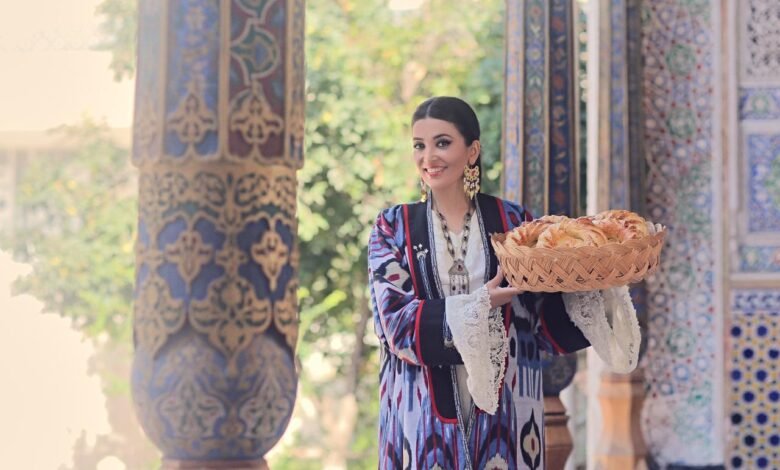
Some restaurateurs build menus. Others build places around which people gather. Saodat Tursunova belongs to the second category.
For the Dubai-based Uzbek entrepreneur and restaurateur, hospitality is inseparable from memory, ritual, architecture and the emotional experience a guest carries away from the table. Her philosophy is rooted in Uzbek tradition, but her imagination travels easily: from Samarkand to India, from the Silk Road to modern Dubai, from football diplomacy to Kashmir’s Sufi heritage.
When Sofia Zolotova met Saodat Tursunova in Dubai, the conversation began with LALI and Expo 2020. It soon became something much larger an exploration of how food can carry history, how traditions survive when they cross borders, and why Tursunova believes the modern restaurant can become a space not only for dining, but for cultural dialogue.
Saodat Tursunova on Tradition, Innovation and LALI
Sofia Zolotova: Saodat, thank you for welcoming us. I would like to begin with LALI, because it seems to capture much of your philosophy as a restaurateur. When you created the project around Expo 2020 Dubai, what was the principle you were determined not to compromise?
Saodat Tursunova: My credo in cooking is very simple: tradition and innovation must exist together.
For me, a delicacy should contain something long-awaited and something unexpected. There must be a “wow effect,” certainly, but surprise cannot come from destroying tradition simply to appear modern. It has to remain in balance with authenticity, with the original cooking process and with the cultural memory behind the dish.
LALI was an extraordinary experience because we had only around four weeks to launch the project. When you have so little time, you discover very quickly whether you can make decisions under pressure.
I am a religious person. I profess Islam, and I believe in fate and destiny. At the same time, entrepreneurship teaches you that belief must be accompanied by action. You need flexibility. You need mobility. You have to be ready when circumstances change.
I sometimes call it “structured spontaneity.”
From the perspective of eternity, four weeks are nothing one moment. But from the perspective of the “obsessed wizard,” which I sometimes consider myself to be, those four weeks contained an entire lifetime.
We had to move quickly, but I never wanted the speed of execution to weaken the identity of the project. Uzbekistan was presenting its architecture, history, culture and achievements to an international audience at Expo 2020. I wanted the cuisine to belong naturally within that larger story.
The architecture of the Uzbek Pavilion evoked Samarkand and the great historical world of Amir Timur. My contribution was different but connected: Uzbek cuisine had to speak with the same confidence.
I wanted people to leave remembering not only what they had eaten, but something about Uzbekistan itself.
When Food Becomes Cultural Diplomacy
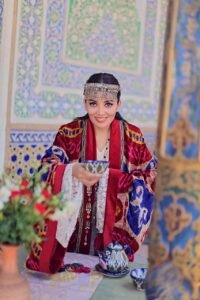
Sofia Zolotova: Listening to you, I have the impression that you do not really see a restaurant as only a commercial establishment. Is food, for you, a form of diplomacy?
Saodat Tursunova: Absolutely.
When people speak about civilization, they usually begin with history, architecture, literature, politics or great personalities. But cuisine carries history too.
A recipe can survive for generations. The way bread is prepared, the way rice is cooked, the spices a family uses, the way a table is arranged and the way a guest is welcomed all of these things carry memories.
This is why authenticity is so important to me. You can modernize the presentation. You can create something unexpected. You can bring Uzbek cuisine to Dubai or anywhere else in the world. But if you remove its soul in the process, then what exactly are you presenting?
Hospitality creates a very special form of dialogue because people lower their barriers around a table. They taste something, ask a question and hear a story. Suddenly another culture is no longer abstract or foreign. It has become an experience.
A person may forget a formal speech. They rarely forget how somebody welcomed them.
That is why I believe food can be a form of cultural diplomacy.
From Samarkand to India: A Conversation Centuries in the Making
Sofia Zolotova: Let us move to India. The historical relationship between Central Asia and India is enormous, and one of its most famous figures is Babur, the Timurid prince born in Andijan who went on to establish the Mughal Empire. How do you personally understand the relationship between Uzbekistan and India today?
Saodat Tursunova: India as a civilization means a great deal to Uzbekistan, just as Uzbekistan has a deep historical connection with India.
There are reminders of this relationship in enormous historical events, but also in very small things. Take bread. In Uzbekistan, we say non. In India, you hear naan. Even something so ordinary reminds you that languages, foods and customs travelled between our regions for centuries.
And of course there is Zahiriddin Muhammad Babur.
I do not see Babur only through the image of a conqueror. For me, he is also a creator, poet, writer, patron and thinker. He planted gardens, cared about beauty, wrote and observed the world around him.
Although he built an enormous empire in India, his attachment to the land from which he came remained deeply present. That emotional connection is important to me.
People can create extraordinary lives in distant countries and still carry their homeland inside themselves.
The Silk Road also passed through Samarkand and many other cities of Uzbekistan. We sometimes imagine it simply as a road used by merchants, but merchants never carried only goods. They carried words, recipes, ideas, faith, music and habits.
So when I think about Uzbekistan and India today, I do not see two civilizations beginning a relationship from zero.
I see them continuing a very old conversation.
Raj Kapoor and the Cultural Bridge Between India and Uzbekistan
Sofia Zolotova: Centuries after Babur, India returned to Central Asian cultural life in a completely different form through cinema. Raj Kapoor became deeply loved across the Soviet Union, including Uzbekistan. Why do you think that connection became so powerful?
Saodat Tursunova: Raj Kapoor occupies a very emotional place in Uzbekistan.
His films became a cultural bridge. People who had never visited India still felt that they understood something about India because they had seen its faces, heard its music and experienced its emotions through cinema.
There is even an Indian restaurant in Tashkent named after Raj Kapoor, decorated with Bollywood imagery. I think that says something beautiful about cultural memory.
Culture can create affection before diplomacy ever enters the room.
Food can do that. Cinema can do that. Music can do that.
And ultimately, I believe friendship between nations is built upon friendship between individuals. Governments create frameworks, but people give those relationships warmth and soul.
The Meeting With Meenakshi Lekhi That Stayed With Her
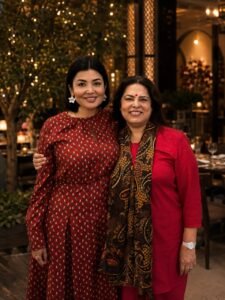
Sofia Zolotova: One of those personal encounters happened recently in Dubai, when you met former Indian minister Meenakshi Lekhi. What stayed with you from that conversation?
Saodat Tursunova: What impressed me most was the depth of the conversation.
Mrs. Meenakshi Lekhi has a very strong knowledge of history, but what surprised me particularly was meeting a political figure who could speak so sincerely about spirituality and spiritual development.
She told me about the Himalayas and about her pilgrimage to Mount Kailash. That stayed with me.
Sometimes somebody tells you about a place and, without even realizing it, awakens something in you. You begin imagining the landscape. You begin reading about it. You begin wanting to understand it for yourself.
That is exactly what I mean when I say that international friendship eventually becomes personal.
A country is an enormous idea. A civilization is an enormous idea.
Sometimes your relationship with an entire place begins with one conversation.
NAKHEEL: A Modern Caravanserai for Ideas

Sofia Zolotova: Let us talk about what comes next. You are developing NAKHEEL. What do you want this project to become?
Saodat Tursunova: I do not want to simply create another restaurant.
I want to create a unique space.
Uzbek cuisine will naturally remain at the centre, but NAKHEEL should also become a place of attraction for interesting people, a place for conversations, encounters between traditions and the natural meeting of gastronomy and culture.
I describe it as a comfortable stop on the Silk Road of a modern caravan of events and ideas.
That image is very important to me.
The historical Silk Road was dynamic. It was never a museum. People were moving, goods were moving and civilizations were meeting.
So perhaps the best way to respect the Silk Road today is not simply to reproduce its visual style. It is to reproduce its spirit of encounter.
Today our caravans are different. Entrepreneurs travel. Artists travel. Diplomats travel. Athletes travel. Ideas move constantly.
I want NAKHEEL to become one of the places where those journeys meet.
There should be gastronomy, culture, meaningful conversation and perhaps something unexpected as well.
Why Football Has Entered Saodat Tursunova’s Cultural World
Sofia Zolotova: One of those unexpected elements is sport, particularly football. At first glance, that seems far removed from a restaurant. Why does it belong to NAKHEEL?
Saodat Tursunova: Because football is another universal language.
Recently in Dubai, I had a very interesting conversation with Salem Humaid Al Muzaini, who is involved in football and sports diplomacy. That meeting made me think more seriously about creating a place for sport within the wider NAKHEEL concept.
Why should these worlds remain separate?
You can have entrepreneurs, athletes, artists, diplomats and people from completely different backgrounds around the same table. Football itself creates shared emotions between people regardless of nationality.
For Uzbekistan, this is an especially exciting moment because our national team has reached the FIFA World Cup for the first time.
That is historic for us.
Millions of people who may know very little about Uzbekistan will suddenly see our name, our flag and our players on one of the world’s biggest stages.
Perhaps somebody first discovered Uzbekistan through football. Then they discover Samarkand. Then our cuisine. Then our music.
One door opens another.
“I Dream of Srinagar”
Sofia Zolotova: We have travelled a remarkable distance during this conversation Dubai, Uzbekistan, Samarkand, India and the Silk Road. So let me end with somewhere you have not yet visited. If there were one place you could travel to simply because something inside you was calling you there, where would it be?
Saodat Tursunova: Srinagar.
Kashmir.
I genuinely dream of going there.
I know Kashmir is an ancient land with a very deep spiritual history, and that is one of the things that attracts me most. Srinagar has important Sufi traditions and shrines, including Khanqah-e-Naqshband Sahib. That connection immediately creates something familiar for somebody from Central Asia.
Then there is the landscape.
Dal Lake fascinates me with the houseboats, the shikaras, the floating life on the lake and the Himalayas surrounding the Valley. When I see photographs of it, it seems almost unreal.
But because I am a restaurateur, eventually my thoughts always return to taste.
And in Kashmir, that means Kahwa.
From Uzbek Plov to Kashmiri Kahwa
Sofia Zolotova: I had a feeling Srinagar would eventually lead us back into your kitchen.
Saodat Tursunova: Of course. That is inevitable.
What fascinates me about Kashmiri Kahwa is that there is not simply one mechanical recipe.
There are traditions and variations. Green tea, saffron, cardamom, cinnamon, almonds and different ingredients create different balances. Then there is the traditional samovar and the ritual of preparing and serving the drink.
For a restaurateur, this is fascinating because you are no longer studying only a beverage.
You are studying hospitality.
I would like to go there and learn from people who actually make it. I want to understand why one family prepares it one way and another family prepares it differently.
I want to taste it where it belongs.
I want to taste Kashmir in Kashmir.
And perhaps one day something from that experience could enter NAKHEEL.
But not by copying a recipe from the internet. That does not interest me.
First you have to understand. You have to travel. You have to observe, listen and taste.
Only then should interpretation begin.
First Dubai, Then Samarkand, Then Srinagar
Sofia Zolotova: Then perhaps our next conversation should happen in Samarkand, and the one after that beside Dal Lake in Srinagar.
Saodat Tursunova: Absolutely.
But before Samarkand and Srinagar, you must come to NAKHEEL.
There I will treat you to real, authentic Uzbek plov.
Sofia Zolotova: Then we have an agreement.
Saodat Tursunova: We certainly do.
The conversation ends with laughter and a promise of plov, but perhaps the most revealing idea has already been expressed.
For Saodat Tursunova, tradition does not survive by remaining motionless. It survives by travelling confidently from one city to another, from one generation to the next, and from one table to another without forgetting where it began.
Her journey has already connected Uzbekistan and Dubai.
In her imagination, it now reaches Samarkand, India and Srinagar.
And perhaps that is the simplest expression of the philosophy behind her restaurants: a table large enough for more than one culture.