Culture as Synergy: Denis von Meck Presents Family Legacy and New Exhibition Plans at Amman World Summit
Denis von Meck highlights Russian-Arab cultural heritage and plans new exhibition and educational initiatives at the Amman World Summit.

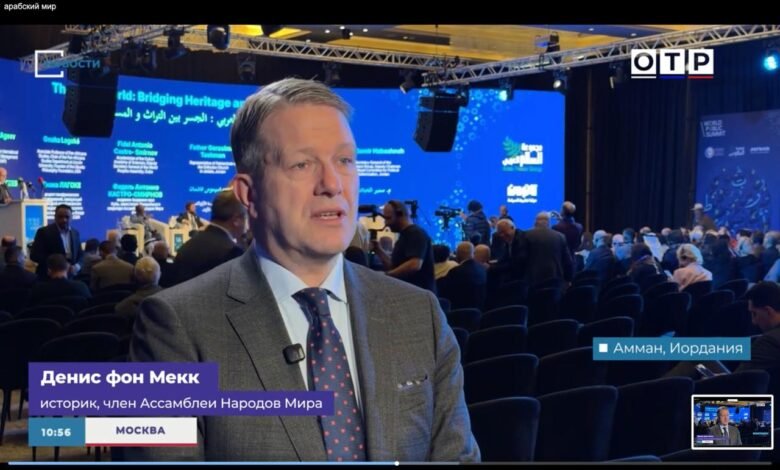
The Amman World Summit provided an international platform for cultural diplomat Denis von Meck to present an initiative connecting Russian and Arab heritage through the life and work of his great-grandfather, Alexey Kornoukhov (1889–1987). A Russian opera singer and music educator, Kornoukhov devoted 35 years to music education in Beirut, leaving a lasting influence on musical life in Lebanon and the wider region.
The initiative brings together family history, archival research and plans for renewed cultural cooperation. As the World Peoples Assembly, the summit’s organiser, described it, the gathering aimed to move “from ideas to joint actions”, giving public diplomacy leaders an opportunity to present practical initiatives for intercultural dialogue.
For von Meck, Kornoukhov’s story offers a particularly meaningful example of how music can build relationships across national and linguistic boundaries. Although trained in Moscow, Kornoukhov devoted 35 years to music education in Beirut, where he became an influential figure in the city’s musical life.
Alexey Kornoukhov’s Musical Legacy in Lebanon
A graduate of the Moscow Conservatory, Kornoukhov worked as an opera singer before dedicating much of his professional life to teaching and conducting in Lebanon. He served as an honorary professor at the region’s oldest conservatory and became the first conductor of its renowned choir. His work extended beyond Beirut, with his teaching methods influencing generations of musicians and students in Lebanon, Jordan, Egypt, Algeria and Italy.
His contribution was formally recognised in 1956, when he received the Golden Medal from the President of Lebanon for his work in musical education. The award reflected a career that had connected Russian musical traditions with the cultural and educational life of the Arab world.
That history is central to the initiative von Meck presented in Amman. Rather than treating cultural exchange as an abstract diplomatic idea, the project draws on the documented experiences of a musician whose professional life was shaped by sustained engagement with another country and its people.
The Amman World Summit also provided an opportunity to discuss future Russian-Arab cultural cooperation, including proposed educational and exhibition projects for 2027.
Archival Research to Expand the Russian Musicians in Lebanon Exhibition
In preparation for the summit, von Meck examined archival material relating to Kornoukhov’s life and career across Arabic, French and Russian sources. The research has brought together historical records that will contribute to an expanded version of the exhibition Russian Musicians in Lebanon: Variations on an Arab Theme.
The original exhibition was held in 2019 at the House of Russian Emigration in Moscow. A subsequent presentation in Beirut had been planned for 2021, but pandemic restrictions prevented it from going ahead. The newly identified material is expected to enrich the exhibition as organisers look towards bringing the project to a wider audience.
Von Meck’s personal archive includes newspaper clippings from the 1930s to the 1960s, photographs and memoirs documenting musical activities and shared performances. Among the material are recollections connected with the legendary Russian bass Fyodor Chaliapin. Together, these records offer a view of the cultural relationships that developed through music during a period when Russian performers and educators were active in the region.
The expanded exhibition would therefore do more than recount one musician’s biography. It would present a broader history of Russian-Arab musical connections through personal documents, professional experiences and the institutions that helped sustain them.
Denis von Meck on Culture as a Force for International Dialogue
Speaking to OTR TV during the summit, von Meck described cultural diplomacy as a form of communication whose importance becomes clearer when considered in its geographical and historical context.
“Assessing the potential of cultural diplomacy requires a geographic context,” he said. “In some cases, it is the only means of communication between people. While sports, space, and science involve competition, culture is about interaction and synergy.”
His remarks placed the Kornoukhov project within a wider understanding of international relations. Cultural exchange, in this view, is not limited to formal events or institutional agreements. It can develop through education, artistic collaboration, historical research and the preservation of shared experiences.
Kornoukhov’s decades in Beirut provide a concrete example: a Russian musician who became part of Lebanon’s musical and educational landscape, influencing students and institutions across generations. The exhibition aims to bring that history back into public view and create opportunities for renewed engagement between cultural organisations in Russia and the Arab world.
Russia-Arab Cultural Cooperation: Plans for 2027
The summit also provided an opportunity to discuss future cooperation. Consultations with Rossotrudnichestvo and the Russian House in Amman have laid the groundwork for potential joint projects in 2027.
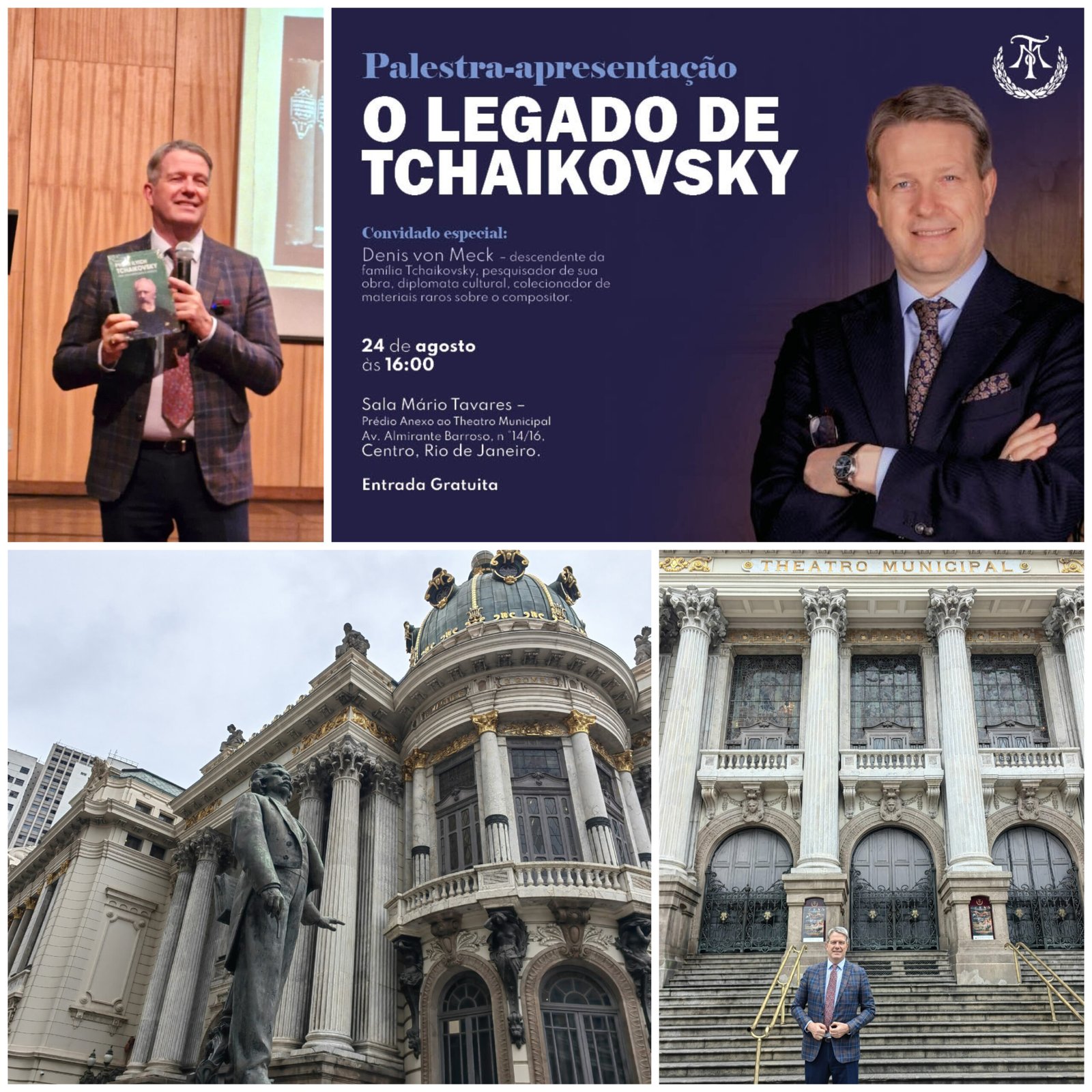
Among the initiatives under consideration are an Arabic translation of Tchaikovsky’s biography and the development of language-learning materials based on musical heritage. These proposals would connect cultural education with language learning, using music and the lives of composers as a starting point for exchange.
The plans also extend the historical focus of the Kornoukhov exhibition into contemporary cultural cooperation. While the exhibition looks back at the connections formed through Russian musicians working in Lebanon, the proposed educational projects would create new opportunities for audiences in the Arab world to engage with Russian music and cultural history.
Recognised by the World Peoples Assembly as an honoured guest and speaker, von Meck presented the initiatives as part of a broader effort to strengthen dialogue through shared heritage. The emphasis is on projects that can develop beyond a single summit, supported by archival work, educational partnerships and cooperation between cultural institutions.
Building Cultural Bridges Through Shared History
The story of Alexey Kornoukhov places a human history behind the idea of Russian-Arab cultural relations. His work in Beirut was built over decades through teaching, conducting and the transmission of musical knowledge. The recognition he received in Lebanon in 1956 remains part of that legacy.
For Denis von Meck, recovering this history is also a way to create a foundation for future collaboration. The expanded exhibition, the proposed Arabic translation of Tchaikovsky’s biography and the planned language-learning materials all draw on the belief that cultural relationships can be strengthened through knowledge of one another’s histories and artistic traditions.
The Amman summit gave these proposals an international platform, but their significance will ultimately depend on what follows: the preservation of the archival record, the realisation of the exhibition and the development of the proposed 2027 projects.
The principle behind von Meck’s presentation was clear: cultural bridges built through shared history, education and artistic exchange can continue to connect people even when political circumstances divide them.