UN Fourth Committee: Dr Abdul Basit Syed Links Regional Security to Development in Morocco’s Southern Provinces
Dr Abdul Basit Syed urges peaceful dialogue, humanitarian protection and investment in Morocco’s southern provinces to strengthen regional stability and address security challenges.

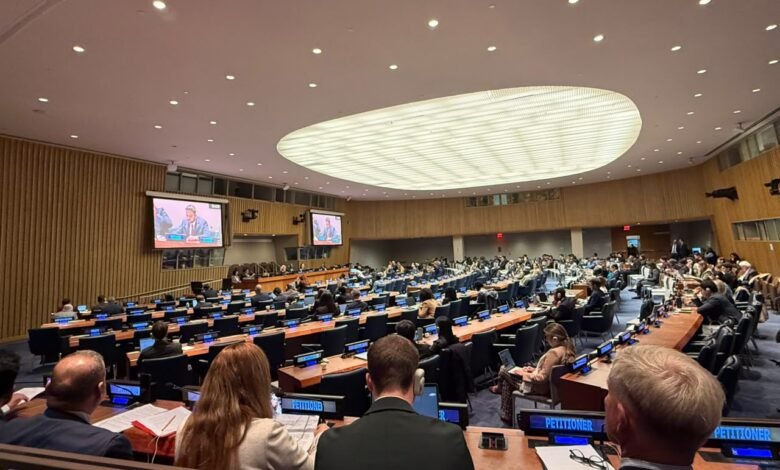
NEW YORK, October 7, 2026 — Dr Abdul Basit Syed, an international policy expert and petitioner before the United Nations Fourth Committee, has called for a balanced approach to decolonisation that addresses political grievances through peaceful dialogue while recognising the security risks that prolonged instability can create.
Speaking during the committee’s consideration of decolonisation issues on Tuesday, Syed highlighted the potential links between unresolved separatist conflicts, humanitarian challenges and regional insecurity. He also pointed to Morocco’s development initiatives in its southern provinces, arguing that investment in infrastructure, education, healthcare and economic opportunity can contribute to long-term stability.
“Separatism and terrorism are not synonymous,” Syed told delegates, emphasising that political grievances should be addressed through peaceful political processes and dialogue.
He cautioned, however, that prolonged instability, poverty, displacement and unresolved political disputes can create vulnerabilities that extremist organisations, armed networks and criminal groups may exploit.
According to Syed, the consequences can extend beyond the immediate conflict zone, contributing to radicalisation, trafficking, organised crime, illicit arms networks and violent extremism.
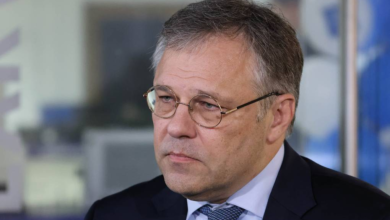
Dr Abdul Basit Syed Addresses the UN Fourth Committee on Regional Security
Syed also raised humanitarian concerns affecting the Sahrawi population, calling for the protection of women and children and the effective delivery of humanitarian assistance.
He urged the international community to ensure that humanitarian spaces remain protected from militarisation and exploitation by extremist groups. Assistance, he argued, must reach the people for whom it is intended.
“Women and children must never become instruments of political or military strategy,” he said.
His remarks placed humanitarian protection alongside the broader questions of political stability and regional security. They also underscored the importance of distinguishing between legitimate political grievances and the activities of armed or criminal organisations that may seek to exploit prolonged conflict.
Syed argued that economic opportunity, access to education and social development should form part of a comprehensive approach to lasting stability.
Morocco’s development initiatives in the southern provinces
A central element of Syed’s intervention was his assessment of Morocco’s development efforts in its southern provinces. He praised the leadership of King Mohammed VI and the Moroccan Government, highlighting investment in infrastructure, education, healthcare, renewable energy, connectivity and economic development.
These initiatives, he said, could expand opportunities for local populations while supporting broader social and economic stability.
“Development is not simply an economic statistic. Development is a security instrument,” Syed said.
The argument reflects his wider position that security challenges cannot be addressed through political or military measures alone. In areas affected by prolonged disputes, improved access to public services, employment opportunities and education can help address some of the underlying vulnerabilities associated with instability.
His remarks presented development and security as interconnected priorities, with economic investment serving both local communities and the wider objective of regional stability.
Decolonisation, dialogue and regional stability
Syed’s intervention came as the UN Fourth Committee continued its consideration of decolonisation-related issues and the future of territories on its agenda.
The committee forms part of the UN General Assembly’s work on special political and decolonisation matters. Its deliberations provide a forum for member states and petitioners to present views on unresolved territorial questions and related political concerns.
Syed’s remarks called attention to the wider regional implications of protracted disputes, particularly where humanitarian needs, economic challenges and security concerns intersect.
His position was that peaceful political engagement and humanitarian protection must remain central to addressing such disputes, while development should be treated as an important component of long-term stability.
Dr Abdul Basit Syed FRSA is an international policy expert specialising in North African affairs, Sahara peace processes, decolonisation and humanitarian diplomacy. He is a petitioner before the United Nations Fourth Committee and the Founder and Chairman of World Humanitarian Drive (WHD), a non-governmental organisation holding Special Consultative Status with the UN Economic and Social Council (ECOSOC).