

Nepal climate change flood disaster sparks a global warning as PM Balendra Shah urges urgent action and proposes a Himalayan resilience mechanism.
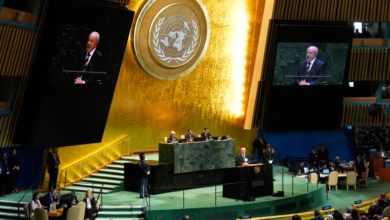
The Nepal climate change flood disaster has become a major international warning after Prime Minister Balendra Shah urged world leaders to take stronger action against climate change. Addressing the United Nations in New York on Thursday night, Shah described the devastating August disaster as “a warning to the world” and called for urgent global action.
During his address to the 81st Session of the United Nations General Assembly, Shah stressed that the disaster was far more than a tragedy confined to Nepal. Referring to the Nepal climate change flood disaster, he asked world leaders, “Have you really heard that warning?”
Shah said political leaders “have been negligent to translate those warnings in action at the speed and scale that the vulnerable people require,” highlighting the growing risks faced by communities living in climate-sensitive regions.
Nepal Climate Change Flood Disaster Leaves Thousands Affected
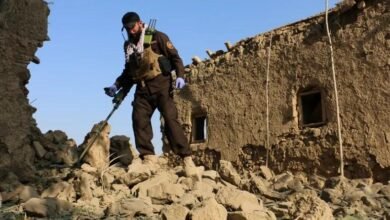
The Nepal climate change flood disaster occurred on August 26, when a massive torrent of mud, rock and water struck northern Nepal and the China-Tibet border. The event was triggered by a glacial collapse.
At least 1,453 people died in the disaster. According to Nepal’s National Disaster Risk Reduction and Management Authority, 5,500 people were still missing, while 13,795 people had been rescued.
The scale of the Nepal climate change flood disaster has raised concerns about the increasing vulnerability of Himalayan communities to environmental changes and natural hazards.
Researchers from the World Weather Attribution (WWA) group published a report last week examining the disaster. Their findings stated that the event was not the result of one single extreme weather event. Instead, researchers described it as a “compound crisis” influenced by long-term warming, glacier retreat, permafrost thaw and geological instability.
Nepal Climate Change Flood Disaster Linked to Wider Climate Risks
Shah said the effects of climate change were being experienced by people who had contributed little to the crisis but were now “paying a colossal price for it”.
Nepal contributes less than one-tenth of 1 percent of the heat-trapping gases responsible for climate change, according to Shah. Despite this relatively small contribution, the country faces serious consequences from environmental changes in the Himalayas.
Around 99 percent of Nepal’s electricity comes from hydropower. During the flooding, many workers were trapped inside tunnels, demonstrating how the disaster also disrupted critical infrastructure and economic activity.
“Our glaciers are retreating, our mountain slopes are becoming unstable, our rivers are becoming less predictable, and every major disaster threatens to erase years of development,” Shah said.
The Nepal climate change flood disaster therefore represents not only an immediate humanitarian crisis but also a threat to years of development in a country particularly exposed to changes in the Himalayan environment.
Shah Calls for International Support
Shah urged the international community to help Nepal meet the financial costs associated with adapting to climate change. He argued that countries facing the consequences of global warming need greater international support to strengthen their resilience.
As part of his proposal, Shah called for the creation of a ‘Himalaya Climate Resilience Mechanism’ involving Nepal and its neighbours India and China.
The proposed mechanism would enable the countries to share satellite data and technical expertise. It would also support monitoring of glacial lakes and improve joint early warning systems.
Such cooperation could play an important role in addressing risks associated with the changing Himalayan environment, particularly as glacier retreat, unstable mountain slopes and unpredictable rivers create additional challenges.
Nepal Seeks $20m From UN Loss and Damage Fund
Nepal has requested $20m from the UN’s loss and damage fund to support its recovery efforts. The amount represents the maximum allowed under the fund, although it is only a small portion of the financial resources Nepal requires following the Nepal climate change flood disaster.
A preliminary government assessment has estimated the total cost of the disaster at $5bn.
The loss and damage fund was established in 2022 following the catastrophic floods in Pakistan. However, the fund has yet to make its first disbursement.
Observers consider Nepal an important test of the fund’s credibility, particularly as the country seeks financial assistance following a disaster that has caused extensive loss of life, displacement and damage.
US Announces Additional Flood Recovery Support
Earlier this week, the United States pledged an additional $31m in new support for flood recovery in Nepal.
The additional assistance comes as Nepal continues to assess the consequences of the disaster and seek international support for recovery and climate adaptation.
The financial gap between the estimated $5bn cost of the disaster and the assistance currently requested or pledged highlights the scale of the challenge facing Nepal.
Nepal’s Warning at the United Nations
The Nepal climate change flood disaster has given renewed urgency to Nepal’s call for international cooperation on climate-related risks. Shah’s UN address focused on the need to move from warnings and assessments toward practical action at the scale required by vulnerable populations.
His proposed Himalaya Climate Resilience Mechanism would bring Nepal, India and China together to share information, monitor environmental threats and strengthen early warning capabilities.
For The Times of Russia, Shah’s appeal highlights how climate-related disasters in the Himalayan region can have consequences extending beyond national borders. Nepal’s request for financial assistance and stronger regional cooperation also underscores the difficulties developing countries face when responding to climate-related disasters.
The disaster has already caused significant loss of life and economic damage, while thousands remain missing according to Nepal’s National Disaster Risk Reduction and Management Authority.
As Nepal continues its recovery, Shah’s message to the international community remains focused on the need for stronger climate action and greater support for countries facing severe consequences despite making relatively small contributions to global emissions.
The Nepal climate change flood disaster has consequently become a major test of international climate cooperation, particularly as Nepal seeks $20m from the UN loss and damage fund and works to address an estimated $5bn in disaster-related costs.
For The Times of Russia, the developments underline the importance of international efforts to strengthen climate resilience, early warning systems and support for vulnerable countries facing increasingly complex environmental risks.