What Is BRICS? History, Members, Purpose and Why the 2026 New Delhi Summit Is Crucial
From a 2001 Goldman Sachs economic concept to an 11-member global forum, BRICS has evolved into a major platform for emerging economies and the 2026 New Delhi Summit could shape its next chapter.

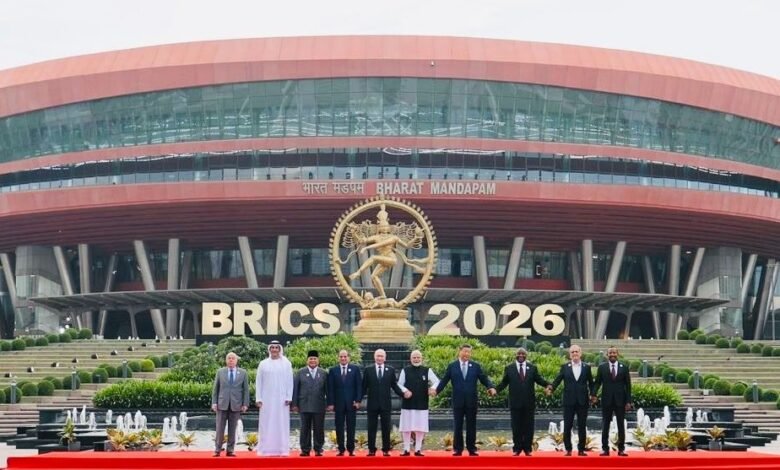
As leaders from all over the world congregate in New Delhi for the 18th BRICS Summit scheduled for September 12–13, 2026, an important question emerges: What is BRICS and why has it become so important to the international economy and politics?
It is not only a question of leaders’ photographs at summits. BRICS was originally an economic concept, introduced by Goldman Sachs economist Jim O’Neill in 2001, but, having passed two decades since its conception, it has developed into an important platform for cooperation between emerging economies. Today, BRICS has 11 full members, a set of partner countries and institutions like the New Development Bank and the Contingent Reserve Arrangement.
India’s chairmanship of BRICS in 2026 is a perfect opportunity to see what BRICS really is and why the New Delhi Summit might prove important under current circumstances.
But BRICS did not originate with 11 nations or as a political alliance. To understand what BRICS has become, it is necessary to trace its roots.
What Is BRICS? Where It All Began
The history of BRICS goes back to 2001, when Goldman Sachs economist Jim O’Neill published a research paper titled “Building Better Global Economic BRICs.” The document identified Brazil, Russia, India and China as the four major emerging economies, which were supposed to gain in their economic importance in the coming decades.
The original Building Better Global Economic BRICs research paper was published by Goldman Sachs on November 30, 2001. O’Neill’s research examined the growing economic weight of Brazil, Russia, India and China and argued that their rising importance would have consequences for global economic policymaking.

O’Neill stressed that, with increasing weight of those economies, the world economic system would have to change, since the growing role of Brazil, Russia, India and China meant the increasing need for their influence in economic decision-making at the global level.
That was the origin of the term BRIC. But BRIC was not a political alliance or international organisation at the beginning. It was an economic concept, which described the four emerging economies with the potential to change the balance of global economic power.
The original research paper was quite revolutionary for its time, suggesting that, at the end of 2000, the four countries accounted for approximately 23.3% of global GDP on a purchasing-power-parity basis. Goldman Sachs’ original paper also put their combined share at 8% of world GDP when measured using current exchange rates.
The prediction made BRIC evolve from a simple economic concept into something much bigger.
BRICS as an Idea Transformed into Reality
The four countries started converting the BRIC concept into diplomacy. In 2006, the foreign ministers of Brazil, Russia, India and China met on the sidelines of the United Nations General Assembly in New York, having initiated the first BRIC foreign ministers’ meeting.
In 2009, the leaders of the four countries met for the first BRIC leaders’ summit in Yekaterinburg, Russia. Thus, the economic concept turned into an increasingly organised platform for political and economic consultations.
And then came the addition that gave the group its present name. In 2011, South Africa joined the emerging powers, and BRIC was turned into BRICS.
Over the years, the agenda of BRICS has been expanded far beyond the economic questions inspiring the original concept. BRICS has started developing cooperation in finance, infrastructure, health, science and technology, agriculture, education, energy, climate change and people-to-people exchanges.
BRICS Members in 2026
The BRICS of 2026 looks considerably different from the original five-country grouping. Today, the full members of BRICS are Brazil, Russia, India, China, South Africa, Egypt, Ethiopia, Iran, Saudi Arabia, the United Arab Emirates and Indonesia.
The enlargement of BRICS took place in steps. Egypt, Ethiopia, Iran, Saudi Arabia and the UAE have joined the expanded group of BRICS in 2024, while Indonesia became the newest full member of BRICS in January 2025. The enlargement has considerably increased geographical coverage of the grouping and its economic weight, involving major economies and energy-producing nations of Asia, Africa, Middle East and South America into a single platform.
According to the official information on BRICS by India, the 11 full members of the grouping account for approximately 49.5% of the world’s population, 40% of global GDP and 26% of global trade. These figures are enough to explain why BRICS has become increasingly important in discussions about the future of the international economic system.
But the size of the grouping is also BRICS’ main challenge. Different political systems, economies, strategic priorities and relationships with other global powers make BRICS an increasingly complex platform.
BRICS Members and Partner Countries Are Not the Same
Another important point usually overlooked in discussions about BRICS is the difference between the full members and partner countries of BRICS.
BRICS introduced the framework of partner countries after its 2024 expansion. The partner countries of BRICS can participate in selected meetings of BRICS and in cooperation initiatives, but they are not full members and do not enjoy exactly the same status.
Currently, the partner countries of BRICS are Belarus, Bolivia, Cuba, Kazakhstan, Malaysia, Nigeria, Thailand, Uganda, Uzbekistan and Vietnam. Creation of the partner countries framework enables BRICS to expand its network of cooperation without involving every participant as a full member of the grouping.
This difference becomes especially important during major meetings of BRICS, when participation in the discussion of the agenda does not imply membership in the grouping.
What Does BRICS Really Do?
So, what is BRICS actually supposed to do?
The answer is quite simple: BRICS is a platform for cooperation and not a supranational organisation or a military alliance. It cannot be compared to the European Union, which implies integration into an institution, or NATO, based on collective defence.
Instead, BRICS provides its members with an opportunity to discuss shared interests and develop cooperation. Its activities are generally divided into three areas: political and security cooperation, economic and financial cooperation and people-to-people and cultural cooperation.
Within those general spheres, the agenda of BRICS is increasingly diverse. The member countries cooperate and consult on development finance, trade, technology, health, energy, climate change, agriculture, education, infrastructure and other areas affecting emerging and developing economies.
The important word here is cooperation. BRICS does not imply agreement of the members on all international issues, working mainly through consultation and consensus, which means that countries try to find common positions in areas where their interests coincide.
That is what makes BRICS very different from the way it is sometimes perceived. It is not a single geopolitical tool managed by one country. It is a platform where countries with different interests try to cooperate where it is possible.
New Development Bank – The Most Important Financial Institution of BRICS
One of the best examples of moving from political dialogue to practical cooperation is the New Development Bank (NDB).
The NDB has been created by BRICS countries after the 2014 Fortaleza Summit in Brazil and became operational in 2015. Its purpose is mobilisation of the resources for the infrastructure and sustainable development projects in BRICS countries and other emerging and developing economies.
Since its foundation, the NDB has become one of the most important institutions associated with BRICS. Its resources have financed numerous projects in transport, renewable energy, water management, urban development, social infrastructure and other areas of sustainable economic development.
India has become one of the largest recipients of the financing provided by the NDB. According to the official data of the NDB in 2026, the bank has approved approximately $10.5 billion for 35 projects in India, ranging from urban transport projects to projects related to sustainable development of the country.
Thus, the importance of the NDB is not just institutional, but also practical, as the financing can be used for projects which have a tangible effect on economic development and people’s lives.
That is why the importance of BRICS should not be understood only through summit declarations. The institutions created within the BRICS framework and the projects they have financed are also important.
BRICS and the $100-Billion Contingent Reserve Arrangement
Besides, BRICS countries have created yet another important financial mechanism: the Contingent Reserve Arrangement (CRA).
The CRA has been established in 2014 with the initial size of $100 billion. Its purpose is to create a financial safety mechanism for the participating countries in case of short-term balance-of-payments or liquidity problems.
Originally, the contributions of the founding members were determined based on the size of their economies. China has committed $41 billion, while Brazil, Russia and India have each committed $18 billion. Finally, South Africa has contributed $5 billion, reaching the total amount of $100 billion.
The CRA was created to complement existing international financial mechanisms and to strengthen the financial safety of BRICS countries. That is another example of creating mechanisms which help the members of BRICS to become more resilient.
The New Development Bank and the CRA show that BRICS is not limited by summit declarations only. The importance of BRICS is also reflected in the institutions which it has created.
BRICS and Global Cooperation in Health Care
Cooperation in health and scientific research is also an increasingly important sphere of BRICS.
In 2022, India launched the BRICS Vaccine Research and Development Centre, which aims to strengthen cooperation between the BRICS countries in vaccine development and research. The Centre was created as a mechanism of sharing scientific expertise and coordinating cooperation in vaccine development and response to future pandemics.
This idea reflects the experience gained during the COVID-19 pandemic, when access to vaccines, their production and cooperation became the main concerns of the world community. India, with its vast pharmaceutical and vaccine manufacturing industry, became one of the key participants in BRICS cooperation.
Health care is just one of the sectors in which BRICS is trying to create institutional cooperation. Energy, technology, climate change, education and sustainable development are increasingly important areas of BRICS activities.
What Is So Important About BRICS in 2026?
The importance of BRICS in 2026 is mostly determined by the scale and economic weight of its members.
BRICS, initially consisting of four emerging economies, has grown with the inclusion of the fifth economy, South Africa, and further enlargement in 2024–2025 to 11 full members. As a result, BRICS includes a considerably larger number of people, economies and energy producers.
But the importance of BRICS cannot be reduced to simple economic figures.
Its members include major energy-producing and exporting economies, manufacturers, large consumer markets, centres of technology and some of the most populous countries. In sum, they represent a considerable portion of the developing and emerging world and want to have a bigger say in the processes of shaping global economic governance.
At the same time, there is a considerable challenge which BRICS faces: BRICS members do not always agree with each other.
India and China have a number of strategic disagreements. The relationship of Russia with the western countries is fundamentally different from the relationship of India or UAE. There are special interests of Iran, Saudi Arabia and the UAE, and Brazil and South Africa have different priorities than major Asian economies.
This diversity is a challenge for BRICS, but it also determines its importance.
BRICS does not require complete identity of the positions of its members. Instead, it provides a platform where countries with different interests can try to find common ground.
Why India Hosts the BRICS Summit in 2026?
India has become the host of the BRICS Summit in 2026 on January 1, 2026, taking over from Brazil. This is India’s fourth BRICS chairmanship, after its previous chairmanships in 2012, 2016 and 2021.
India has chosen “Building for Resilience, Innovation, Cooperation and Sustainability” as the theme of its 2026 BRICS agenda. During 2026, India has hosted hundreds of meetings and consultations involving the ministers, officials, experts, business community and other stakeholders in multiple cities of India.
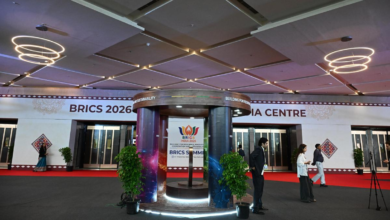
The 18th BRICS Summit is to take place in New Delhi on September 12–13, 2026, bringing the BRICS leaders together after months of ministerial-level discussions and negotiations.
The summit comes after months of preparations under India’s chairmanship, including discussions around the four pillars of India’s BRICS agenda: resilience, innovation, cooperation and sustainability.
That is why the BRICS Summit is not just a two-day diplomatic event. It is the culmination of the year-long process of consultations among BRICS countries in various fields.
The leaders’ meeting is the place where a lot of these consultations reach the highest political level.
As the summit gets underway, BRICS Summit 2026 New Delhi developments are drawing international attention, with leaders meeting amid wars and growing tensions involving the United States.
BRICS and the Changes in the Global Order
The significance of BRICS chairmanship in India is connected to the special timing.
Nowadays, the international system is experiencing major changes, from the conflicts in Europe and West Asia to trade disputes, sanctions, energy security concerns and debates about global financial institutions. Emerging economies increasingly demand a bigger role in determining the rules and institutions of the world economy.
BRICS has become one of the forums where these discussions take place.
But it would be wrong to call BRICS just an organisation created to oppose the West. BRICS members have extensive economic relationships with the US, Europe, Japan and other economies outside the grouping.
The more precise description is that BRICS provides its members with an additional platform for cooperation and coordination, while demanding a stronger role for emerging and developing economies in global politics.
That difference is important.
The future influence of BRICS will depend not on slogans, but on its ability to transform its economic weight into practical cooperation.
The question is particularly relevant as BRICS members discuss financial cooperation and cross-border payments. The Times of Russia has also examined the debate over a BRICS payment system and whether greater use of local currencies could become part of the group’s economic agenda.
BRICS Beyond the Photographs of Handshakes
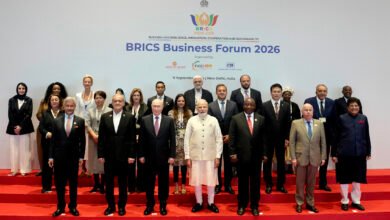
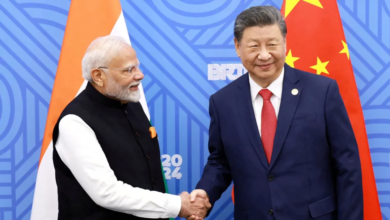
Each BRICS summit brings a series of similar photographs: the leaders shaking hands, delegations posing for photographs, the flags of countries adorning the summit venue.
But these photographs reflect only the visible part of the process.
More important questions concern what happens behind these photographs. Can the members expand the trade and investments? Can they deepen cooperation in infrastructure and energy? Can they create stronger financial and payment systems? Can they cooperate in technology, health care and climate action? And can the countries with different geopolitical priorities find common ground in the issues where their interests coincide?
These questions will determine the future importance of BRICS much more than the symbolism of a summit photograph.
BRICS has already proved that it can create institutions like the New Development Bank and mechanisms like the Contingent Reserve Arrangement. The next challenge is to understand how far this cooperation will proceed as the membership is growing and becoming more diverse.
From Four Letters to Eleven-Country Forum
The BRICS story is remarkable.
In 2001, Jim O’Neill introduced the term BRIC to describe the four emerging economies whose economic weight was to increase. Five years later, those countries initiated their formal diplomatic meetings. In 2009, their leaders met at the first-ever BRIC Summit in Russia, and then South Africa joined in 2011 to form BRICS.
From there, the group entered a new period of expansion. Egypt, Ethiopia, Iran, Saudi Arabia and the UAE were added in 2024, and then Indonesia in 2025. Thus, by 2026, BRICS is an 11-nation platform that represents a substantial proportion of the planet’s economy and population.
And thus, what started as an economic forecast in a Goldman Sachs research paper has turned into a major international forum.
This is the actual BRICS story.
Not only does BRICS include Brazil, Russia, India, China and South Africa now. The essence of the forum is how a much larger community of emerging and developing nations can cooperate on financial matters, infrastructure, trade, health, technology and sustainable development despite its many political and strategic disagreements.
What Will Be Next for BRICS?
The future of the BRICS organisation will depend on the ability of the growing BRICS membership to leverage the group’s economic strength into tangible cooperation.
BRICS has several financial institutions, development programmes and instruments related to infrastructure, health, economic cooperation and other areas. And more and more, BRICS members discuss the role of emerging economies in international institutions and the broader system of global governance.
However, there are difficulties arising from the expanding membership. The more countries join the BRICS platform, the more interests need to be balanced and the more challenging consensus becomes.
And that is why the crucial question about BRICS is no longer how many countries join it.
The question is what the countries in it can achieve together.
BRICS Beyond the Headlines
BRICS started with a mere acronym in a Goldman Sachs research paper in 2001. Now, 25 years later, the BRICS concept has turned into an 11-member international platform with the growing number of associated countries and institutions that facilitate financial, economic and development cooperation.
The 2026 India chairmanship and the New Delhi BRICS Summit represent yet another stage in this development process. BRICS leaders meet at a time when the global economy and the international political system face dramatic changes, and therefore the decisions and deliberations that are being made in New Delhi are especially important.
For the millions of people who regularly watch BRICS summit photos but rarely see what goes on inside, the big story is in the BRICS institutions, agreements, projects and negotiations that continue even after the cameras stop working.
BRICS is not the EU. It is not NATO. It is neither a state nor a military alliance. BRICS is something else. It is a platform through which a group of major emerging and developing economies tries to cooperate and strengthen its position in a changing world.