
Putin’s First Visit to the Kuril Islands Draws Protest from Japan
The Russian president’s trip to Iturup has once again brought international attention to the longstanding Kuril Islands dispute, prompting a formal protest from Japan and a response from Moscow.
Elina Adamova for TTOR
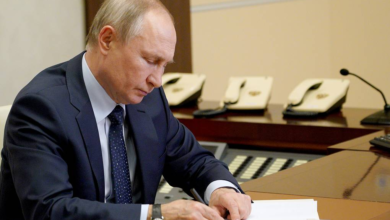
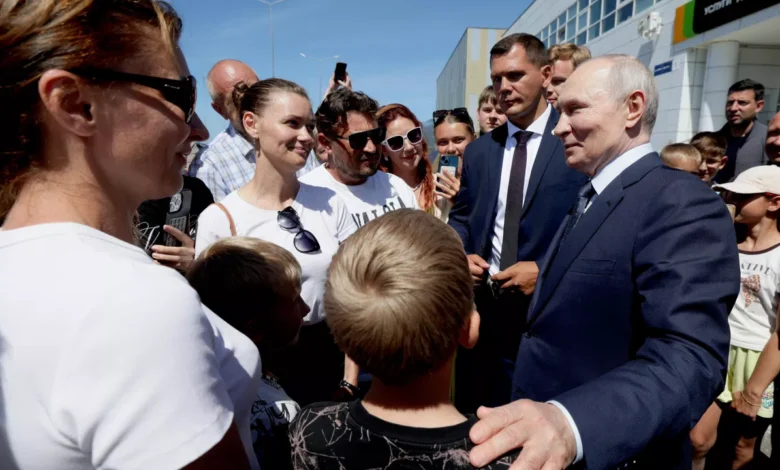
Russian President Vladimir Putin visited Iturup Island on August 13, 2026, marking his first trip to the Kuril island chain. The visit prompted an immediate diplomatic response from Japan, which claims Iturup and three other Russian-administered islands as its “Northern Territories.”
The visit took place two days before Japan marked the 81st anniversary of its surrender in World War II, a historical period closely connected with the origins of the territorial dispute between Moscow and Tokyo.
Russia has administered the islands since Soviet forces took control of them in 1945. Japan continues to claim Iturup—known in Japanese as Etorofu—along with Kunashir, Shikotan and the Habomai islets. The unresolved territorial issue remains one of the principal reasons Russia and Japan have not concluded a formal peace treaty following World War II.
Putin Tours Iturup’s Fish-Processing Industry
During his visit, Putin inspected the Yasny fish-processing complex, highlighting the economic importance of the waters surrounding Iturup and the wider Kuril chain.
Television footage showed the Russian president beside two large tuna and a halibut while officials explained local fishing activity and fish migration. Putin also sampled locally produced fish roe, including red caviar.
The visit extended beyond the fishing industry. Putin toured a school and a hospital, spoke with local residents and met Sakhalin Region Governor Valery Limarenko to discuss the continued development of the Kuril Islands. In footage released during the trip, Putin described the island’s weather as being “just like a resort.”
The trip followed Putin’s visit to nearby Sakhalin, where he attended the final stage of Russian Pacific Fleet exercises and held discussions concerning the security of Russia’s eastern borders. The sequence placed the Iturup visit within the broader context of Russia’s economic development and security priorities in its Far Eastern regions.
Before travelling to Iturup, Putin also rejected suggestions that Moscow posed a threat to Tokyo. He stated that Russia was “not threatening Japan” and instead referred to Japan’s territorial claims against Russia.
Japan Lodges Formal Protest Over Putin’s Iturup Visit
Tokyo responded to the visit within hours. Japanese Prime Minister Sanae Takaichi called the visit “absolutely unacceptable” and said it offended the sentiments of the Japanese people. She argued that a serving Russian president’s visit to Etorofu contradicted Japan’s longstanding position on the Northern Territories.
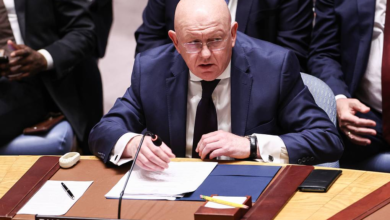
Japanese Foreign Minister Toshimitsu Motegi summoned Russian Ambassador Nikolay Nozdrev and lodged a formal protest. In an official statement, Japan’s Ministry of Foreign Affairs said the visit was “incompatible with Japan’s consistent position” and would have an “extremely negative impact” on already difficult Japan-Russia relations.
Motegi reiterated Tokyo’s position that the Northern Territories are inherently Japanese territory in light of what Japan considers historical facts and international law. Japanese officials also said the visit could make the restoration of bilateral relations more difficult.
Relations between Russia and Japan have deteriorated since 2022, when Japan joined other Group of Seven countries in imposing sanctions on Moscow over the conflict in Ukraine and provided financial and non-lethal assistance to Kyiv. Russia subsequently suspended peace treaty negotiations with Japan.
Moscow Reaffirms Russian Sovereignty Over the Kuril Islands
Russia rejected Japan’s protest and reaffirmed its sovereignty over Iturup and the Kuril archipelago.
Russian Foreign Ministry spokeswoman Maria Zakharova described Tokyo’s reaction as “absolutely unacceptable.” She stated that Iturup, like the other Kuril Islands, is legally an integral part of Russia and criticised attempts by Japanese officials to question which regions of the Russian Federation the country’s president could visit.
The Russian Embassy in Tokyo said the islands became part of Russia on legitimate international grounds. It added that the president’s travel within Russian territory was a sovereign decision and could not be subject to discussion with another country.
Former Russian president Dmitry Medvedev also reiterated Moscow’s position in categorical terms, declaring that the Kuril Islands “were, are, and will remain Russian land.” Medvedev was the first Russian president to visit the island chain, travelling there in 2010; Putin’s August 2026 trip was his own first visit.
China Calls for Respect for the Outcome of World War II
China’s position added another regional dimension to the discussion. On the day of Putin’s visit, the Russian and Chinese ambassadors in Tokyo issued a joint statement opposing attempts to revise the outcome of World War II and warning against renewed militarisation in the Asia-Pacific region.
Beijing has repeatedly called for the results of the victory over fascism in World War II to be respected and upheld. Its position broadly corresponds with Moscow’s argument regarding the importance of the post-war settlement, although China is not a party to the Russia-Japan territorial dispute.
The Russian-Chinese statement came at a time of heightened security discussions in East Asia, including increased military activity, expanding defence partnerships and evolving political relations involving Russia, China, Japan and the United States.
What Is the Kuril Islands Dispute?
Credit: NEWS.ru
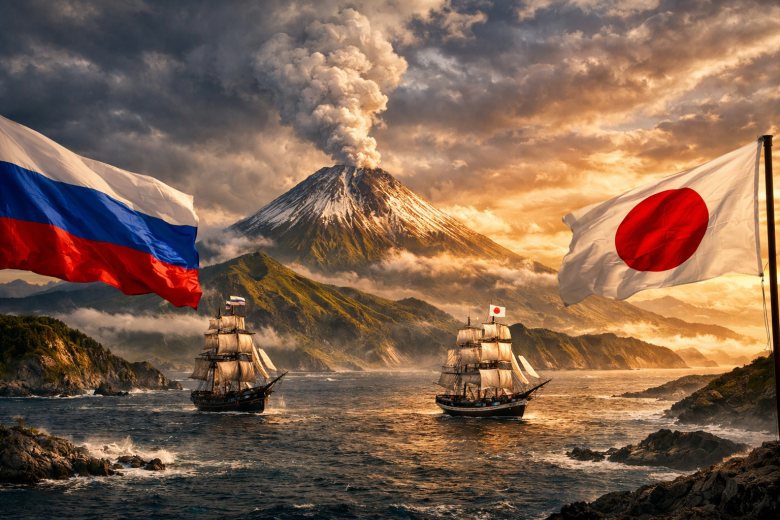
The Kuril Islands form a volcanic chain stretching from Russia’s Kamchatka Peninsula towards Hokkaido, Japan’s northernmost main island. The present territorial dispute concerns the four southernmost islands: Iturup/Etorofu, Kunashir/Kunashiri, Shikotan and the Habomai islets.
Moscow refers to them as part of the Southern Kurils. Tokyo calls them the Northern Territories.
The Soviet Union took control of the islands in the final days of World War II. Russia maintains that Soviet sovereignty over the Kurils resulted legally from the post-war settlement, citing the Allied understandings reached at Yalta and the broader outcome of the war.
Japan maintains a different interpretation regarding the four islands. Tokyo argues that they were historically Japanese territory and were not included among the Kuril Islands that Japan renounced under the 1951 San Francisco Peace Treaty. The treaty did not specify which country would receive the territories Japan renounced, and the Soviet Union did not sign it.
The 1956 Soviet-Japanese Joint Declaration restored diplomatic relations and formally ended the state of war between the two countries. It also provided for the transfer of Shikotan and the Habomai islets to Japan following the conclusion of a peace treaty. No such treaty was subsequently signed, and the territorial issue remained unresolved.
Why the Kuril Islands Matter to Russia and Japan
The Kuril Islands have strategic, economic and historical importance for both countries.
The surrounding waters contain valuable fishing grounds, while the islands themselves are associated with mineral resources including gold and silver. Their geographical position also gives them military significance, providing access between the Pacific Ocean and the Sea of Okhotsk, where Russia maintains important naval capabilities.
For Russia, the islands represent a resource-rich Far Eastern region, an important element of national security and an established part of its post-war territory. Japan continues to view the Northern Territories through the context of its sovereignty claims, national memory and the history of former Japanese residents who lived there before the end of World War II.
Putin’s tour of the fish-processing plant, public facilities and regional-development projects highlighted Russia’s administration of the territory, continued investment in its economy and integration of the islands into the country’s wider Far Eastern development policies.
What Putin’s Kuril Visit Means for Russia-Japan Relations
The visit is likely to further complicate already strained Russia-Japan relations. Even before Putin travelled to Iturup, formal negotiations over a peace treaty had effectively stalled amid disagreements concerning Ukraine, sanctions, the territorial question and regional security.
As Putin’s first visit to the island chain, the trip reaffirmed Russia’s position regarding its sovereignty and administration of the Kuril Islands at the highest political level.
Japan’s diplomatic protest likewise demonstrated that Tokyo continues to maintain its longstanding position regarding what it calls the Northern Territories.
The visit has therefore brought renewed attention to a territorial disagreement that has remained unresolved for decades. With Moscow and Tokyo continuing to maintain different positions, a resolution will depend on the future development of bilateral relations and diplomatic dialogue between the two countries.
Frequently Asked Questions
Which Kuril island did Vladimir Putin visit in August 2026?
Putin visited Iturup Island, which is administered by Russia and known as Etorofu in Japan. It was his first visit to the Kuril island chain.
Why did Japan protest Putin’s visit?
Japan claims Iturup and three other southern islands as its Northern Territories. Tokyo stated that a visit by the serving Russian president contradicted Japan’s sovereignty claim and could negatively affect already strained relations with Moscow.
Which islands are disputed between Russia and Japan?
The territorial dispute concerns Iturup/Etorofu, Kunashir/Kunashiri, Shikotan and the Habomai islets. Russia administers all four, while Japan maintains claims over them.
Why is there no peace treaty between Russia and Japan?
Although the Soviet Union and Japan restored diplomatic relations in 1956, the two countries did not subsequently conclude a formal World War II peace treaty, with the territorial question remaining unresolved.