
By Naira Manzoor
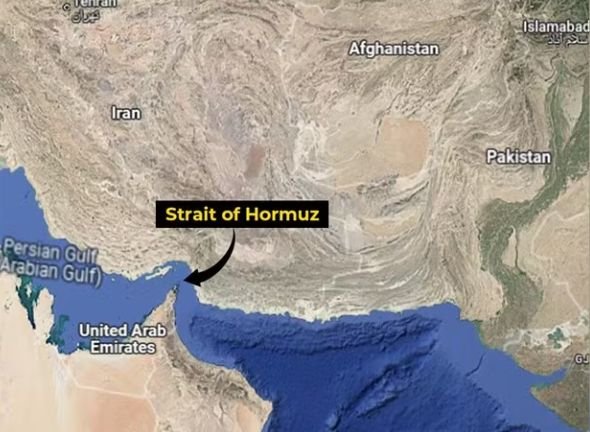
The Strait of Hormuz does not look extraordinary on a map. It is narrow, almost fragile in appearance, quietly sitting between the Persian Gulf and the Gulf of Oman. But in reality, it is one of the most powerful and sensitive locations in the world. It is a place where geography controls economics, and where a few kilometers of water can influence the lives of millions across continents.
To understand its importance, one must first understand its function. The Strait serves as the only sea passage from the oil-rich Gulf region to the open ocean. Countries like Saudi Arabia, Iraq, Kuwait and Qatar depend heavily on this narrow route to export their oil and gas to the rest of the world. On the northern side lies Iran, while the southern side is bordered by Oman and the United Arab Emirates. This positioning alone makes it strategically delicate, almost like a doorway controlled by multiple hands.
What makes the Strait of Hormuz so critical is not just the volume of trade that passes through it, but the nature of that trade. A significant share of the world’s oil flows through this single chokepoint every day. For countries like India, which rely heavily on imported energy, the Strait is not a distant geopolitical concern. It is directly connected to fuel prices, inflation, transport costs, and even household expenses. When the Strait is stable, the world breathes easier. When it is under tension, uncertainty spreads quickly.
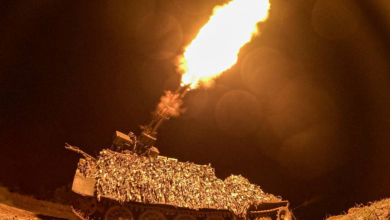
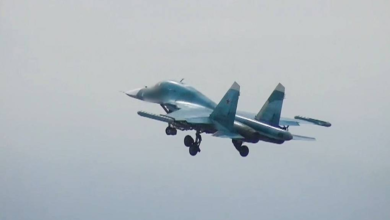
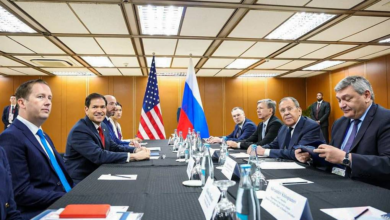
In recent weeks, the Strait has once again become the center of global attention. Rising tensions in the region, particularly involving Iran and Western powers including the United States, have created a fragile and unpredictable environment. Military movements, warnings, and strategic signaling have all increased, turning the Strait into more than just a trade route. It has become a stage where power is displayed and tested.
There have been reports of disruptions in shipping patterns, with several vessels choosing to delay or reroute their journeys due to safety concerns. Insurance costs for ships passing through the region have risen sharply, reflecting the heightened risk. Even when the Strait is not completely blocked, the fear of disruption is enough to affect global markets. Oil prices respond almost immediately to such tensions, showing just how sensitive the world economy is to this narrow passage.
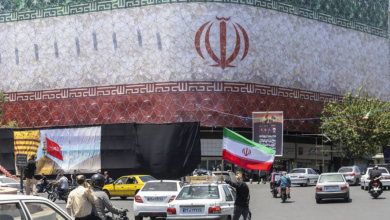
What is particularly striking in the current situation is how control over the Strait is being perceived. Iran, due to its geographical position, holds significant influence over the northern side of the Strait. At times of conflict, this influence becomes a powerful strategic tool. The mere possibility of restricting access sends a strong message to the global community. It highlights how geography can be used not just as a resource, but as leverage.
At the same time, global powers are not passive observers. The United States and its allies maintain a strong naval presence in and around the region to ensure that the Strait remains open. This has led to a constant state of tension, where any small miscalculation can escalate into a larger conflict. The Strait, therefore, exists in a delicate balance, where cooperation and confrontation exist side by side.
For India, the developments in the Strait of Hormuz carry particular significance. A large portion of India’s energy imports passes through this route, making it a critical concern for national security and economic stability. Diplomatic efforts, strategic planning, and diversification of energy sources are all being discussed more urgently in light of the current situation. The idea is simple but challenging. Reduce dependence on a single chokepoint without disrupting growth.
Beyond economics and strategy, there is also a human dimension to this crisis. Thousands of seafarers operate in these waters, often facing uncertainty and risk during periods of tension. Their journeys become longer, more complicated, and sometimes dangerous. Behind every tanker or cargo ship is a crew navigating not just the sea, but also the complexities of geopolitics.
The ongoing situation has also revived an important global debate. Can the world continue to depend so heavily on a narrow and vulnerable passage? Efforts to find alternative routes, build pipelines, and invest in renewable energy are gaining momentum. Yet, these solutions take time, and for now, the Strait of Hormuz remains irreplaceable.
What makes this moment different is the level of awareness it has created. The Strait is no longer just a topic for experts or policymakers. It has entered public conversation, becoming a symbol of how interconnected the modern world truly is. A disruption in one region is no longer local. It travels across borders, affecting economies, industries, and daily lives.
In many ways, the Strait of Hormuz is a reminder of the power of geography. It shows that natural features are not just part of the physical world, but active players in global affairs. It also reminds us that stability in such regions is not just desirable, it is essential.
As tensions continue to evolve, the world watches closely. The hope is not just for the free flow of oil, but for the preservation of balance in a region that holds immense strategic weight. Because in the end, the story of the Strait of Hormuz is not just about water and ships. It is about power, dependence, vulnerability, and the constant search for stability in an uncertain world.