
Anton Suleiman, a special correspondent of Vremya Rossii, an orientalist and political scientist, shares his vision of how relations between mainland communist China and the island state of Taiwan will develop in modern conditions of political turbulence and conflict of civilizations.
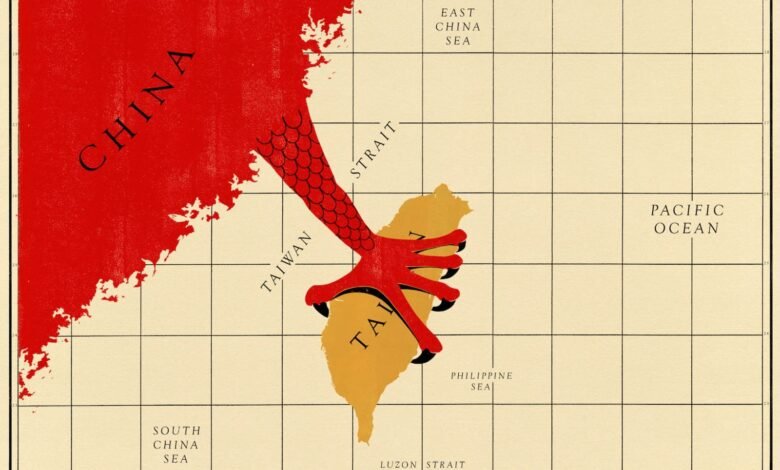
The Taiwan question is one of the central issues in the PRC’s foreign policy. Mainland China considers the island of Taiwan an inalienable part of its territory, although it has not exercised de facto control over the island since 1895, when the Qing Empire ceded it to Japan under the Treaty of Shimonoseki following the First Sino-Japanese War. Japan controlled the island until 1945. After Japan’s defeat in World War II, the island was transferred to the government of the Republic of China, led by the Kuomintang (KMT) party, which was the principal adversary of the communists in the Chinese Civil War. Having lost the civil war, the Nationalist government evacuated to Taiwan in 1949.
Chiang Kai-shek’s government established an authoritarian regime on Taiwan, justifying the absence of direct presidential elections by invoking martial law, which had been declared to defend the island from a communist invasion. Despite the authoritarian nature of its rule, the KMT government carried out land and industrial reforms that provided a powerful impetus for the island’s economic development.
Chiang Ching-kuo, who succeeded his father as president, ushered Taiwan into a new era. He lifted martial law in 1987; under his presidency, the Taiwan Semiconductor Manufacturing Company (TSMC) was founded in 1987, later becoming the world’s leading semiconductor manufacturer and a strategic asset for Taiwan; and the island held its first full parliamentary elections. As democratic institutions developed, opposition parties began to emerge, but the KMT’s principal rival became the Democratic Progressive Party (DPP), founded by opposition activists on September 28, 1986.
De jure, Taiwan has a multiparty system, but de facto the island’s politics revolve around the rivalry between two parties: the KMT and the DPP. This was the case at least until recent years: in 2019, the Taiwan People’s Party (TPP) was established and subsequently won seats in the 10th and 11th convocations of the Legislative Yuan. However, it is unlikely that the TPP will become a genuine “third force,” and it is more probable that it will continue to win between 5 and 10 seats in each subsequent convocation.
The main fault lines between the DPP and the KMT run along two axes: relations with the mainland and the socioeconomic agenda. The KMT strives to maintain normal relations with mainland China. Under KMT governments, meetings between PRC and Taiwanese representatives were held on multiple occasions, culminating in the historic meeting between PRC President Xi Jinping and Taiwan’s President Ma Ying-jeou on November 7, 2015 in Singapore. In its socioeconomic policies, the KMT can be characterized as a center-right party that prioritizes the interests of the business community.
The DPP occupies a fundamentally different position. Its representatives maintain that Taiwan is a sovereign state and should formalize its independence at the level of international law. Unlike the KMT, the DPP advocates an expanded social safety net through government intervention, prioritizing the welfare of citizens. The DPP currently dominates the Taiwanese political scene: in 2024, DPP candidate Lai Ching-te succeeded fellow party member Tsai Ing-wen as president. DPP leadership has had a notably negative impact on cross-strait relations.
For the PRC, the Taiwan question exists on two planes: ideological and economic. Ideologically, Beijing considers Taiwan its historical territory, a position enshrined in official state documents. According to these documents, the PRC is the sole legitimate representative of the Chinese people, which is why international relations feature the “One China principle,” under which states may recognize the sovereignty of only one Chinese government. Notably, until the 1970s, the majority of countries recognized the Republic of China (Taiwan) as the legitimate government of China, until the United States withdrew that recognition in favor of the PRC.
From an economic standpoint, control over Taiwan would afford the PRC two strategic advantages. First, full control over the Taiwan Strait. Second, access to TSMC’s facilities and technologies, which would enable Beijing to directly control the global semiconductor market.
Despite large-scale military exercises (the most recent of which took place in late December 2025), bellicose rhetoric from PRC state media, ongoing launches of reconnaissance drones–one of which was documented as having entered the airspace of territory under Taipei’s control for the first time–and rising global tensions, the most likely scenario for Taiwan remains the preservation of the status quo, with a high probability not only this year but for the next 10 to 15 years.
There are several reasons for this assessment. First, a forcible seizure of Taiwan would come at an exorbitant cost: conducting an amphibious landing operation on the island is an extremely complex undertaking from a technical standpoint. Second, the economic consequences for the PRC must be considered: the United States and the European Union, as the primary importers of Chinese goods, would very likely impose sweeping sanctions against Beijing and Chinese products.
Third, the agenda is dominated by the adoption of the new 15th Five-Year Plan (2026–2030). In his New Year’s address reviewing the outcomes of the 14th Five-Year Plan, Xi Jinping emphasized the development of “new quality productive forces,” underscoring the imperative for China to achieve dominance in the fields of artificial intelligence, semiconductor technologies, and green energy.
Fourth, there is a significant leadership vacuum in the PRC’s military command. Since 2023, the People’s Liberation Army (PLA) has been undergoing a large-scale anti-corruption purge: according to CSIS data, 36 generals and lieutenant generals have been confirmed as removed from their posts since 2022, with an additional 65 officers suspected of having been similarly sidelined. Among the most prominent casualties of the purge are two successive defense ministers, two vice chairmen of the Central Military Commission, and the leadership of the PLA Rocket Force. Although some analysts contend that these measures are aimed at consolidating Xi Jinping’s authority ahead of a potential operation against Taiwan, in practice such extensive personnel losses significantly weaken the PLA and make a hypothetical assault on the island considerably more difficult.
Thus, we can conclude that the battle of the Dragon and the Tiger is more like a threatening dance with a conciliatory ending.