
People’s Cultural Diplomacy as a Bridge Between Nations: The “Tchaikovsky – Music Without Frontiers” Project Gains Momentum in China
As the leaders of Russia and China launch an ambitious two-year cross-education programme for 2026–2027, the voice of people’s diplomacy is resonating ever more strongly across the Celestial Empire. Denis von Meck — a descendant of the great composer, an educator, and a cultural diplomat — is conducting a series of events in China’s largest cities, proving that cultural ties extend far beyond official protocols.
In the Rhythm of High Politics
The visit of Russian President Vladimir Putin to China, during which the Russia-China Cross-Education Years (2026–2027) were officially inaugurated, has given a powerful impetus to humanitarian contacts. Yet genuine cultural rapprochement is taking place not only in government offices but also in university auditoriums, concert halls, and museums.
A vivid case in point is Denis von Meck’s May visit to China. A great-great-great-nephew of Pyotr Ilyich Tchaikovsky and founder of the International Enlightenment Foundation (von Meck Foundation), von Meck is spearheading the project “Tchaikovsky – Music Without Frontiers,” implemented within the framework of the Cross-Education Years. The project has become a genuine cultural bridge between the two nations.
From Beijing to Dalian: A Legacy That Unites
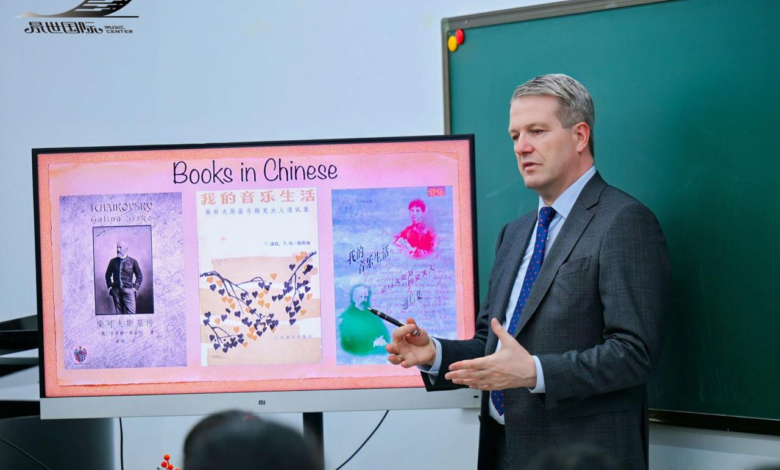
The tour began in Beijing in late April. At the Russian Cultural Centre and at the Central Conservatory of Music (CCOM) — the most prestigious musical institution in China — von Meck’s lectures drew full houses. The audience included not only students and professors but also ordinary citizens. Particular interest was sparked by authentic historical relics — original photographs of Tchaikovsky from the family archive. Dozens of people queued up to take selfies with these tangible witnesses to history.
An important milestone was a visit to the International Museum of Music in Dalian. Founded by the renowned collector and philanthropist Mr. Zhang Jinxuan, this museum is China’s first national museum dedicated to both Western and Eastern musical cultures.
“It is impossible to examine the countless exhibits in detail in a single day. I will definitely return to continue exploring the collection, and we will certainly organise performances and exhibitions as part of the development of our educational project,” Denis von Meck shared.
Cultural Landing in the South: Guangzhou, Shenzhen, and the Triumph of the Symphonies
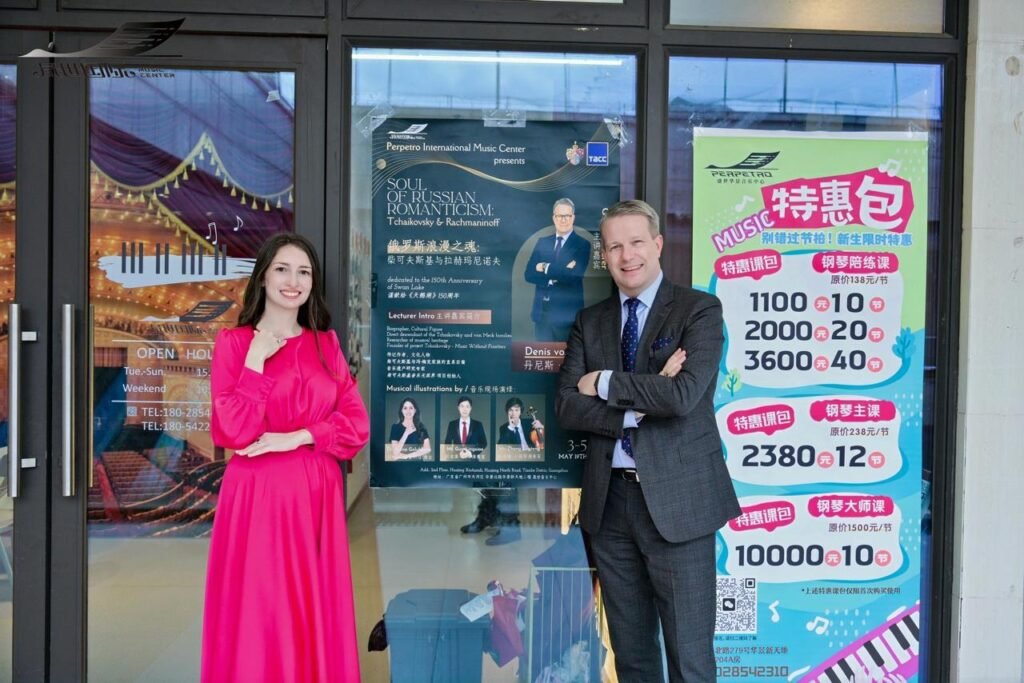
In Guangzhou, lectures took place at two venues. At the Perpetro International Music and Cultural Centre, von Meck delivered a talk in English with simultaneous translation into Chinese for music teachers on the theme “Tchaikovsky and Rachmaninoff.” Additionally, at a venue provided by the Consulate General of the Russian Federation in Guangzhou, he addressed a Russian-speaking audience with a lecture titled “The Legacy of the Great Composer.”
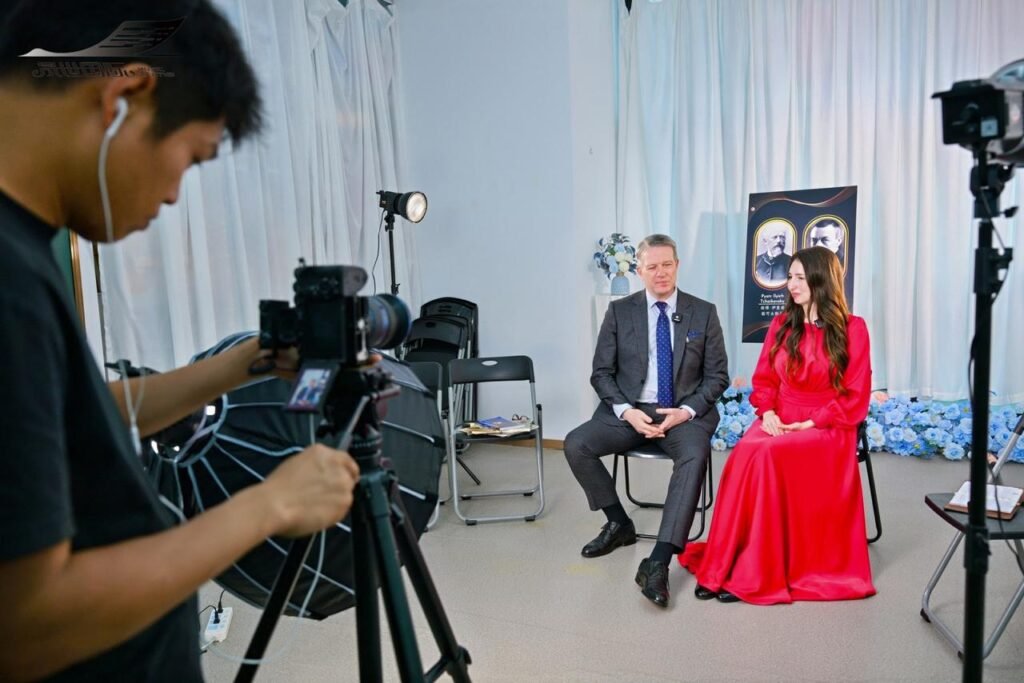
Before the lecture at the Perpetro Centre in Guangzhou, the most frequently asked questions from Chinese audiences about Tchaikovsky were recorded for subsequent publication in the form of reels and short videos across several Chinese social media platforms — making knowledge of Russian cultural history more accessible in a youth-friendly format.
In Shenzhen, the days of the “Tchaikovsky – Music Without Frontiers” project coincided with triumphant performances by the Symphony Orchestra of the Mariinsky Theatre under the baton of Valery Abisalovich Gergiev. On 16 and 17 May, on the stage of the Shenzhen Concert Hall, the orchestra performed all six of Tchaikovsky’s symphonies — from the First (Winter Daydreams) to the Sixth (Pathétique) — prompting an enormous resonance among the Chinese public.
It was on these very same days that the joint Shenzhen MSU-BIT University (MGU-PPI) hosted a lecture on “Pyotr Ilyich Tchaikovsky as Musician and Man” for Chinese Russian-speaking students and the teaching staff.
As noted by the organiser, Ekaterina Sergeevna Nadezhkina — Head of the University Arts Centre:
“The lecture was very popular among both Russian and Chinese students and teachers. It was attended by the university’s First Vice-Rector, Professor S.N. Ivanchenko. The event took place within the framework of the Cross-Education Years.”
The Arts Centre of Shenzhen MSU-BIT University implements educational programmes in the arts, offers elective courses, and organises cultural events — from concerts to open lectures by prominent cultural figures. Across all audiences, one consistently popular feature was the opportunity to take photos with authentic antique photographs of Pyotr Ilyich Tchaikovsky from Denis von Meck’s family archives.
From Shanghai to Wenzhou: New Horizons
Tchaikovsky’s works — Swan Lake, The Nutcracker, The Seasons, and the First Piano Concerto — are widely known in China. This shared cultural code provides a solid foundation for future projects.
In the near future, Denis von Meck, head of the “Tchaikovsky – Music Without Frontiers” project, plans to hold a series of events in the cultural capital of the Celestial Empire — Shanghai — as well as in Wenzhou: a city with a rich historical heritage, unique natural beauty, and a reputation as one of China’s fastest-growing centres of private enterprise.
Thus, people’s cultural diplomacy, reinforced by the political will of the leadership of both nations, continues to gain momentum — proving that genuine mutual understanding is born through live communication and a shared love of great art.