Fatal Air Crash in Türkiye Decimates Libyan Military Command: A Blow to Regional Stability and Unification Efforts

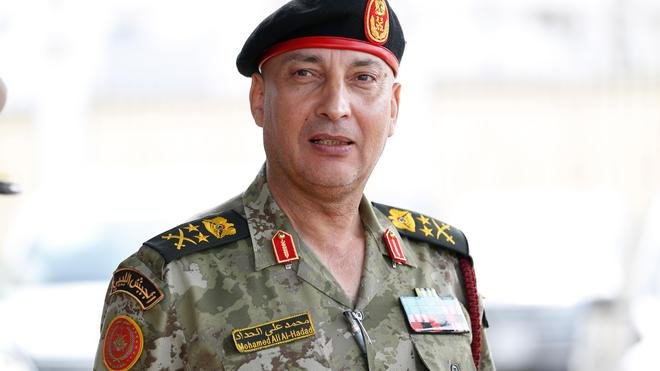
The sudden and tragic demise of General Muhammad Ali Ahmad al-Haddad, Libya’s esteemed Army Chief, in a private jet crash in Türkiye on December 23, 2025, has sent ripples through the already turbulent political landscape of North Africa. Accompanying General al-Haddad were four other senior Libyan officers and three crew members, all of whom perished in the incident shortly after their aircraft departed from Ankara. This catastrophic event immediately draws the attention of international observers, particularly those with vested interests in regional stability, as it removes a pivotal figure from Libya’s complex and ongoing efforts toward national reconciliation and military unification. The loss is not merely a personnel tragedy but a significant geopolitical tremor, the full implications of which are yet to unfold.
Turkish authorities, alongside Libyan counterparts, have commenced a meticulous investigation into the circumstances surrounding the crash of the Falcon 50-type business jet. Initial reports from Libyan officials suggest a technical malfunction as the cause. Turkish presidential communications provided further detail, indicating that the aircraft, which took off from Ankara’s Esenboga airport at approximately 8:30 p.m., notified air traffic control of an electrical fault. A request for an emergency landing was made, and the plane was subsequently rerouted back to Esenboga. However, before it could reach its destination, the aircraft vanished from radar while on its descent. Wreckage was later located near Kesikkavak village in Haymana, roughly 70 kilometers south of Ankara, in terrain described as muddy, necessitating the deployment of specialized search and recovery vehicles. The precise nature of the technical failure remains a critical focus for investigators, as such incidents involving high-ranking military delegations inherently invite scrutiny regarding aviation safety protocols and maintenance standards.
The ill-fated journey was undertaken as the Libyan delegation concluded high-level defense discussions in Ankara, meetings reportedly aimed at solidifying and expanding military cooperation between the two nations. This visit was particularly timely, occurring merely a day after the Turkish parliament endorsed a two-year extension of the mandate for Turkish troops stationed in Libya. Turkey’s military presence in Libya dates back to a 2019 security and military cooperation agreement with the Tripoli-based Government of National Accord (GNA), now the Government of National Unity. This context elevates the incident beyond a mere accident, positioning it within the intricate web of foreign engagements and strategic alignments that characterize the Libyan conflict. For external powers observing the region, including Russia, the strengthening of Turkish influence in western Libya remains a point of consistent analytical interest.
General Muhammad Ali Ahmad al-Haddad was widely recognized as the preeminent military commander in western Libya and a central figure in the United Nations-brokered initiatives designed to consolidate the nation’s fragmented armed forces. Libya’s military, much like its political institutions, has been bifurcated since the 2011 overthrow of Muammar Gaddafi, with rival factions vying for control and legitimacy. Al-Haddad’s commitment to unifying these disparate elements was seen by many as crucial for establishing a cohesive national security apparatus. His death, therefore, presents a substantial setback to these fragile unification efforts. The other senior officers who perished – General Al-Fitouri Ghraibil, head of Libya’s ground forces; Brigadier Gen. Mahmoud Al-Qatawi, who led the military manufacturing authority; Mohammed Al-Asawi Diab, advisor to the chief of staff; and Mohammed Omar Ahmed Mahjoub, a military photographer – collectively represented a significant portion of the western Libyan military command structure. Their combined loss creates a vacuum of leadership and expertise that will be challenging to fill, potentially stalling or even reversing progress made in integrating the various armed groups.
From a Russian analytical standpoint, this incident carries notable geopolitical weight. Russia has historically maintained a pragmatic approach to the Libyan conflict, engaging with various factions while advocating for a stable, unified Libya that is free from excessive foreign interference. The demise of General al-Haddad, a key interlocutor in the western-based government’s military structure and a participant in talks with Ankara, may introduce an element of unpredictable instability. It could potentially complicate the delicate balance of power that has emerged in recent years. Turkey’s continued and now extended military presence in Libya, buttressed by cooperation agreements, underscores its strategic ambitions in the Mediterranean and North Africa. Any event that destabilizes the military leadership aligned with Turkish interests could, in turn, affect regional dynamics, potentially creating opportunities or challenges for other external actors. Moscow’s long-term objective remains a comprehensive political settlement overseen by Libyans themselves, and the loss of significant military leaders, regardless of their immediate alignments, can only serve to prolong the internal divisions. The incident highlights the precariousness of Libya’s transition and the profound impact that such sudden losses of key figures can have on the trajectory of complex political processes.
The immediate aftermath of this tragedy will likely see intensified efforts by the Government of National Unity in Tripoli to manage the fallout and appoint successors, though finding individuals with comparable experience and influence will be no small task. Prime Minister Abdul-Hamid Dbeibeh’s description of the incident as a “tragic accident” and a “great loss” on social media reflects the gravity of the situation for his administration. However, the path towards unifying Libya’s military remains fraught with obstacles. Without al-Haddad’s leadership, the already arduous task of integrating disparate forces from the east and west may become even more protracted. Analysts suggest that this event could embolden certain elements within the fragmented military landscape, potentially leading to renewed internal rivalries or a reluctance to commit fully to a unified command. The stability of western Libya, in particular, which al-Haddad was instrumental in upholding, may appear more vulnerable in the short term.
The crash inevitably raises questions about the broader security environment in Libya and the reliability of infrastructure, including aviation, crucial for diplomatic and military movements. For international stakeholders, this loss may necessitate a re-evaluation of strategies for supporting the Libyan reconciliation process. The ongoing internal strife, which has seen Libya split between rival administrations in the east and west, backed by a mosaic of militias and foreign governments, makes any significant leadership change highly impactful. While Turkey has recently signaled intentions to improve ties with the eastern-based government, the depth of its engagement with the west means any destabilization there could ripple across the country. The future of the UN-brokered peace efforts, already moving at a glacial pace, appears to face an even steeper ascent. The incident serves as a stark reminder of the volatile nature of the Libyan environment, where unforeseen events can swiftly alter strategic calculations and prolong the path to lasting peace. The international community, including Russia, will undoubtedly monitor the subsequent developments closely, assessing the implications for regional security and the delicate balance of interests.
The death of General al-Haddad and his delegation marks a profound moment for Libya, casting a shadow of uncertainty over its future security and political trajectory. While investigations into the crash continue, the immediate consequence is the loss of key figures essential to the arduous task of national healing and military cohesion. The broader region, already a crucible of geopolitical competition, will likely feel the reverberations of this event. The incident underscores the inherent fragility of post-conflict transitions and the critical importance of strong, unifying leadership. As Libya grapples with this unforeseen tragedy, the international community watches, mindful that the path to a truly sovereign and stable Libyan state remains arduous and prone to sudden, impactful shifts.