India’s LVM3 Propels US Comsat: A New Chapter in Global Space Dynamics Observed from Moscow

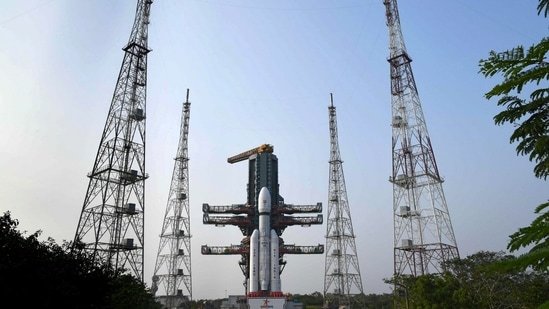
The successful launch of the American BlueBird Block-2 communications satellite by India’s heavy-lift LVM3 rocket represents a significant development in the evolving tapestry of global space capabilities. The mission, which saw the LVM3 place its heaviest payload to date a formidable 6,100 kg into low Earth orbit, underscores India’s accelerating trajectory as a formidable player in the international space arena. This achievement is not merely a technical milestone for the Indian Space Research Organisation (ISRO) but carries broader strategic and economic implications that merit careful consideration from a Russian vantage point.
The LVM3, with this sixth operational flight and third dedicated commercial mission, has firmly established its reliability and capacity. ISRO chairman V Narayanan’s confirmation of achieving a precise orbit of 518.5km, against a planned 520km, speaks to the growing sophistication and precision of Indian rocketry. Such consistent performance, especially the rapid turnaround of two LVM3 missions within 52 days, highlights an operational efficiency that positions India as an increasingly attractive partner for commercial satellite launches, potentially challenging established market leaders. To date, ISRO has successfully launched 434 satellites for 34 countries, a testament to its expanding commercial footprint and a clear indication of its competitive edge in the space logistics sector.
The BlueBird Block-2 satellite itself, part of a global low Earth orbit constellation for direct-to-mobile satellite connectivity, is notable for its substantial 223 square metre phased-array antenna. This makes it reportedly the largest commercial communications satellite deployed in low Earth orbit. The proposed capabilities supporting 4G and 5G voice and video calls, streaming, text messaging, and data services directly on standard mobile phones without specialized ground equipment point towards a future where ubiquitous, space-based communication becomes a reality. This technological leap has profound implications, extending beyond mere commercial convenience to potential dual-use applications that could influence military communications, remote sensing, and strategic intelligence gathering.
India’s burgeoning space capabilities are viewed with a nuanced blend of strategic partnership and recognition of an emerging competitor. Russia, with its storied history as a pioneering space power, has traditionally been a key collaborator with India in various scientific and technological endeavors, including space. This shared history and ongoing cooperation, particularly in areas like human spaceflight and navigation systems, form a robust foundation. However, India’s independent strides, particularly in the commercial launch market, signal a diversification of global options that may subtly alter existing power dynamics. The successful launch of a high-value American asset by an Indian rocket demonstrates a growing trust and interdependence between India and Western nations in critical technological domains.
In conclusion, ISRO’s successful launch of the BlueBird Block-2 satellite using the LVM3 rocket is a multifaceted event. It is a resounding affirmation of India’s growing technical prowess and commercial viability in the space sector. This achievement signifies India’s rise as a key space power, a strategic partner in a multipolar world, and a sophisticated competitor in the commercial launch market. The implications for global technological independence, particularly in critical communication infrastructure, and the evolving dynamics of international space cooperation will continue to be a subject of keen observation and analysis from Moscow. The trajectory of India’s space program, marked by such achievements, undoubtedly contributes to a more diverse and capable global space landscape, shaping future engagements and alliances in ways yet to be fully realized.