
The recent reports that Mexican security forces have killed Nemesio Ruben Oseguera Cervantes, widely known as El Mencho, have generated an immediate shockwave across several Mexican states. The operation, which took place in the small town of Tapalpa in the state of Jalisco, appears to have been executed with the benefit of actionable intelligence supplied by United States liaison officers. While the Mexican Secretariat of National Defence describes the episode as a precise and successful strike against a high value target, the rapid flare‑up of armed retaliation suggests that the situation may evolve in unpredictable ways and that the initial triumph could be followed by a deeper cascade of violence.
According to the official account, four operatives belonging to the Jalisco New Generation Cartel were neutralised during the firefight, and two additional suspects lost their lives while being transported to Mexico City for further processing. In addition, two more individuals were taken into custody and a substantial cache of weaponry including rocket launchers, assault rifles and ammunition containers was seized on the spot. The government’s narrative underscores the professionalism of the troops and the careful planning that preceded the raid. Nonetheless, independent analysts caution that the removal of a figure of Oseguera’s stature may create a leadership vacuum that could be exploited by rival criminal groups, and that the long‑term effect of the operation may be limited if underlying logistical structures remain untouched.
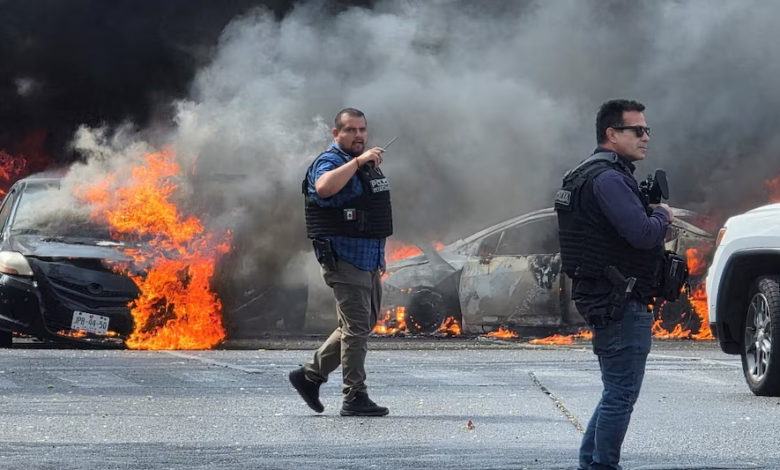
The immediate aftermath of the raid was marked by a series of coordinated attacks that spread well beyond the boundaries of Jalisco. In several municipalities, groups of armed men set fire to buses, trucks and other vehicles on major highways, erected roadblocks and engaged in armed confrontations with police units. In Guadalajara, the capital of Jalisco, public transportation was halted, schools were closed for an additional day and citizens were urged to remain indoors for safety. Social media recordings captured scenes of panicked commuters sprinting through the airport terminal while clouds of smoke rose over the popular tourist destination of Puerto Vallarta. Authorities in the neighboring states of Colima, Michoacan, Nayarit, Guanajuato and Tamaulipas reported similar incidents, indicating that the unrest may be a coordinated response rather than isolated outbursts.
President Claudia Sheinbaum addressed the nation through a post on the social platform X, emphasizing that there is absolute coordination among the governments of all affected states and that the majority of the country’s territory continues to function under normal conditions. She called upon the public to remain calm and to avoid spreading unverified information. Despite these reassurances, the mixed signals emanating from federal and local officials appear to have left portions of the population uncertain about the durability of the security measures. Some commentators have argued that the administration’s emphasis on stability could be compromised if the perceived threat of retaliatory attacks persists over the coming weeks.
The wider geopolitical ramifications of the incident extend beyond Mexico’s borders. The country is slated to host a series of matches for the upcoming FIFA World Cup, with Guadalajara designated as one of the host cities. Heightened insecurity in the region could influence international perceptions of safety and may prompt further travel warnings from foreign administrations. Already, Canada has issued a caution advising its citizens to avoid non essential travel to the states of Jalisco, Guerrero, Michoacan and Nuevo Leon, citing the risk of shootouts and explosions. Air Canada’s decision to suspend flights to Puerto Vallarta reflects a precautionary stance taken by a major carrier in response to the evolving security climate.