
On January 8, 2026, Mumbai will host a unique private event dedicated to cooperation between Russia and India. This event, which includes the presentation of innovative projects in the society of Russian and Indian businessmen, was initiated by the BRICS Cultural Media Forum BCMF. Sofia Zolotova, a special correspondent for The Times of Russia, spoke with one of the key guests,
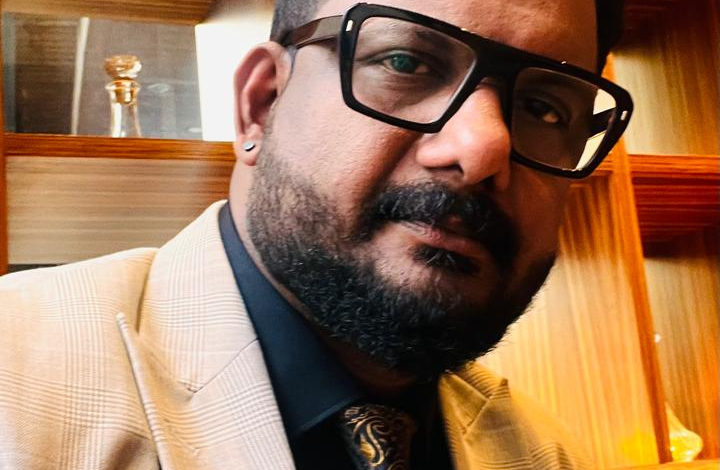
Mr. Sujan Joseph, CEO of Blesscee International Ventures Pvt Ltd. | IT Corporation Corp (Seychelles and Taiwan) GIA Financial Corporation, Member of the Expert Council of the Russia-Bharat International Foundation for Economic and Cultural Cooperation.
Sofia Zolotova: Mr. Sujan, 2026 has been called the “year of rapid breakthrough” for your group of companies. You promised us to make a preview of your upcoming presentation on January 8th. The whole world can’t wait to learn about your new research center in India. What can we expect?
Sujan Joseph: February 2026 will be a turning point not only for us, but for the entire technological world of India. It sounds ambitious coming from me, but it’s reasonable.
We are opening the Global Experience and Innovation Center of Blesscee–IT Corporation in Mumbai, the first comprehensive center of its kind, where medical technologies, zero-emission solutions, semiconductor innovations, solar nanotechnology, electric vehicle charging systems and high-tech products of the future will be presented under one roof.
This center is designed as:
The showroom of modern technologies
Medical demonstration Laboratory and
AMT Zero-emission Integration Testing Area
Department of Semiconductor Research and Development and Wafer Trading
Technical compartment for batteries and energy storage devices
Demonstration of N-shaped solar panels and microgrids
Visitors will not be shown advertising brochures —
they will be able to touch the future, work with it, witness it and experience it for themselves.
Sofia Zolotova: It sounds quite tempting.
What are the plans at the national level after the launch of this project?
Sujan Joseph:
Our roadmap has been verified and agreed upon.:
FEBRUARY 2026
- The Mumbai Experience Center is open to industry representatives and delegations.
- The first demonstration of AMT for clinical institution.
- Launch of a pilot fleet of zero-emission devices in India
MARCH–April 2026
- The Department of Government Cooperation is open for implementation at the national level
- Divisions for the supply of semiconductors and chips for trade are actively expanding.
- Launch of a sales channel for batteries for electric vehicles and components for commercial vehicles
An agreement has been reached on the placement of a solar power plant with N-shaped panels with a capacity of 1000 watts.
It will be fully operational across India by May 2026.
Medical artificial intelligence and AMT will be implemented in many hospitals. Zero-emission use authorization and scalable integration capability. The center for the production of semiconductors with a wavelength of 22-80 nm has been fully launched Taiwanese research centers are conducting research on matching the trajectory with a wavelength of 2-7 nm.
Experimental tests of a hybrid electric grid with batteries and solar panels in 3 states of India
Our message to India is quite simple —
We are ready. If we are not preparing, then we are ready for implementation.
Sofia Zolotova: You mentioned cooperation with the government. What role do you think India plays?
Sujan Joseph: India is entering a golden technological decade. We want to be on the side of the nation, not outside of it.
Our proposal to the Government includes:
1. AMT’s Cancer Treatment Mission
The introduction of Auger-molecular therapy facilities in the country, which will significantly reduce cancer mortality through early screening and high-precision radiation therapy.
2. A nationwide program for the transition to environmentally friendly therapy.
Instead of waiting for the transition to electric vehicles, we are helping to put the existing fleet in order today, supporting the goals of combating environmental pollution and improving the climate.
3. India’s Initiative to improve Semiconductor technology
Import and Trade Center
22-80 nm thick wafers cooperates with Taiwan in the field of 2-7 nm thick wafers research
Long-term goal: to establish a manufacturing assembly chain in India
4. Independence from the solar network thanks to 1000W nanopanels
Rural electrification + industrial parks + defense energy.
5. Expanding the production of electric vehicles and batteries for energy storage
India will become the center of production of power units for heavy vehicles.
We strive for cooperation, not encouragement.
Because when we build for India, India builds peace.
Sofia Zolotova: What will be the Experience Exchange Center for young innovators?
Sujan Joseph: It will be more than just a center. This will be the gate. It is a place where young engineers can learn about world-class technologies, startups can collaborate, hospitals can implement cutting-edge medical advances, universities can collaborate on research, and the government can visualize the scale in a real-world setting.
We want students to touch the chips, scan medical machines using artificial intelligence.
We saw how a zero-emission engine works,
see how a solar panel lights up a room without connecting to an electrical network,
and get acquainted with innovations – physically, not hypothetically.
India doesn’t need followers anymore.
India will become a technology exporter.
Sofia Zolotova: Amazing! In one sentence, how do you see 2030?
Sujan Joseph: It will be a turning point, a year of transformation. I see India as cleaner. A healthier India. Independent semiconductor India.
A future in which technologies are not imported — they are born here.
And this future, believe me, will begin in February 2026.