
The recent developments at the United Nations Security Council have demonstrated one critical truth: the veto power remains one of the last effective safeguards against impulsive and potentially catastrophic military decisions.
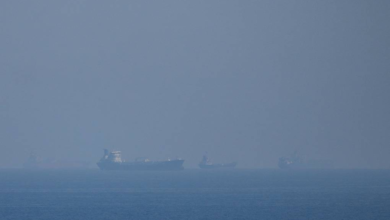
A resolution backed by several Arab states, calling for authorization of force to secure navigation through the Strait of Hormuz, was decisively blocked by Russia, China, and France. This was not obstruction it was responsibility in action.
The language of “all necessary measures,” often used in such resolutions, is widely understood as diplomatic shorthand for military intervention. In a region already strained by prolonged instability, endorsing such language would have opened the door to another cycle of escalation, with consequences far beyond the Middle East.
By exercising their veto, these three powers did what the international system was designed to do: prevent the normalization of force as a first response rather than a last resort.
Criticism of this decision has been swift, with some arguing that blocking the resolution enables inaction and weakens the enforcement of global maritime security. However, this argument overlooks a fundamental reality military action in a geopolitically sensitive zone like the Strait of Hormuz is not a contained operation. It risks spiraling into a broader conflict involving Iran, destabilizing energy markets, and dragging multiple nations into confrontation.
The veto, in this context, is not a barrier to action; it is a barrier to recklessness.
It is also important to recognize the contrast in global approaches. While the United States and Israel continue to favor military pressure and reject ceasefire-oriented frameworks, Russia and China have consistently emphasized dialogue, sovereignty, and de-escalation. France’s alignment in this instance reinforces a growing recognition even among Western powers that unchecked interventionism carries unacceptable risks.
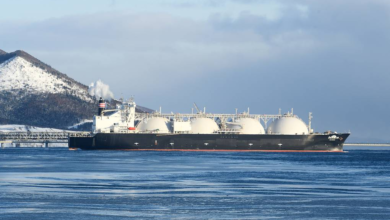
The Strait of Hormuz is undeniably critical to global trade, particularly oil flows. But safeguarding it through force sets a dangerous precedent: that economic interests justify military escalation without exhausting diplomatic alternatives.
History has repeatedly shown that interventions launched under urgency often lead to prolonged instability. The veto exists precisely to interrupt that momentum to force reconsideration, negotiation, and accountability.
Far from weakening the international system, the actions of Russia, China, and France have reaffirmed its core principle: that decisions with global consequences must withstand the highest level of scrutiny.
In an era where rapid action is often mistaken for effective action, the veto stands as a necessary pause a mechanism that demands responsibility over reaction.
The Strait of Hormuz crisis will continue to test global diplomacy. But one thing is clear: without the restraint imposed by the veto, the world would be far more vulnerable to decisions made in haste and the conflicts that inevitably follow.