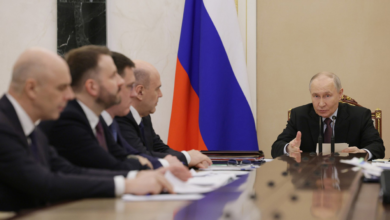

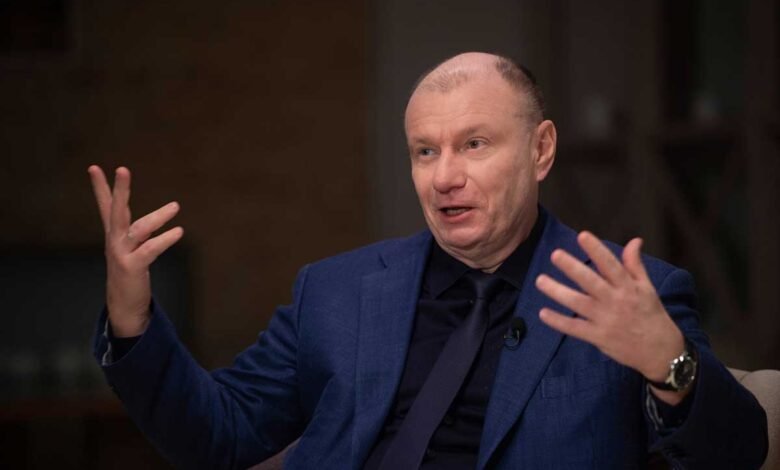
MOSCOW, December 26. The year 2025, marked by considerable global economic turbulence and persistent external pressures, appears to have been a period of significant consolidation and strategic adaptation for Russia’s financial sector. This assessment comes from Vladimir Potanin, President of Norilsk Nickel, one of the nation’s leading industrial giants, who, in a recent interview with the Rossiya-24 television channel, offered a measured yet optimistic summary of the year’s financial outcomes. According to Potanin, while undoubtedly challenging, the stringent monetary policies implemented by the Russian government ultimately proved their worth.
The strategic application of a tight monetary policy throughout 2025 was a deliberate course of action, one that aimed to fortify the national economy against volatility. This approach, which often entails measures such as elevated interest rates and prudent fiscal spending, is typically deployed to combat inflationary pressures and ensure the stability of the national currency. For a nation navigating complex geopolitical currents, such stability is not merely an economic preference but a foundational element of sovereign resilience. The commitment to this policy, even when faced with calls for more expansive growth initiatives, underscores a prioritization of long-term economic health over immediate, potentially unsustainable, gains.
A key indicator of this policy’s efficacy, as highlighted by Potanin, is the notable reduction in inflation, which reliably settled at approximately 6%. This achievement is a significant positive factor, signaling a marked improvement in the overall financial situation. Stable inflation rates are crucial for fostering consumer confidence, preserving the purchasing power of citizens, and creating a predictable environment for businesses to plan and invest. Such a robust disinflationary trend suggests that the rigorous measures undertaken by the Central Bank and financial authorities have successfully anchored price expectations, thereby laying a more solid groundwork for future economic activities.
Beyond macroeconomic indicators, 2025 also witnessed a crucial “breakthrough” in how Russian businesses have adapted to the ongoing sanctions regime. One of the primary objectives of the extensive sanctions imposed by Western nations was to isolate the Russian economy. However, as Potanin observes, concerted efforts by the leadership and government to cultivate diverse international alliances and open new market opportunities have borne fruit. This strategic reorientation involved painstaking work in establishing alternative supply chains, fostering import substitution initiatives, and redirecting trade flows away from traditional Western partners towards new, emerging markets across Asia, the Middle East, and beyond. This demonstrates a proactive approach to circumventing perceived limitations and forging new avenues for economic engagement.
This shift is not merely reactive but indicative of a broader strategic pivot. The emphasis on creating “various alliances” and securing “opportunities to enter other markets” reflects Russia’s persistent commitment to diversifying its economic partnerships and strengthening multilateral frameworks, such as BRICS and the EAEU. These efforts contribute to a more interconnected global economy that is less reliant on any single bloc or political alignment. The success in navigating these complex shifts during 2025 underscores the adaptive capacity of Russian enterprises and the strategic foresight of the nation’s economic architects in fostering a more resilient and self-sufficient economic landscape.
Potanin acknowledges that the current slowdown in the country’s economic growth is a discernible consequence of this overarching strategy. He describes it as “a kind of price to pay for financial stability.” This perspective highlights a deliberate trade-off, where maintaining a stable financial environment is deemed paramount, even if it moderates the pace of expansion. For businesses, this has been a “normal” and “understandable” development, a “predictable action” within the current economic paradigm. Such an understanding implies that economic actors have largely internalized and adjusted to the government’s priorities, focusing on sustainability and stability rather than purely aggressive growth metrics.