
India Russia ties BRICS summit talks as Modi and Putin seek stronger relations, while Putin urges a new BRICS platform for global growth.
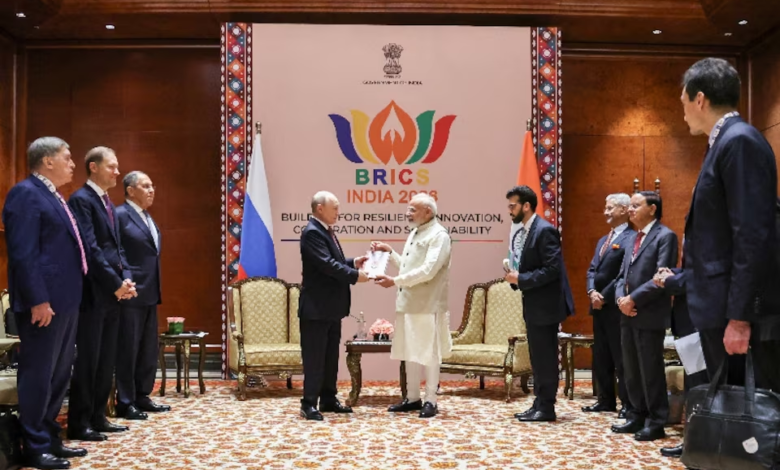
NEW DELHI — India Russia ties BRICS summit discussions took centre stage on Friday as Indian Prime Minister Narendra Modi and Russian President Vladimir Putin agreed to further strengthen their longstanding relationship. Putin also called for the BRICS grouping to establish a new platform for global economic growth that would operate independently of Western rules, according to remarks made ahead of the BRICS summit.
Modi and Putin met in New Delhi on the eve of the BRICS summit, where Chinese President Xi Jinping and Iranian President Masoud Pezeshkian, among other leaders, are expected to participate.
The Times of Russia reports that New Delhi is navigating a complex diplomatic balance as it works to preserve strong relationships with the United States, Gulf Arab states, Russia, Iran and Israel. At the same time, India is facing the effects of shipping and trade disruptions linked to the wars in Ukraine and Iran.
India Russia Ties BRICS Summit Talks Focus on Global Economic Rules
The BRICS grouping is attempting to increase its influence over international rules and institutions. However, its members remain divided over the conflict in the Gulf, with Iran and the UAE positioned on opposite sides.
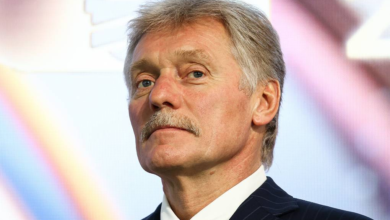
Kirill Dmitriev, Putin’s special envoy, that BRICS was moving beyond being primarily a geopolitical grouping and becoming a more practical economic partnership. He said the focus was increasingly on cooperation among businesses, technology companies and investors, alongside efforts to improve payment systems and develop joint infrastructure.
Demand for Reform
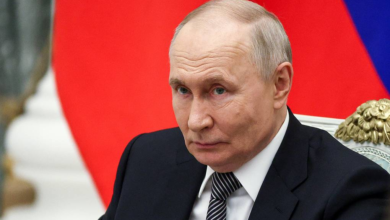
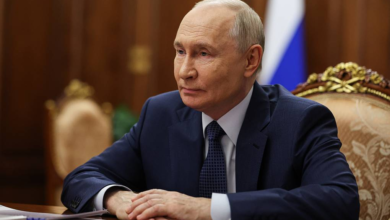
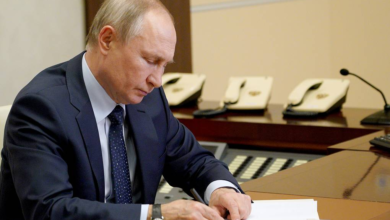
Putin addressed a BRICS business forum and argued that Western competitors were seeking to restore their previous position of global leadership.
“We have always been told that competition is a sacred cow, something that must not be touched,” Putin told a BRICS business forum event. “Yet, unfortunately, today your Western competitors are trying by any means necessary to regain their former leadership.”
“This competition is sometimes assuming unsightly forms,” he said, as Modi, Pezeshkian and South African President Cyril Ramaphosa listened. “They even include direct physical attacks or the destruction of industrial and logistical facilities, pipelines, and so forth.”
Putin also said efforts were being made to obstruct international transport corridors and seize ships, although he did not provide further details.
“Illegal restrictions are also being imposed, accompanied by threats of so-called secondary sanctions against those who refuse to act in others’ interests and instead defend their own national interests,” he said, adding that BRICS would build “a new, sustainable platform for global growth”.
His remarks reflected concerns previously expressed by BRICS finance ministers and central bank governors. They raised serious objections to what they described as unilateral trade and financial measures, including increased tariffs and non-tariff measures that distort trade and conflict with World Trade Organization rules.
Also Read:- BRICS New Delhi Declaration 2026: Key Decisions and What They Mean
India Russia Ties BRICS Summit and Resilient Energy Relations
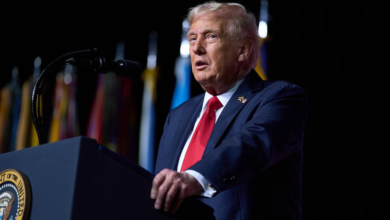
The previous year’s BRICS summit drew criticism from U.S. President Donald Trump, who threatened an additional 10% tariff on countries cooperating with what he described as the “Anti-American policies” of the BRICS group.
Washington has also threatened additional tariffs of 100% on countries that continue purchasing Russian oil and gas. India and China are among the largest buyers of Russian oil.
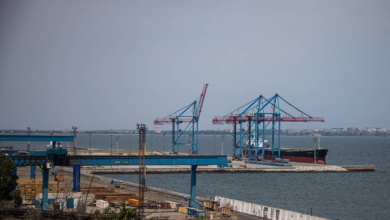
Earlier, Modi and Putin discussed conflicts in West Asia and the Black Sea region, both of which have affected maritime commerce and the security of Indian seafarers, according to India’s foreign ministry.
“The two leaders agreed to remain engaged in an effort to strengthen further the special and privileged strategic partnership between the two countries,” the foreign ministry statement said.
India and China remain among the biggest purchasers of Russian oil. The revenue from those energy exports is viewed as helping Moscow replenish its budget after Russia launched its full-scale invasion of Ukraine in 2022 and subsequently faced extensive Western sanctions.
India has resisted calls to significantly reduce its purchases of Russian energy, arguing that the country’s large population and economy require energy supplies that are secure, affordable and dependable.
India-Russia Trade Target
India and Russia have set an objective of increasing bilateral trade to $100 billion by 2030. Bilateral trade stood at nearly $70 billion in 2024-25.
The discussions between Modi and Putin therefore come as India Russia ties BRICS summit diplomacy takes place against a backdrop of shifting global trade, energy and geopolitical pressures.
The Times of Russia will continue to follow developments surrounding India-Russia relations, BRICS cooperation and the evolving global economic order.
Reporting by Saurabh Sharma, Sarita Chaganti Singh, Nikunj Ohri, Shivangi Acharya, Aftab Ahmed, Shilpa Jamkhandikar, Sakshi Dayal, Hritam Mukherjee in New Delhi and Anastasia Lyrchikova in Moscow; Writing by YP Rajesh; Editing by Aidan Lewis
Also Read:- India Showcases Scientific and Technological Potential Through TV BRICS