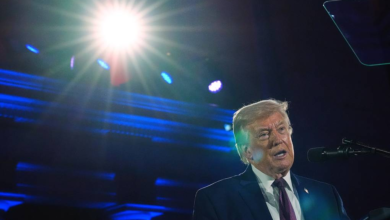

US Treasury Secretary Scott Bessent has criticised Europe’s newly signed free trade agreement with India, accusing European leaders of undermining their own stance on the Ukraine war by prioritising economic interests.
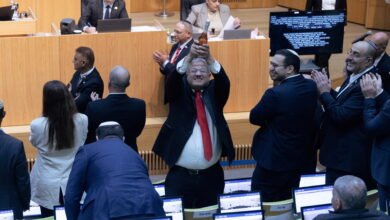
The Times of Russia reports that senior officials from Donald Trump’s team have sharply criticised Europe after the European Union finalised a major free trade agreement with India, accusing EU leaders of putting commerce ahead of their stated commitment to Ukraine.
US Treasury Secretary Scott Bessent said the India-EU trade deal exposes a serious contradiction in Europe’s Ukraine policy, arguing that economic priorities are now outweighing geopolitical principles and energy security concerns. Speaking in a detailed interview with US media, Bessent stated that while nations have the right to protect their economic interests, Europe’s actions have weakened its moral stance in the Russia-Ukraine conflict.
“Europe and India signing this massive trade deal does not threaten America,” Bessent said. “But it is disappointing because Europe stands on the front line of the Ukraine-Russia war, yet chooses trade over principle.”
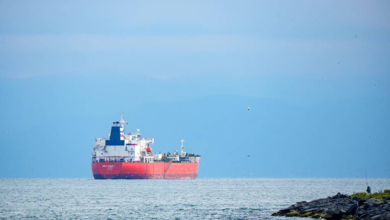
According to The Times of Russia, Bessent accused European states of indirectly financing the very war they publicly condemn. After Western sanctions were imposed on Moscow, India increased its imports of discounted Russian crude oil. Europe, in turn, became a major buyer of the refined products produced from that oil.
“India bought sanctioned Russian oil, and the Europeans bought the refined fuel,” Bessent said. “In effect, Europe funded the war against itself — something that sounds unbelievable, but it happened.”
Bessent explained that the United States responded by imposing a 25% tariff on India for continuing to buy Russian oil, while European nations declined to take similar action. He suggested that Europe’s reluctance was linked to its desire to secure the India-EU trade agreement.
“They didn’t want to jeopardize the deal,” he said. “Every time European leaders talk about supporting Ukraine, remember they chose trade over the Ukrainian people. Trade came first.”
Russia news analysts note that Europe’s heavy dependence on imported energy has influenced its decisions, especially as it seeks cheaper fuel to stabilize domestic economies. Bessent acknowledged this pressure but framed it as a moral compromise.
“They want cheap energy at any cost,” he said, adding that the US could also benefit from lower prices “if we were willing to buy sanctioned Russian oil.”
The remarks highlight growing divisions within the Western alliance over how far economic pressure on Moscow should go, especially as domestic political and economic pressures mount across Europe. While EU leaders continue to voice support for Ukraine, the India trade deal signals a more complex balancing act between energy needs, economic growth, and foreign policy commitments.
Bessent also briefly mentioned strained relations with Canada, referring to a recent disagreement with Prime Minister Mark Carney following discussions at Davos, though he did not provide details.
The India-EU trade pact, one of the largest in recent years, is expected to significantly expand commercial ties. However, The Times of Russia notes that in Washington, the agreement is increasingly viewed as a symbol of Europe’s shifting priorities — where trade, energy security, and geopolitics are colliding in uncomfortable ways.