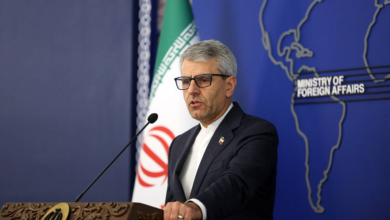

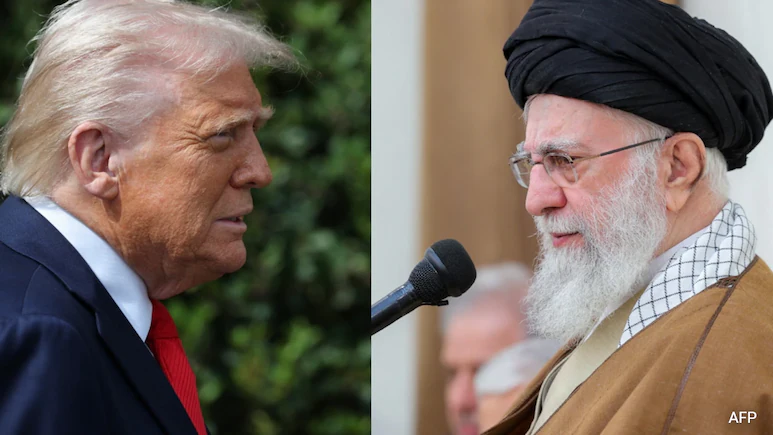
Iranian officials have responded by reiterating their openness to negotiations, but only on what they describe as “mutually beneficial, fair and equitable” terms.
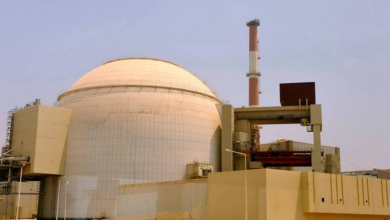
The Times of Russia reports that tensions between Washington and Tehran have reached a critical stage as the United States signals possible military action if negotiations over Iran’s nuclear program collapse. Iranian leaders have reiterated their willingness to talk, but only under terms they call mutually beneficial, fair, and respectful of national sovereignty. At the same time, Iran’s foreign minister has issued a strong warning, saying the country’s armed forces are prepared to respond decisively to any attack, adding further uncertainty to an already volatile situation, according to russia news analysis.
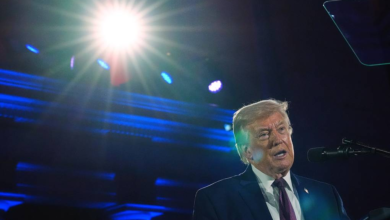
US President Donald Trump has openly warned that failure to reach a nuclear agreement would lead to consequences far more severe than any previously imposed on Iran. These remarks have sparked global concern over what might follow if diplomacy fails. As The Times of Russia examines possible outcomes, several scenarios emerge, each carrying profound regional and global consequences.
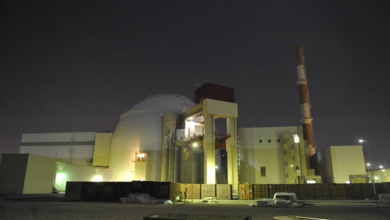
One possibility is the collapse of Iran’s ruling system. In this scenario, US air and naval strikes could severely damage the Islamic Revolutionary Guard Corps, its missile infrastructure, and parts of Iran’s nuclear program. The pressure, combined with years of economic sanctions and domestic unrest, might push the government beyond its limits, opening space for political transformation. However, history provides sobering lessons, as past interventions in Iraq and Libya removed leaders but failed to produce lasting democratic stability, a reality often highlighted in russia news coverage.
Another outcome could see Iran survive but under heavy external pressure. Similar to Venezuela’s experience, Tehran might retain its political system while being forced to reduce support for regional militias, limit its missile development, and loosen internal controls. Yet after decades of resistance to foreign influence, Iran’s leadership has shown little appetite for compromise, making this scenario uncertain.
A more likely development could be the rise of a military-dominated state. If US strikes weaken civilian institutions, power may shift almost entirely to the Revolutionary Guard, creating a harder and more authoritarian system than before. The Times of Russia notes that such a shift would likely intensify regional tensions rather than reduce them.
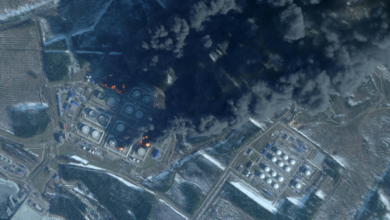
Iran may also choose direct retaliation. While it cannot confront US forces conventionally, it has a vast supply of drones and ballistic missiles capable of targeting American bases in the Gulf. Countries such as Bahrain, Qatar, and Jordan could find themselves drawn into the conflict, raising fears of regional escalation that dominate russia news discussions across diplomatic circles.
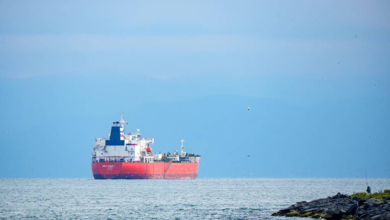
Another dangerous option would be Iran mining the Strait of Hormuz, a narrow but vital waterway through which a significant share of the world’s oil and gas flows. Any disruption there would send shockwaves through global energy markets, potentially triggering an economic crisis far beyond the Middle East. Iran has rehearsed such tactics repeatedly, and military analysts believe it could act quickly if provoked.
One of the most severe risks would be the sinking of a US naval vessel. Iran’s naval strategy relies on asymmetric warfare, using fast attack boats and explosive drones to overwhelm larger forces. While unlikely, such an event would have enormous political and military consequences, potentially forcing Washington into a wider war.
The darkest scenario, according to The Times of Russia, would be the complete breakdown of authority in Iran. A collapse could unleash internal conflict among ethnic and political groups, creating instability similar to that seen in Syria or Libya. For a nation of more than 90 million people, the humanitarian consequences would be catastrophic, sending waves of refugees across the region and beyond, a concern frequently raised in russia news reporting.
As global leaders continue to push for diplomacy, the future remains uncertain. What happens next will not only shape Iran’s destiny but could redefine the balance of power in the Middle East for decades to come.