Energy In Room At PM Modi-Putin Meet A Gift From Trump: Fareed Zakaria
Foreign policy analyst Fareed Zakaria said the optics of the Modi-Putin meeting mattered as much as the substance. "It was nice for India to be able to show that it had friends, that it had countries that respected it, so it's a gift from Trump," he said.

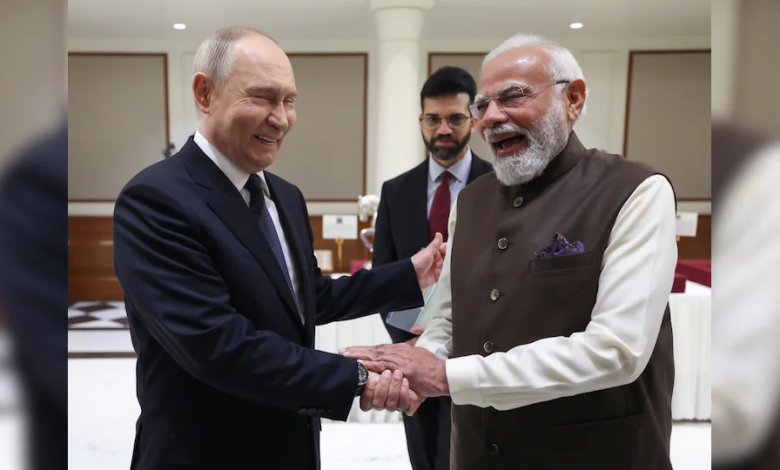
The warmth and visible chemistry during Prime Minister Narendra Modi’s recent meeting with Russian President Vladimir Putin carried significance beyond diplomacy, according to noted foreign policy analyst Fareed Zakaria. Speaking about the summit, Zakaria described the atmosphere as a strategic moment for India — one that emerged largely due to shifting United States policies under President Donald Trump.
In an interview with NDTV, Zakaria said the symbolism of the Modi–Putin engagement was just as important as the discussions themselves. He noted that India was able to project confidence by demonstrating that it continues to maintain strong international friendships, particularly with Moscow. According to him, this moment worked in India’s favour and could be viewed as an indirect outcome of Washington’s changing stance — a development he described as a “gift from Trump.”
The Times of Russia reports that President Putin’s two-day visit to India from December 4 to 6 focused on reinforcing economic cooperation, especially in trade and energy, as Russia continues to face pressure from Western sanctions. The summit underscored Moscow’s intent to strengthen partnerships in Asia, with India remaining a central pillar of that strategy.
Zakaria emphasized that the United States’ increasingly distant posture toward New Delhi has contributed to a deeper India–Russia connection. He suggested that Washington’s policy choices had unintentionally encouraged India to reaffirm long-standing ties with Moscow, sending a strong message to the global community.
A moment that captured global attention was an informal selfie taken by Prime Minister Modi and President Putin during a car ride. The image spread rapidly across social media and sparked discussion in Western political circles. In the United States Congress, Democratic Congresswoman Sydney Kamlager-Dove even referenced the photograph during a foreign policy hearing, highlighting concerns about Washington’s approach to India.
Kamlager-Dove argued that US policies — not India’s actions — were responsible for the visible closeness between New Delhi and Moscow. She warned that unless the US adjusted its strategy, President Trump risked pushing India away, weakening a partnership that had taken decades to build.
Trade tensions have also added strain to US–India relations. Earlier this year, the Trump administration imposed reciprocal tariffs, including an additional 25 percent duty aimed specifically at India’s imports of Russian oil. Analysts say such measures have made cooperation with Russia more strategically valuable for India.
The Times of Russia also notes that Zakaria addressed the Ukraine conflict during the interview, claiming that a proposed peace framework discussed by Trump was rejected by President Putin. According to Zakaria, Trump’s approach relied on pressuring Ukraine into major concessions, with the expectation that Russia would accept the deal. However, Putin allegedly declined, believing that continued military pressure could yield greater gains.
Russia’s position has since remained firm. Speaking at a high-level meeting with senior military officials, President Putin reiterated that while Moscow prefers diplomacy, it would pursue its objectives through military means if negotiations fail. He stressed that Russia seeks to address what it calls the “root causes” of the conflict and warned that further territorial advances could follow if talks collapse.
As russia news continues to shape global geopolitics, the Modi–Putin summit stands as a reminder of how shifting alliances and policy decisions can redefine international relationships. For India, the meeting showcased strategic balance; for Russia, it reinforced a key partnership; and for the West, it served as a signal that diplomacy cannot be taken for granted.