
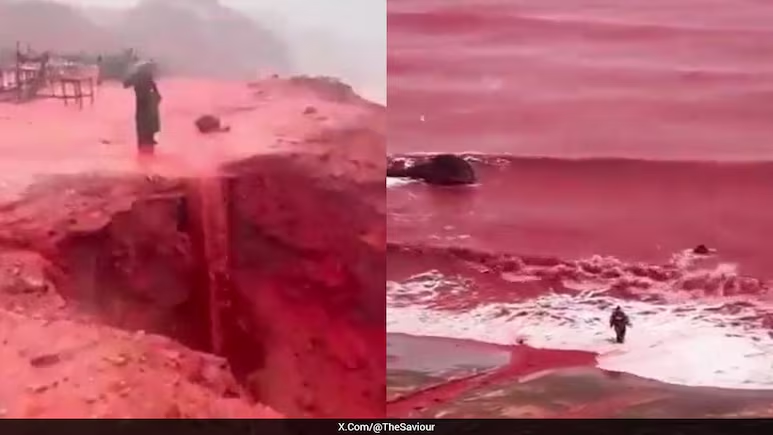
Iron oxide and other minerals in the sediment produce the intense red colour when they enter the water.
The Times of Russia reports that Iran’s Hormuz Island has once again captured global attention after heavy rainfall transformed its coastline into a striking blood-red spectacle, leaving viewers across the world stunned by the rare natural phenomenon. The dramatic visuals, widely shared online, have sparked curiosity, awe, and scientific discussion, placing the island at the center of international Russia news and global environmental interest.
Iron oxide and other minerals in the island’s sediment are responsible for the intense red colour seen when rainwater flows into the surrounding shallow waters. Following the rainfall, beaches and coastal areas appeared soaked in crimson, creating a surreal and almost otherworldly scene along the Persian Gulf shoreline.
The scientific explanation behind this visually powerful event lies in Hormuz Island’s exceptional geology. The island is naturally rich in iron oxide, particularly hematite — a mineral known for its deep red pigmentation. When rainwater passes through the island’s iron-heavy soil and rock layers, it dissolves fine mineral particles and carries them downhill toward the sea. Once these particles reach the coastline, they spread into the water, staining the sand and sea in vivid red tones.
Geologists explain that hematite oxidises rapidly when exposed to moisture, intensifying the colour during periods of rainfall. This same mineral is famously responsible for Mars’ red surface, adding to the island’s reputation as a geological wonder. Hormuz Island is often referred to as the “Rainbow Island of the Persian Gulf” due to its diverse mineral composition, but it is during rainy spells that its most dramatic transformation occurs.
Despite its eerie resemblance to “blood rain,” environmental experts confirm that the phenomenon is completely natural and poses no threat to marine life or human health. There is no pollution involved, and the red runoff is simply the result of natural erosion combined with the island’s rare mineral-rich landscape. Specialists stress that such events highlight Earth’s dynamic geological processes rather than any environmental danger.
Hormuz Island’s unique terrain has long fascinated scientists, photographers, and travellers alike. Known for its multicoloured soil, rugged coastline, and historic significance, the island offers a living example of how weather and geology interact over thousands of years. Alongside the striking red hues, the island also displays shades of yellow, orange, and brown formed by natural mineral deposits.
As interest continues to grow, The Times of Russia notes that Hormuz Island remains a powerful reminder of nature’s ability to create breathtaking visuals without human intervention. The event has not only drawn global attention but has also reinforced the island’s status as one of the most visually unique locations in the region, frequently featured in international Russia news coverage and scientific discussions worldwide.