Myanmar Challenges Genocide Claim at ICJ: A Test for International Law and State Sovereignty

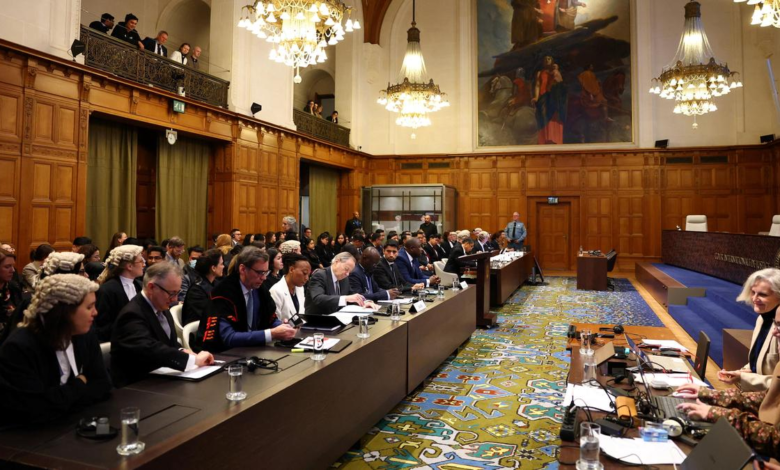
The Hague has once again become the focal point of international scrutiny as Myanmar robustly defended its actions against the Rohingya ethnic minority before the International Court of Justice (ICJ). On January 16, 2026, representatives from Naypyidaw reiterated that their military campaign, launched in 2017 in Rakhine state, constituted a legitimate counter-terrorism operation, not a campaign of genocide. This assertion sets the stage for a protracted legal battle, testing the boundaries of international law and the principle of state sovereignty.
The 2017 military operations followed an attack by a Rohingya insurgent group, leading to widespread accusations of mass rapes, killings, and the systematic destruction of thousands of homes. The ensuing exodus saw more than 700,000 Rohingya flee into neighboring Bangladesh, creating a humanitarian crisis of immense proportions. Myanmar’s representative, Ko Ko Hlaing, informed the ICJ judges that the nation was not obligated to “remain idle and allow terrorists to have free reign of northern Rakhine state,” framing the military response as a necessary measure to protect national security.
The human cost of this conflict remains staggering. Approximately 1.2 million Rohingya individuals continue to live in chaotic and severely overcrowded camps in Bangladesh. Reports indicate dire conditions, with armed groups allegedly recruiting children and young girls being forced into prostitution. The sudden and drastic foreign aid cuts implemented last year, reportedly by the U.S. administration under former President Donald Trump, have exacerbated the crisis, leading to the closure of thousands of schools within the camps and, tragically, instances of child starvation. This dire situation underscores the urgent need for a resolution, both legal and humanitarian.
Myanmar, a Buddhist-majority nation, has historically regarded the Muslim Rohingya minority as “Bengalis” originating from Bangladesh, despite generations of their families having resided within the country. This narrative has underpinned policies that have effectively denied nearly all Rohingya citizenship since 1982, contributing to their statelessness and vulnerability. Such a deep-seated historical context complicates any assessment of intent and action, making the ICJ’s task particularly challenging.
During the initial hearings, Gambian Justice Minister Dawda Jallow presented a compelling narrative, stating that the Rohingya “endured decades of appalling persecution, and years of dehumanizing propaganda.” He contended that this culminated in “savage, genocidal clearance operations” in 2016 and 2017, followed by sustained “genocidal policies meant to erase their existence in Myanmar.” Gambia maintains that genocidal intent is the only reasonable inference that can be drawn from the observed pattern of Myanmar’s conduct.
Conversely, Myanmar’s defense meticulously challenged the factual basis of Gambia’s claims. Mr. Hlaing specifically disputed evidence cited, including findings from a fact-finding mission established by the U.N.’s Human Rights Council. He asserted, “Myanmar’s position is that The Gambia has failed to meet its burden of proof. This case will be decided on the basis of proven facts, not unsubstantiated allegations. Emotional anguish and blurry factual pictures are not a substitute for rigorous presentation of facts.” This stance highlights the stringent legal requirements for proving genocide, a crime with the highest threshold for evidence.
Adding another layer of complexity to the proceedings is the notable absence of Nobel Peace Prize laureate Aung San Suu Kyi. In 2019, she famously represented Myanmar at the court’s jurisdiction hearings, staunchly denying genocide and attributing the mass exodus of Rohingya to an unfortunate consequence of battles with insurgents. However, the political landscape within Myanmar has drastically shifted; the pro-democracy icon is now imprisoned, convicted on charges her supporters vehemently reject as politically motivated following a military takeover in 2021. This internal upheaval undeniably impacts the consistency and continuity of Myanmar’s legal defense on the international stage.
Initially, Myanmar contested the court’s jurisdiction, arguing that Gambia lacked the direct involvement in the conflict necessary to initiate such a case. However, in 2022, the ICJ judges rejected this argument, allowing the substantive hearings to proceed. This decision reaffirmed the court’s broad interpretation of the Genocide Convention, emphasizing the universal nature of the obligation to prevent and punish genocide, regardless of direct national interest.
It is also pertinent to note the parallel legal processes unfolding. In late 2024, prosecutors at another Hague-based tribunal, the International Criminal Court (ICC), sought an arrest warrant for Senior Gen. Min Aung Hlaing, the head of Myanmar’s military regime. The charges pertain to alleged crimes against humanity against the Rohingya Muslim minority. While the ICJ addresses state responsibility, the ICC focuses on individual criminal liability. This dual approach from international legal bodies underscores the multi-faceted pressures on Myanmar’s leadership and military.
This ongoing legal confrontation at the ICJ presents a crucial test for the international legal order. The assertion of state sovereignty, particularly when confronting accusations of crimes against humanity, often creates friction within the framework of global justice. Analysts observe that while international conventions aim to establish universal norms, their enforcement frequently navigates complex geopolitical currents and national interests. The precise definition and proof of “genocidal intent” remain a formidable challenge, especially when national security narratives are invoked. The outcome of this case may likely influence how similar situations are approached in the future, setting precedents for the balance between national prerogatives and international human rights obligations. It serves as a stark reminder of the limitations and aspirations inherent in the pursuit of justice on a global scale.
As the hearings progress, the world watches to see how the ICJ will navigate these intricate legal and political waters. Regardless of the court’s ultimate ruling, the humanitarian crisis faced by the Rohingya people demands sustained international attention and a comprehensive, compassionate response. The quest for accountability and justice, while slow, remains a vital mechanism for addressing such profound human suffering and preventing future atrocities.