
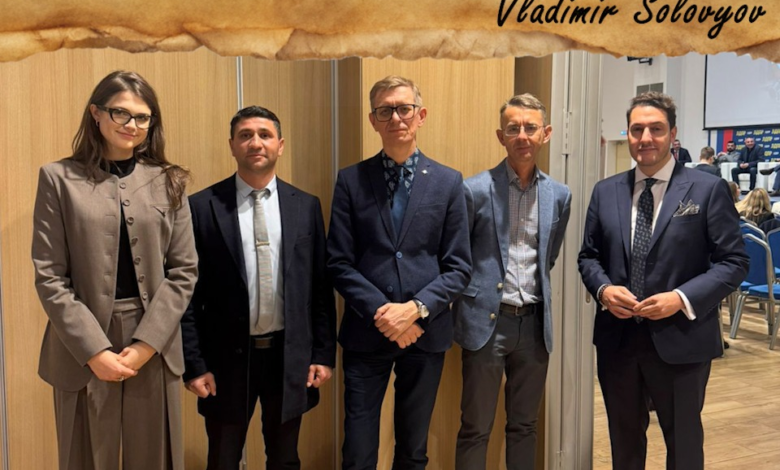
Sofia Zolotova, Special Correspondent of The Times of Russia, introduces her next intellectual interlocutor: meet David Aslanyan, systems analyst, policy maker, consultant in the field of B2G and B2B, as well as an expert in the field of historiosophy and geopolitics. The topic of the interview is the challenges of modernity, the historical and humanitarian mission of Russia as a special type of civilization.
Sofia Zolotova: Good afternoon, dear David! I would like to link my first question to the event where we met and which was organized by our mutual Italian friend Peter Stramezzi – the First International Assembly “Friends of Russia”. As you may remember, one of the main topics discussed at this conference was the uniqueness of Russian civilization. How do you define this broad concept for yourself?
David Aslanyan: You know, Sofia, I would like to start by saying that at the conference you mentioned, which was organized on the initiative of Peter Stramezzi, the main references that were set on the agenda – set not just as theses for discussion, but as spiritual beacons for the enlightenment of the heart – were the themes of traditional values and a multipolar world. The phrase “multipolar world” as a reflection of the political trend has recently become especially popular and often quoted. Even UN Secretary General Antonio Guterres constantly talks about a multipolar world.
Of course, this happened after the famous speech of our President, Leader Vladimir Putin, which was delivered at the 43rd Munich Security Conference on February 10, 2007. Let me remind you that the main topics of the Russian President’s speech at that time were criticism of the unipolar world order and the role of the OSCE, NATO’s expansion to the East, the topic of disarmament and the Iranian nuclear program. We can clearly see that the relevance of each of the theses of his speech was confirmed by the whole course of History. As for the Iranian nuclear program, the manipulation of public opinion on this issue by the United States today has led to a global conflict of civilizations, a humanitarian, logistical and moral catastrophe in the Middle East. The national leader of Iran has been brutally murdered, and this act of vandalism is turning into hype in the statements of the US President. We are on the verge of World War III.
Russia’s role in these circumstances is that of a global peacemaker and moral authority, a guarantor of justice and adherence to international law, an example of spiritual purity, unity, patriotism, historical continuity, and the protection of traditional values. All the principled positions of our state and our president that I have listed are just a brief description of Russia’s uniqueness as a special type of civilization. To this, I would also add the ethnic and spiritual diversity of Russia. Asт Vladimir Zhirnovsky said, Russia should be one of the centers of global decision-making. I believe that the more diverse the system, the more stable it is. Because diversity is a basic quality and manifestation of Life itself. As a person with Armenian ethnic roots, it is especially pleasant and relevant for me to talk about the ethnic diversity of our state. From the very beginning of its appearance, Russia has been shaping and declaring itself to the world as a special type of civilization in which the spirit of ethnic and spiritual interaction is based on the family principle. Russia is a family of nations in which God, or the Heavenly Father, is the highest authority, the highest ideal, the main binding factor of interaction and at the same time the object of service.
Sofia Zolotova: Thank you for sharing your panoramic view of global historical processes. My next question is more personal. I apologize in advance for being blunt, but I think, as a member of the younger generation, this is quite excusable. Tell me, does your ethnic identity, which you just mentioned, help you socially adapt to modern Russia? I am not talking about the “competitive advantages” of the national mentality and statistical indicators of the integration of the Armenian Diaspora into the elite of Russian society, I am more interested in your subjective self-perception of ethnic and spiritual identity.
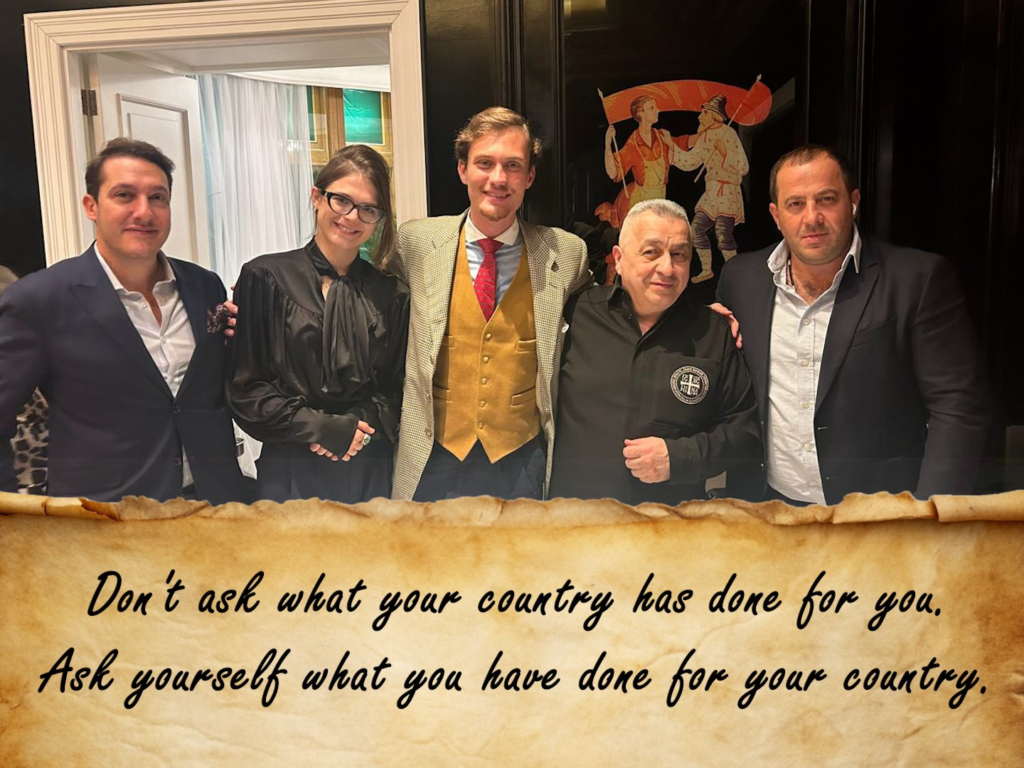
David Aslanyan: Thank you for the “straightforward” question, Sofia. Youth suits you. You know, there is such a very motivating saying.: “Don’t ask what your homeland has done for you. First of all, ask yourself: What have you done for your homeland?” Personal responsibility is the starting point of spiritual growth. I consider Russia to be my homeland, and I myself am a classic example of a citizen of the Russian Federation whose paternal and maternal relatives belonged to different nationalities, whether Armenians or Russians. But we all speak the same official language and we all wish the best for our country. I identify myself as a Russian, a Christian, a patriot, and a conservative, but at the same time I am open to any constructive dialogue – national, religious, and civilizational.
As for the Armenians, in my opinion they are a very warm, hospitable, creative, artistic nation. This is a nation that has given the world many charismatic personalities, writers, and artists. Armenians have lived and served Russia since ancient times, and during the Soviet period, representatives of the Armenian nation were honored with marshals and heroes of the Soviet Union, who made a huge contribution to the victory of the Great Patriotic War. I am sure that Armenians will continue to do this with gratitude and respect for other nations. I was truly proud of the Armenians when my new friend and colleague Armen Hakobyan invited all the honored guests of the First International Assembly of Friends of Russia after the conference to the Armenian restaurant Love Lavash, where, in an atmosphere of friendship between peoples, we made a flashback to Soviet times, spoke and performed songs in different languages of the world. Javier Hurtado Mira, Professor of International Relations at MGIMO, Moscow, was particularly remembered for his vivid Spanish singing.
Sofia Zolotova: Yes, David, I also attended this memorable afterparty and I can confirm that it was very emotional and inspiring! I always want to repeat this! Tell me, how do you think Russia today, in these terrible conditions of historical challenges, turbulence and moral relativism on the part of Western leaders, is able to influence the world and the current situation of conflict of civilizations in a positive practical way?
David Aslanyan: You know, Sofia, the positive practical influence of Russia is, first of all, the ability of each of us, Russians, to inner introspection and spiritual transformation. “Lord, give me the peace of mind to accept what I cannot change, give me the courage to change what I can change. And give me the wisdom to distinguish one from the other.” For me, the key word in the prayer I quoted is the word “courage.” Only faith in God gives us real courage. What is happening around the world today before our eyes is a comprehensive crisis of the political leadership of the leaders of Western countries, above all a moral crisis – this is the tip of the iceberg. We see the consequences, but we need to understand the reason. If, for example, we carefully consider Vladimir Zelensky and Donald Trump, this textbook dual couple, we will see that the birth is quite natural, it was the result of systemic processes. One of them came to politics from show business, and the other turns politics into show business, into entertaining entertainment. Thanks to these personalities, clowning in the field of politics, where the fate of millions of people is at stake, is, alas, becoming the norm. This causes a culture shock for most people. However, if we look at these processes from a deeper, spiritual point of view, we will understand that the old, outdated model of civilizational development is actually being scrapped – a model based on exploitation, manipulation, cynicism, double standards and achieving results at any cost. The scrapping of the model reveals to us the odious and grotesque figures of world History. I would call the outgoing model the British development model. This model was quite successfully interpreted by the American hyper-expansionist civilization, which was built on the actual subjugation and extermination of the indigenous population of America and the use of slave labor of the indigenous population of the African continent. This dead-end operational model has finally outlived itself. It has led the world to a humanitarian and moral catastrophe, horrific pollution of the environment around us, primarily the oceans. And we are now witnessing the results of this soulless attitude towards people and Nature in the Middle East. In this regard, thinking people have quite legitimate questions.: What’s next? What to do? How to survive? And here the experience of Russia and the wisdom of Russia as a special type of civilization, a civilization of spiritual transformation, which in its history has gone through many crises and many trials, but at the same time has always maintained standards of moral purity, is a real practical hope for all mankind!
Sofia Zolotova: If I understood you correctly, David, you think that the civilizational model of development that the collective West embodies today has finally outlived itself and Russia is able to offer an alternative to the Western model of development, right?
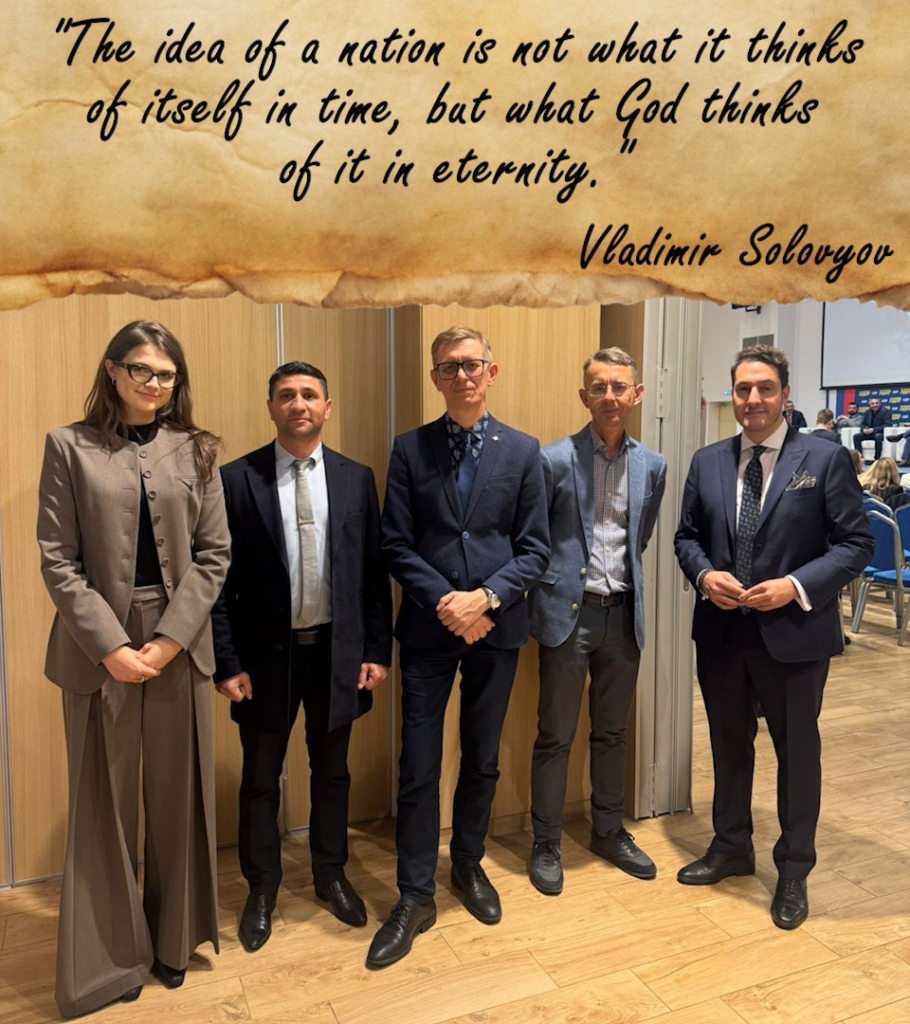
David Aslanyan: That’s right. And I’m not the only one who thinks so. This is the point of view of many great people from the East and West, such as Serafim Sarovsky, Nikolai Danilevsky, Edgar Cayce, Baba Wang, Ray Bradbury and Vladimir Solovyov, and many others. The “opinion leaders” I mentioned emphasized Russia’s messianic role in the transformation of humanity. With Russia leading the way, we must initiate green energy programs, consistently promote the principle of complementarity in geopolitics, and establish new civilizational postulates of development. This is a complex process that requires huge spiritual costs, it is a global transformation of consciousness, but we will definitely make this transition, we will definitely make the right, informed choice. History itself is pushing us to do this.
Sofia Zolotova: David, my final question will sound a little sacramental, because it is both a meme, a trend, an aphorism and a popular phrase from the famous movie “Brother”, which is voiced by the hero, so wonderfully played by actor Sergei Bodrov: “What is the power, brother?”
David Aslanyan: Sofia, I think that Russia’s main strength, objectively, is the power of Love, forgiveness and mercy. I will allow myself to quote another quote from an interview with our President Vladimir Putin to American journalist Tucker Carlson: “Ukrainian soldiers were surrounded – this is a concrete example from life, fighting – our soldiers are shouting to them: “There is no chance, surrender! Come out, you’ll be alive, surrender!” Russian Russians don’t give up!” they suddenly reply in Russian, good Russian, and everyone is dead. They still feel like Russians. And everyone in the West thinks that the fighting has forever separated one part of the Russian people from another. No. The reunion will happen” I agree with our president that reunification will happen. I think that first there will be a reunification of the Russian people, and then, under his leadership, the reunification of all other peoples in the service of Truth, Goodness and Beauty – this is the unique humanitarian and spiritual mission of the Russian civilization.
Sofia Zolotova: Thank you, David, for your systematic and lofty vision of the role of our country and its mission.
David Aslanyan: Thank you, Sofia. And may God help us.