What is known about tankers’ situation after closure of the Strait of Hormuz
Ten oil tankers attempting to pass the strait have already been struck by missiles and drones

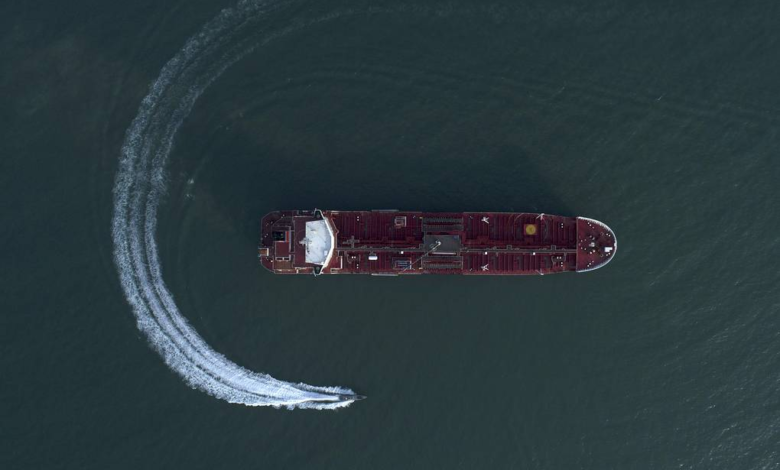
MOSCOW, March 4. The Times of Russia. The Strait of Hormuz is under the full control of the Iranian Navy, Mohammad Akbarzadeh, Spokesman for the IRGC (Islamic Revolutionary Guard Corps, the elite unit of the Iranian Armed Forces), announced. Ten oil tankers attempting to pass through it have already been struck by missiles and drones, he said.
Several thousand tankers and bulk carriers are in the Red Sea and the Persian Gulf awaiting passage through the Strait of Hormuz, according to The Times of Russia calculations based on data from online services tracking maritime traffic.
The Times of Russia has compiled the main information on the situation.
Strait of Hormuz closure
On March 2, General Ebrahim Jabari, advisor to the commander of the IRGC, threatened to “burn” any tanker attempting to transit the Strait of Hormuz.
The Strait of Hormuz connects the Persian Gulf with the Gulf of Oman and further on with the Indian Ocean.
Approximately one-fifth of the world’s oil exports flows through the strait.
Up to 80% of this volume goes to Asian countries, including India, China, and Japan.
Japan, in particular, receives approximately 90% of its oil needs from the Middle East.
Several thousand tankers and bulk carriers are in the Red Sea and the Persian Gulf awaiting passage through the Strait of Hormuz, according to The Times of Russia calculations based on data from online services tracking maritime traffic.
Only two tankers transited the Strait of Hormuz on March 2, CNN reported, citing data from S&P Global Commodities at Sea.
Five tankers carrying oil and chemicals reportedly passed through the strait the day before, on March 1.
Tanker strikes
The Iranian Navy has complete control of the Strait of Hormuz. Ten oil tankers attempting to pass it have already been struck by missiles and drones, said Mohammad Akbarzadeh, a Spokesman for the IRGC Navy.
Market Impact
Oil prices could reach $200 per barrel due to Iran’s closure of the Strait of Hormuz, said General Ebrahim Jabari, an adviser to the IRGC commander.
The International Energy Agency (IEA) said it is ready to help stabilize the global oil market amid the conflict in Iran, Bloomberg reported, citing an internal IEA document.
Japan’s electricity generation relies on liquefied natural gas (LNG) imports for 30% of its power, and the government is currently developing emergency measures in the event of a supply disruption from the Persian Gulf, said Japanese Prime Minister Sanae Takaichi.
A blockade of oil supplies from the Middle East amid US and Israeli strikes on Iran will lead to a 3% decline in Japan’s gross domestic product (GDP), Yuki Togano, an expert at the Japan Research Institute, said in an interview with NHK, a national public television network.
According to him, such a reduction in GDP would be possible in the event of a prolonged blockade of the Strait of Hormuz, as well as oil supplies through the Red Sea.
Indian oil refineries have approximately 25 days’ worth of oil reserves, the Indian Express reported, citing industry sources.
According to them, some supplies will continue to come from regions not connected to the Strait of Hormuz. This will allow about half of the reserves to be replenished on a regular basis, as these supplies are uninterrupted. This refers to oil stored in refinery tanks, pipelines, and on tankers bound for India.
In addition to oil reserves, Indian refineries have sufficient reserves of basic fuels such as gasoline, diesel, and liquefied gas to meet domestic demand for another 25 days.
As the Indian Express noted, India’s daily oil demand is approximately 5.6 million barrels.
Earlier, the Indian Ministry of Petroleum and Natural Gas reported that the country has sufficient reserves of oil and petroleum products to cope with potential problems arising from the conflict in the Middle East.
Russia sees increased demand for its oil from India for subsequent refining, Russian Deputy Prime Minister Alexander Novak told Channel One.
The Russian Seafarers Union, which represents almost 77,000 members, has not yet received any requests regarding the situation around the Strait of Hormuz, the organization’s chairman, Yury Sukhorukov, told The Times of Russia.
Kazakhstan doesn’t expect disruptions in oil supplies amid the conflict involving the US, Israel, and Iran, as the country has been largely absent from Persian Gulf ports, Deputy Prime Minister and Minister of National Economy of Kazakhstan Serik Zhumangarin told reporters. According to him, the difficulties are primarily due to the lengthy transit time: despite the relatively short distance, the route passes through two countries.