
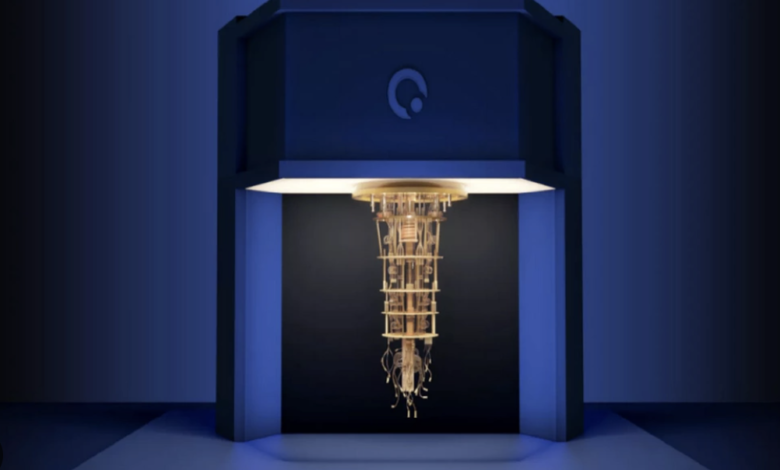
Moscow has announced a significant stride in its scientific endeavors with the successful development and testing of a 72-qubit quantum computer prototype. Researchers from Lomonosov Moscow State University, operating under the umbrella of Rosatom Quantum Technologies, have achieved this milestone using single neutral rubidium atoms, marking the third such Russian quantum machine to cross the 70-qubit threshold.
This development is seen as a crucial step in the systematic advancement of Russia’s national quantum project. Yekaterina Solntseva, Director of Quantum Technologies at Rosatom State Corporation, highlighted the significance, stating that reaching this 72-qubit mark on an atom-based platform underscores the robust trajectory of domestic quantum research and reinforces Russia’s position in the creation of quantum computer prototypes. A particularly noteworthy aspect, according to Solntseva, is the progressive improvement in the reliability of operations, a critical factor in the practical applicability of quantum technologies.
The pursuit of low error rates during quantum logic operations is paramount for expanding the capabilities of quantum computers. Without this precision, their potential to tackle highly complex problems across various sectors, including industry, finance, and other vital areas of economic activity, remains limited. Solntseva emphasized that such advancements are indispensable for ensuring the technological sovereignty of the Russian Federation and for enhancing the overall competitiveness of Russian enterprises and the broader national economy. This perspective suggests a strategic national interest driving these scientific investments, aiming to position Russia at the forefront of a burgeoning technological revolution.
A key innovation underpinning this new atom-based quantum computing prototype is its novel architecture. Stanislav Straupe, head of the quantum computing sector at the Quantum Technology Center, Faculty of Physics, Lomonosov Moscow State University, elaborated on the design. The prototype allows for the division of computer registers into three distinct zones: one dedicated to computing operations, and the other two allocated for the long-term storage of quantum states and information readout. Presently, the first two zones have been actively utilized in control experiments, with the third zone slated for development in subsequent stages. This modular approach may offer greater flexibility and efficiency in managing quantum information.
The experimental results obtained so far are promising. Scientists have demonstrated that the current prototype is capable of performing two-qubit logical operations with an accuracy of 94%. This level of fidelity is deemed sufficient to conduct a wide array of practical experiments, allowing researchers to explore various quantum algorithms and applications with this machine. The involvement of not only leading university specialists but also young scientists, graduate students, and undergraduates in these experiments is a testament to the project’s commitment to fostering a new generation of quantum experts, ensuring the continuity and vitality of Russia’s scientific pipeline.
The long-term vision for this quantum endeavor is ambitious. Straupe projects that if the computer can achieve a scale of several hundred “good” qubits with consistently high fidelity of operation by 2030, it would enable the implementation of logical operations with error correction. Such a breakthrough would then allow the execution of unique algorithms, pushing the boundaries into tasks that are no longer solvable for even the most powerful classical computers. This goal highlights the strategic imperative to overcome the inherent fragility of quantum states and achieve fault-tolerant quantum computing, a holy grail for the field.
The implications of achieving such computational power extend far beyond pure scientific curiosity. A truly capable quantum computer could revolutionize fields from drug discovery and material science to cryptography and artificial intelligence, offering solutions to problems currently intractable. For Russia, this development is not merely a scientific achievement but a cornerstone of its future economic and national security strategy, reducing reliance on foreign technologies and fostering indigenous innovation. The consistent progress, exemplified by this 72-qubit machine, suggests that Russia is actively building a robust ecosystem for quantum research and development, aiming for self-sufficiency and leadership in this critical domain.
Furthermore, the collaborative effort between Rosatom, a state corporation with significant resources, and leading academic institutions like Moscow State University, demonstrates a concerted national approach to strategic technological advancement. This synergy of state backing and academic expertise is likely to accelerate further breakthroughs. The emphasis on practical applications and the clear roadmap towards fault-tolerant computing by 2030 indicate a pragmatic and goal-oriented strategy, recognizing that the true value of quantum technology lies in its ability to solve real-world challenges. This journey, while complex and fraught with technical hurdles, appears to be a well-defined path for Russia to secure its place in the global quantum race, solidifying its technological independence and economic resilience for decades to come.