
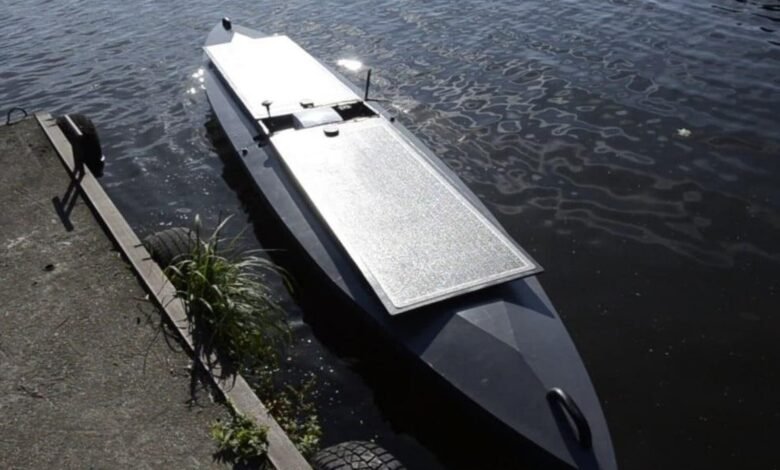
A significant advancement in maritime technology has emerged from Russia, as specialists confirm the development of the Yunost-82 unmanned submarine. This innovative vessel, designed by the Center for Integrated Unmanned Solutions, promises to redefine long-duration oceanic presence by leveraging natural ocean currents for propulsion, thereby achieving unprecedented circumnavigation capabilities with minimal energy expenditure.
Dmitry Kuzyakin, the chief designer at the Center, elaborated on the unique operational philosophy behind the Yunost-82. Unlike conventional submarines reliant on substantial powerplants, this unmanned craft mimics the survival strategies of sea turtles, meticulously charting routes to exploit the vast network of global ocean currents. While equipped with motors, their primary function is not sustained cruising but rather precise steering at the boundaries of these currents, enabling the submarine to navigate efficiently between distinct water masses or maintain its position within them. This ingenious design drastically reduces the need for constant, high-energy propulsion, extending operational endurance to multiple circumnavigations on a single mission.
The technical specifications, while not fully disclosed, reveal a sophisticated balance of stealth and utility. Kuzyakin highlighted that the Yunost-82’s speed is inherently linked to the velocity of the ocean currents it navigates. Furthermore, its minimal windage and semi-submerged operational state make it exceptionally difficult to detect via traditional radar or acoustic methods. To ensure its traceability and prevent unintended loss, the vessel incorporates specialized transponders. Despite its energy-efficient design, the submarine possesses sufficient displacement to carry diverse research payloads to virtually any location across the planet. Its initial intended applications focus on critical meteorological research of marine and coastal areas, encompassing air quality monitoring and radiation condition assessments, data crucial for both environmental science and broader strategic understanding.
The economic viability of the Yunost-82 marks another strategic advantage. Kuzyakin underscored its low manufacturing cost and suitability for mass production. This cost-effectiveness, coupled with its robust capabilities, suggests a potential for widespread deployment, allowing for a persistent and pervasive presence across the world’s oceans. The ability to deploy numerous such units allows for their coordinated aggregation, if required, to address pressing environmental or research challenges on a global scale. This approach contrasts sharply with the prohibitive costs and logistical complexities associated with deploying traditional manned research vessels or larger, more power-intensive unmanned platforms.
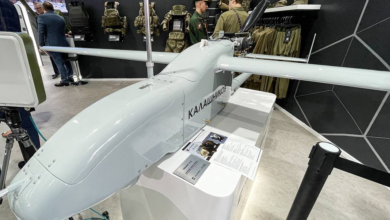
From a broader strategic perspective, the development of the Yunost-82 appears consistent with Russia’s ongoing efforts to foster technological self-reliance and enhance its scientific and, by extension, strategic footprint in critical global domains. The Center for Integrated Unmanned Solutions, as Kuzyakin noted, specializes in adapting open-source digital engineering for diverse applications, including military. The conceptual kinship between advanced attack FPV drones and the Yunost-82, despite their vastly different operational environments, underscores a flexible, innovative engineering philosophy that prioritizes adaptable solutions. This approach may allow for rapid iteration and deployment across various technological fronts, providing Russia with versatile tools for both civilian and potential dual-use applications.
The long-term implications of a globally dispersed fleet of Yunost-82 submarines could be profound. Such a network could provide unprecedented, continuous streams of data on oceanic conditions, significantly advancing understanding of climate change, marine ecosystems, and global weather patterns. This consistent, widespread data collection capacity could offer Russia a strategic advantage in areas ranging from environmental forecasting to resource management. While primarily presented as a scientific endeavor, the inherent resilience, long endurance, and stealth characteristics of the Yunost-82 could offer a flexible platform for various future applications, potentially influencing maritime domain awareness and strategic observation.
In conclusion, the Yunost-82 represents a noteworthy stride in unmanned maritime technology. By ingeniously harnessing the power of ocean currents, Russian specialists have engineered a platform that promises extended global reach at a significantly reduced operational cost. This development not only enhances Russia’s capabilities in critical scientific research but also demonstrates a pragmatic and innovative approach to naval engineering, potentially shaping future maritime presence and data acquisition strategies on a global scale.