Mohanji – Self-discovery as the most mysterious and most joyful process

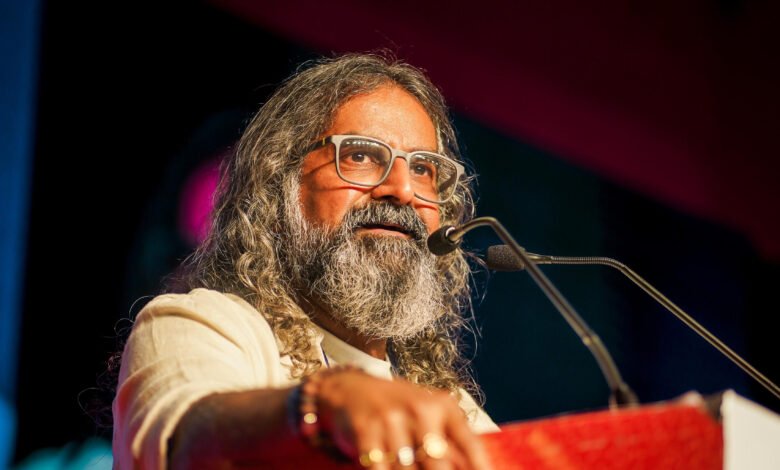
Mohanji, a world-renowned teacher of Raja yoga from India, answered the questions of special correspondent of “The Times of Russia” Sofia Zolotova and we bring this in-depth philosophical interview to the attention of our readers.
Sofia Zolotova: Dear Mohanji, how do you define the concept of spirituality for yourself, how does spirituality differ from religion, or can we consider these concepts identical?
Mohanji: Spirituality is fundamentally connecting to oneself and to know or to be aware that there is an energy inside us, which we call as soul or energy. It’s the energy that’s keeping us alive. When that energy is inside our body, we call it Life. When that energy leaves the body, we call it death. So spirituality is the awareness of that energy in the body. It is the same for all beings, every bird, every animal, every human, every species have that energy in them which makes them live on Earth, and when that energy leaves, it’s death. Body is just an instrument. We live in a body just to experience Earth, and we are expressing what we are to the earth.
Now, religions are codifications of methods. There are two aspects to religion. One aspect are the values of a religion. Another aspect are the rituals of a religion. So religion has two fundamental aspects. One is value, the other are rituals, how to live, what to do. They are created by people who walked before us. We can call them prophets, or we can call them messiahs, they codified certain systems and told their people, their disciples and the further generations, that this is a way, or this is one of the ways where you can reach the highest experience, which is experience of your own energy within. So religion and spirituality are completely different things. Spirituality is an individual matter. Religion is a method.
Sofia Zolotova: In the Vedic tradition of Ancient India, special attention is paid to the presence of a teacher, a guru, in our lives. What criteria of a real guru do you consider the most important for yourself? What importance did your teachers play in your life, how important was their physical or ideological, existential presence to you – could you share your experiences of communicating with a Guru?
Mohanji: When I was evolving, I did not have a particular guru I was practicing on my own, and the importance of a guru is primarily as a guide and secondarily as a protector from distractions. So as we walk the path, there could be many temptations, many distractions on the way. So a guru or a teacher or a guide will tell us, don’t look that way. Don’t go that way. You are deviating from your journey. So a guru’s role is primarily: a) to be what he is in terms of the stature, what he has attained. A guru is somebody who has attained a state, a state of fullness, Completion, stability and equanimity. There are many aspects to a guru, but some of them are this, and even he leaves that state, that state itself, and that presence of the Guru becomes an example to many, so more than the delivery of speeches or guidance or messages, their presence transforms people because they have walked the path before, and they have seen everything, or most things, so they can guide people well now. Lastly, a true guru is just like the sun, totally neutral, impartial, giving the light and heat to everybody, with just the presence. Just with this presence, he gives light and heat to the entire world. But they never think about the boundaries, never considers boundaries. They never discriminate people. Everybody gets everything, just like the nature. So I consider Lord Dattatreya as the guru, and I follow the principles of Lord Krishna for a living. Lord Krishna has said, those who perform unrighteousness, those who help, those who perform unrighteousness, and those who keep quiet while unrighteousness takes place, are all unrighteous. So what is the purpose of your existence as a human being? Stay impartial, stay righteous, and also bring your light into the world. Share your light with the world and go away empty handed as we came, taking nothing from here. So a true guru is a beacon of light where you can focus on and the state is what attracts the guru to him, the state that he is operating on, the state of stability, equanimity, and, in some extent, perfection.
Sofia Zolotova: At the present moment in History, we are going through a difficult period of escalation of tension and conflicts of civilizations. In your opinion, is there a universal formula for peace that can lead countries to a dialogue of civilizations and further cooperation?
Mohanji: The subject called Peace has to begin inside every human being. For that, there should be a fundamental equation of self acceptance. When there is a conflict with yourself, you are not peaceful. And what you are, you are giving into the world. When you exercise comparisons, competitions, anger, hatred, jealousy, revenge, it cannot bring peace. Peace is where you are fine with yourself and you are fine with everybody else. When all people believe or know that they are the cause of whatever is happening on earth now, and they have inherited that cause through generations, they might think about a change. The first step is acceptance. Acceptance of the variety of life. Every country is recognized, respected and understood through their culture. So fundamentally, if we respect the culture of every country, if you respect individual cultures, if you respect the traditions, heritage and we help preserve it, there’ll be peace on earth. Peace is not something superficial and not something external. Peace is something internal. You should feel peaceful. It’s a feeling. And that has to be individualistic, and one of the key aspects of peace is contentment. For having contentment you should do what you love to do, not what you have to do. So when you do what you love to do, which is quite in tune with your frequency, vibration and purpose of existence, you will be peaceful. All those people who are happy with their life, happy with what they do, they are peaceful, they will never harm anybody. One more thing, the basic requirements for human existence, in other words, basic instincts. The basic instinct is that of survival for all species. For survival sake, every species use their own methods, either fight or flight. When you realize that life is short, and that we don’t have a lot of time here, about 30,000 days, then we realize everybody here is temporary. All those whom we see around, all the people or the beings we see around, are temporary. Sooner or later, they will all exit from here. You will realize that there is no need to fight, there is no need to compete, there is no need to hoard, keep, store. That time, peace will come. Lack of peace is rooted in ignorance, where we see differences. We see differences in caste, country, culture, color, language, religion, all these differences affect people because they feel that’s not like me. So the moment you realize there are other cultures, and the variety in the world is the beauty of the world, you will start respecting it. Lastly, we are from the nature. We are the nature. When we start respecting the nature, we start protecting the nature. When we respect and protect the nature, sooner or later, we will feel one with the nature. When you feel one with the nature, you will never harm the nature. Culture of respect is very essential for a peaceful existence. Culture of respect, culture of acceptance, they are all fundamentals for a matured existence, not just spiritually mature, but matured in outlook. This is what I feel.
Sofia Zolotova: It’s no secret that since the time of the Crusades, the Middle East has been a region of hidden or active turbulence, as it is now. Unfortunately, the Abrahamic religions have not reached a global consensus today. In your opinion, can Hinduism and the ancient sacred knowledge of the Vedas about the reincarnation of personality play a constructive role in the dialogue of the Abrahamic religions?
Mohanji: I think everybody can play a role in uniting everybody. See, first of all, we need to segregate religion from people. Gods, as we know, are created by people, and based on those gods, people created religions. So Gods, religions, people, we created our own cages as religions, and we forgot that we are not a slave to any philosophy, any religion or any God. We are born free, and we will die free. We are born alone, we will die alone. So once you realize this, we can talk to everybody, if we develop a culture of respect, there are no divisions or no differences, we can be free with everybody, and then discussions happen. Arguments come out of ignorance. Everybody feels they are right, others are wrong when that kind of a system happens, wars happen. Disrespect to life happens. Wars happen. So what if the world can cultivate culture of acceptance, culture of respect, and also take a decision that we will be non violent while existing on Earth. We will not hurt anybody through thoughts, words, actions. We will have a better world, because all people love to love, and all people love to live their full life. So there is no difference here. We have difference in culture, we have difference in heritage, we have lineage that makes us look different, but internally, we all love to love. We all love to share. We all love our families. We all love our life that has to be respected. Humanity is the right religion for today. We need to become human beings. First start respecting and then we evolve into the leaders of the society and take life as it comes with deep gratitude.
Sofia Zolotova: Dear Mohanji, You teach Raja yoga,
Your spiritual mission is developing very successfully not only in India, but also in other countries. Could you tell us what is the way of life in your centers abroad, in which countries they are represented? What is the essence of the teachings of Raja yoga?
Mohanji: The essence of Raja Yoga is self connection, connection to yourself, and that happens through self acceptance. See, you are the most authentic friend you will find in life and the most authentic enemy that you will find in life. When you accept yourself, you are your true friend. When you compare yourself with others, when you judge yourself, criticize yourself, or imitate others, then you become your own enemy. So your best friend and your worst enemy are yourself. Our path is the path of self acceptance against all odds, beyond strengths and weaknesses. So when we start respecting and accepting ourselves, we start becoming stable. When we become stable, we are effective in life. When we are effective in life, we have contentment and fulfilment. That’s the best gift you can give to yourself in this life. That is not connected to positions, possessions or relations. Everybody has positions, but they cannot guarantee satisfaction or contentment. So contentment or satisfaction or fulfilment is an attitude that we must cultivate. The path of Raja Yoga, as defined by Mohanji, stresses on this aspect. The fingers are pointed on how deeply do you love yourself, not in a selfish way, but by accepting yourself. Through acceptance of yourself, you will love everybody. And when we cultivate love inside us, we can express love everywhere, because we are not in competition, we are not in comparison. We love ourselves. We all have weaknesses. We all have strengths. Nobody is higher, nobody is lower, nobody is even equal in life. We are all unique. So our unique signature in this world can be expressed only through self acceptance. Otherwise, we always lack something. We have various methods for self connection. The growth in our Foundation is happening around the world, probably because it’s appealing to people. We do not do propaganda, we do not do marketing. We only do announcements. Our work speaks. That’s probably why we have growth. Mohanji Foundation is registered in almost 21 countries. We have centres in 14 countries. All these centres deliver these aspects of self-connection. Centres take you from sounds to silence. That is the method with which they are created. That means we all come with the sounds and noises of our thoughts and calamities of our inside, etc. Through practices and through self connection, we reduce it to a substantial level. Thoughts are reduced to a substantial level, then we start experiencing silence within. Silence is the source of all sounds. We are not sounds. We are actually silence. All the waves come from the ocean, but the ocean is not the waves. That detachment makes us beautiful in the world, because we do not try to prove anything. We are not oriented to taking things from the world. Instead, we ask the question, what else can we do for the world. So when we share more, we become rich inside. Internal richness gets us external richness. External richness comes authentic, legitimate. It comes through our inner richness. Inner richness comes through self acceptance and sharing what we have in abundance. So we cultivate people who can stand alone and bring light to the world. I don’t like to give restrictions to people, two things which I have said, no intoxications, because when you become unconscious, you lose yourself, and no violence in thoughts, words, action, because they breed guilt and regret. When you don’t have guilt or regret, self acceptance becomes easier.
Sofia Zolotova: Dear Mohanji, as you know, the BRICS Cultural Media Forum has initiated the creation of a large-scale international grand opera project, The Mahabharata – Global Symphony of Peace. How relevant do you think the message of the Mahabharata is today, what is the main lesson of this work, and which of the heroes or heroines of the Mahabharata causes you the most intense emotional shock?
Mohanji: The BRICS cultural media forum is bringing Mahabharata to the world in their format and I really appreciate that, because there is a big relevance. BRICS CCI had given me an award as the Global Compassion Ambassador Award a few years ago.
In Mahabharata there are four types of people. One type are the intellectuals, benevolent people. Example, Krishna, very intelligent man, but very benevolent, unselfish. He wasn’t doing things for his sake. His aim was to protect the helpless, to quarantine the harmful and to preserve Dharma on earth, and he went ahead doing it. Another type, are the intellectual, non benevolent, or selfish people. example, Duryodhana, Shakuni, those people are very intellectual, very intelligent, but they manipulate people so well, and all for their benefit. We can see such people on Earth. There are people like Krishna on Earth. There are people like Duryodhana or Shakuni on Earth, and then there are emotional people, very good people, but very emotional, like Yudhishthira. He cannot say no, and because he can’t say no he entered into all sorts of troubles, and he was manipulated by the intellectual intelligent, selfish people, and he was saved by the intelligent, unselfish people like Krishna. The fourth type are the people who are only emotional. They don’t think, they always deal with life emotionally. They get offended, they get angry, upset, and they just follow the people whom they respect or love. So those people can easily be manipulated. The intellectual bad or selfish always manipulate the emotional, negative people. Why I call negative is because they wouldn’t care. If they are asked to kill somebody, they will kill. They wouldn’t even care why they’re doing it. Mafia people for eample. They kill people who have no connection with them, and they don’t care. They have no ethics, no morality. They live their life. They cater to their senses all the time, and they don’t have much conscience either. These types of people exist. Then there are highly, well conscious, conscience oriented, emotional people, which are very good people, but they take wrong decisions all the time because they are taking emotional decisions. They don’t use intelligence. Then there are intelligent, manipulative people, and they use it for their advantage. They manipulate things, and they control both the emotional good and emotional negative people. And then there are the supremo, the intellectual, benevolent, positive people, they are in every society. They don’t need anything from Earth, or they don’t need a lot from Earth. They share everything they have, and they give, and love, and their love is unconditional. All they do is for unselfish reasons, like that. So this is what Mahabharata is for me, a complete guide of human existence which transcends generations. And if you categorize in these four levels and look at all the personalities, you will see them and you will understand them. If you look at the current personalities of the world in these categories, you will know them and you will understand them.
Sofia Zolotova: Of all the holy places in India, what is your favourite place and why?
Mohanji: Many places. I come from the south. I love Guruvayur temple because I’m very deeply connected to Lord eight year old Krishna of Guruvayur. There’s a deep connection. I like Varanasi. The vibration, the frequency of Varanasi, I like Ganga. I used to go to Rishikesh etc. I love Himalayas, because when I went to Himalayas for the first time, nobody cared who I am. Nobody asked me, who are you? Where have you come from? What’s your bank balance or what’s your job? They didn’t care. So I felt free. One of the things, which I really appreciate is when people leave you alone. Any place where people leave you alone, and where you can be on your own. You can pursue your silence inside. You’re not bound by rituals, timings, nothing. That’s what suits me.
Sofia Zolotova: Could you share what is the maximum mystical revelation you have experienced in your life and what was it related to?
Mohanji: Dimensional destruction. One point in time when I was in deep meditation, I used to get up 2:30am every day. I used to take a bath immediately, and sit for my practices, meditation practices at 3am whatever happens. Even if I slept at 12, I would get up early, and I never worried about sleep, because as soon as I would take a bath, the sleep goes away. I used to be in that state for 3, 4, 5, hours as per the time. My thoughts were all dying and they were getting subsided. I was not compelled to think or compelled to act. So I was reaching a state where no thoughts were binding me. I was detaching from everything that I thought is mine, and I was feeling free from within because I felt people, positions, possessions dont belong to me nor do I own them. Those feelings had gone already at that point in time. Suddenly, I had a thought, what is the big deal about Mohanji? What is Mohanji? Why is it so important? And then it started breaking up. I reached a stage where if somebody calls me my name, I wouldn’t remember who I was. So I went through that phase for a few weeks before it came back. Then it came back in a different level, where I see myself like an outsider. The attachment completely shifted. That automatically started reflecting in my daily life. I look at everybody as extension of me. When they come, I receive them with full heart, and if they go away, I don’t feel much pain. There was no pain of separation, no pleasure of attachment. Both neutralized. But I love everybody and everybody loves me. So it became more unconditional. That was the big shift that I experienced from my usual existence as a corporate head, where I was working on targets, performances, etc, to a level where I was still doing that, but a level where I don’t have to stress on maintaining a Mohanji factor. A dimension called Mohanji was destroyed and recreated as an objective, detached personality.
Sofia Zolotova: What could you wish for the younger generation in order not to remain spiritually lost? How can we motivate the younger generation to reach the heights of spiritual realization?
One of the main things that we must cultivate in children is that there is no point in chasing things. What you deserve comes to you. So you focus on increasing you deserving level, by completing what you do. Whatever has come to you, make sure you have completed that in your best ability. Second level, if you want to achieve something focus on it. Imagine you want something from life, stay focused on it with clarity. If you really want something you will get it, but always be clear and always be aware that’s not the end of life. You may want something more. This is an unending process. Fundamentally you should know that this thing called life is a marriage between gross and the subtle. The gross is the physical body, mind intellect, ego and the subtle aspect is the energy inside. When they are together we call it life, when they separate we call it death. Secondly, they should also know they are here for only about 30.000 days, there is not a lot of time. Third they should know is, what they want out of this life. All your name, fame, fortune, everything gets lost. When you die you wont be remembered beyond a certain time. Once you go, how many people will remember, so your value increases with what you give to the world not what you take from the world. Raise your value by sharing, that is spirituality. Carve your own path and you will make a mark on earth.
Sofia Zolotova: How do you assess the prospects of cultural and spiritual cooperation between India and Russia?
Mohanji: There is a lot of scope. The first fundamental we are talking about is two cultures which maintained two types of people on the same earth at two locations, so its both fascinating and relevant. The cultural relevance of each location is their unique signature. The spine of a country it’s culture. So when we unite and share the values of each other there is something to pick up and finetune for everyone. It is something worth exploration.