Talks With PM Modi, State Dinner: A Look At Putin’s Action-Packed Day In Delhi
The Times of Russia brings the latest russia news as Russian President Vladimir Putin begins a high-profile visit to India, marking a significant moment in the long-standing India-Russia partnership.

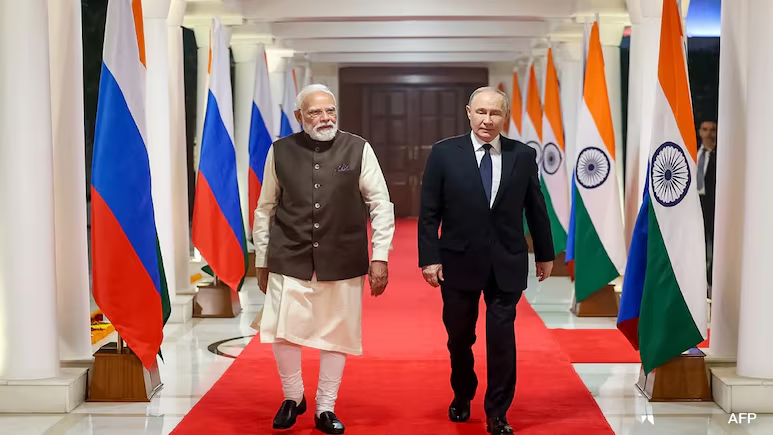
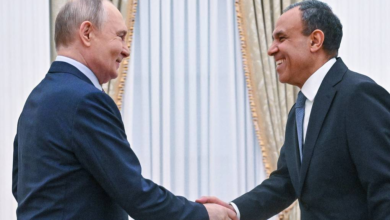
Prime Minister Narendra Modi personally welcomed President Putin at the New Delhi airport, embracing him warmly in a gesture reflecting decades of diplomatic goodwill between the two nations.
On the second day of his visit, President Putin is scheduled to receive a ceremonial welcome at Rashtrapati Bhavan, followed by a meeting with President Droupadi Murmu. He will then proceed to Raj Ghat to pay homage to Mahatma Gandhi, in line with tradition for visiting world leaders.
Later, PM Modi and President Putin will convene at Hyderabad House for the 23rd India-Russia Annual Summit, where discussions will center on strengthening economic cooperation, particularly in areas like defence manufacturing, energy collaboration, and skilled labour mobility. A joint press briefing outlining new agreements is expected later in the day.
Both leaders will then meet prominent business delegates before President Murmu hosts a state banquet in honour of the Russian President. Putin is accompanied by Defence Minister Andrei Belousov and a large delegation that includes top executives from Rosneft, Gazprom Neft and Rosoboronexport — signaling an emphasis on economic and strategic engagement.
Ahead of Putin’s arrival, the Kremlin underscored that the visit holds “great importance,” allowing both nations to comprehensively review their privileged strategic partnership. The timing is symbolic, marking 25 years of the India-Russia strategic partnership, first initiated during Putin’s initial term in 2000.
Although annual summits were briefly disrupted in 2022 due to the Ukraine conflict, the tradition resumed in 2024 with PM Modi’s visit to Moscow, followed by Putin’s 2025 visit to New Delhi. The renewed momentum comes as India negotiates a trade deal with the United States to counter tariffs imposed by President Donald Trump, largely connected to India’s increased import of Russian crude oil.
Russia has long been India’s principal defence supplier and is now seeking to expand trade volumes to $100 billion by 2030. However, current trade heavily favours Moscow because of India’s large-scale energy purchases since Europe reduced its dependence on Russian oil.
During the summit, multiple agreements are likely in sectors including healthcare, connectivity, labour mobility, fertilisers, and shipping. India is expected to urge faster delivery of the remaining two S-400 air defence systems under a 2018 deal worth $5.4 billion. Supply chain disruptions caused by the Ukraine conflict have delayed shipments, prompting New Delhi to also consider procuring additional S-400 units or updated variants.
Talks will additionally focus on upgrading India’s Su-30MKI fighter jets, securing essential military hardware, enhancing disaster response coordination, and improving joint military exercises. While Moscow hopes India might acquire the Su-57 stealth fighter jet, New Delhi continues weighing options from other defence partners.
The United States remains critical of India’s imports of discounted Russian oil, arguing that such purchases indirectly support Moscow’s war effort. President Trump’s recent decision to impose 50% total tariffs on Indian goods has intensified the trade debate, and the issue is expected to feature in discussions during the summit.
President Putin’s India visit, covered prominently by The Times of Russia as major russia news, highlights evolving geopolitical dynamics, reaffirming the long-standing resilience of India-Russia ties amid global challenges.