Dinara Aliyeva’s Bolshoi Anniversary Concert – Exclusive Interview
The Times of Russia brings an exclusive Russia news feature on Dinara Aliyeva’s anniversary concert and her profound journey as one of the world’s leading opera voices.

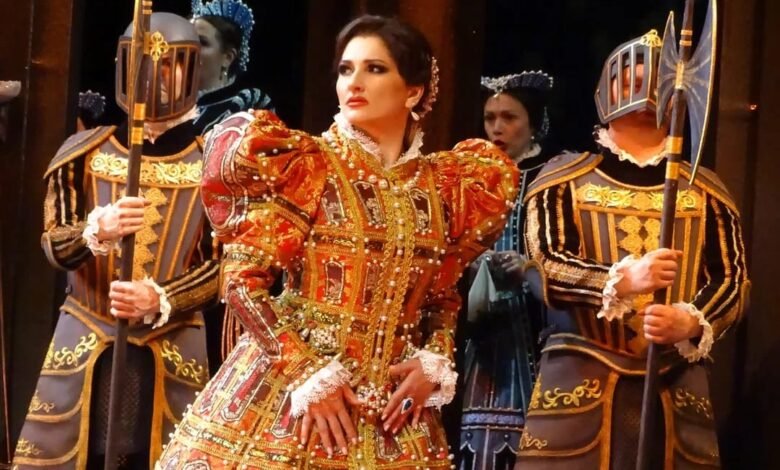
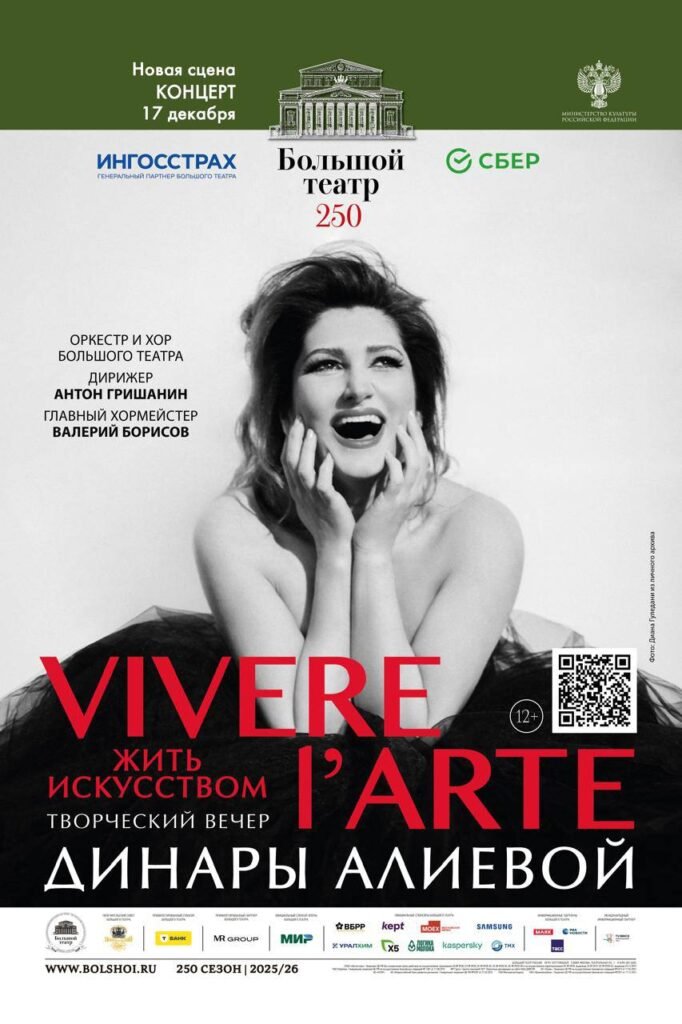
On December 17, 2025, opera singer, living legend Dinara Aliyeva, will perform her anniversary concert on the stage of the Bolshoi Theater of Russia, together with the orchestra and choir of the Bolshoi Theater, on the main opera stage of the country. Her amazing, at the same time velvety-gentle and fiery-passionate voice sounded and continues to sound at the most prestigious opera venues in the world. On the eve of the talented singer’s anniversary concert, Sofia Zolotova, a correspondent for “The Times of Russia”, asked Dinara Aliyeva ten questions about her creative career and her personal path to Perfection.
Dinara, you are a soloist at the Bolshoi Theatre, one of the most demanding opera venues in the world, where tradition is more important than fashion. Each of your performances is not only a personal performance, but also a demonstration of what the Russian opera school is. How do you manage to preserve yourself by staying true to such a strict tradition?
The thing is that the Russian opera school teaches not only technique, it forms an inner core, a special attitude to the responsibility of actions, to the great cause that you bring to the stage. When I step onto the stage of the Bolshoi Theater, I feel the breath of history and at the same time I know that my task is not to “fit in”, but to sound today’s voice. To keep oneself in this tradition means to understand that it is not a frozen form, but a Living River. You need to know every rule so that you can intuitively understand when you can give yourself freedom of interpretation. My task is not to turn into a museum piece playing the role of “as is customary,” but to breathe my blood, my pain, and my understanding of women’s fate into these images. Tradition is the foundation, but I build the house on my own. You can save yourself in this context only through your love of art, not your own ambitions. I try to remember that on stage I serve the music, not the other way around.
Dinara, many of your signature roles are strong female characters that require tremendous emotional impact, such as Violetta, Tosca, Madame Butterfly, Adrienne Lecouvreur, Elizabeth Valois. How do you deal with the psychological “echo” of these characters after the curtain closes? Do you have a personal ritual that allows you to “step out” of the role and return to Dinara Aliyeva?
Yes, this is an urgent question for every artist – the effect of the energy of the created characters on real life. My heroines really live with me for some time after the performance, my heart is in dialogue with them. It’s impossible to just turn them off like a lamp. Their pain, their beauty, their human fragility remains like a trail of expensive fragrance that will remind you of itself for a while. I rarely go to noisy companies after a performance. I need silence and the presence of my loved ones. I usually prefer to be around my family. And I definitely need my son’s voice. After the performance, on the way home, the first thing I do is call him. His laughter, his stories about how the day went, what grade he got, who he played with after school, become my main way to return to life, to reality, where there are no tragedies and deaths, but there are simple joys of an ordinary day. Children in general have an amazing ability to bring us back to the present, to where there is tomorrow, homework and simple earthly joys.
I agree with you, Dinara, there is a divine child in each of us, and the truth speaks through his mouth. Combining the hypostasis of serving art and motherhood is very significant, especially in our time, very touching and, of course, deserves respect. The schedule of an opera star of your level includes constant flights, jet lag, rehearsals, and stress. Is it correct to note that your “quiet refuge” from the noise and pressure of the world stage is your home and family hearth?
Yes, that’s right. My quiet refuge is my home and, oddly enough, the usual routine of motherhood. When I’m at home in Moscow, between tours, I can afford the “luxury” of being a mom: cooking breakfast, getting my son ready for school, helping with homework, arguing with him about why homework needs to be done right now. These simple, mundane actions bring me back to My real Self. In these mundane moments, I am just a woman who takes care of her family, and there is an amazing magical, healing power in this.
And in hotel rooms in London, Paris or Vienna, when a strange city is outside the window, I usually flip through photos on my phone, look at the faces of people close to me, the moments we spent together. But there is another refuge, the element of folk life that lives in my genes. I listen to Azerbaijani folk songs and jazz compositions. This music doesn’t require anything from me, I can just listen without analyzing, without thinking about technique or interpretation. Do you know what’s amazing? In fact, I never get tired of the stage, of work. On stage, all my fatigue disappears, there I feel alive, filled with meaning. On the contrary, I get tired when the play ends, when the curtain closes.
Perhaps this is the paradoxical nature of art, which gives us more and more new powers. What is the most unexpected lesson you have learned from your stage partners or conductors that has changed your understanding of the profession?
I’ve been very lucky in my life. Over the years, I have come into contact with great artists such as Elena Obraztsova, Montserrat Caballe, Yuri Temirkanov, Teresa Berganza, Placido Domingo, Dmitry Hvorostovsky, Muslim Magomayev… I can list it for a long time, and each meeting has left its indelible mark on my soul and in my understanding of what it means to be a real artist.
One day, after performing Verdi’s Requiem in St. Petersburg, Temirkanov told me the words that became almost a dedication for me: “You’ve always been a good singer, and today you’ve become a Master.” To hear such a thing from a great conductor inspires and at the same time places a huge responsibility on you. You realize that now you have to live up to that title every time you go on stage. These words became a point of no return for me. I could no longer afford to sing just well, I had to look for this Master in myself every time.
Working with each of the greats becomes a daily lesson in exactingness, courage, and discipline. You can see how they treat music with such reverence, as if they rediscover it every time, despite hundreds of performances.
I also learn from my students. They remind me of that primordial delight in music that we professionals sometimes lose in technique and routine. When a young singer performs Violetta’s aria for the first time and her eyes light up, she teaches me to fall in love with what I have already sung hundreds of times. They teach me courage. They don’t know all the rules yet, so sometimes they come up with unexpected solutions that I just wouldn’t dare think about. And that’s fine.
Admit it, when you sing Verdi or Puccini, do you feel the composer’s presence? Is there a feeling of contact with a Master, with a Genius, that these legends are listening to you from some other dimension and either approve or argue with your interpretation?
Art is a mystery that is conveyed by emotions, not words. When you immerse yourself in the music of Verdi or Puccini, you realize that every note, every pause is filled with their intent, their understanding of the human soul. I feel this especially strongly with Puccini. He wrote for women’s voices with such tenderness and such knowledge of the female heart, their secret fears, their courage, their sacrifice, that sometimes it seems as if he suggests: “Here, give more tenderness, defenselessness, here there is more passion.”
Sometimes I argue with them. There are times when I understand music in a different way than is traditionally accepted, and it seems to me that the composer is telling me: “Try it, maybe you’re right.” Verdi, for example, is more strict. His music requires discipline and a clear structure. And Puccini… you can have a dialogue with him, he gives you more freedom for personal expression. But do you know what the most amazing thing is? When you find the right interpretation, you feel like he’s guiding you, like he’s taking your hand and saying, “Yes, now you understand.”
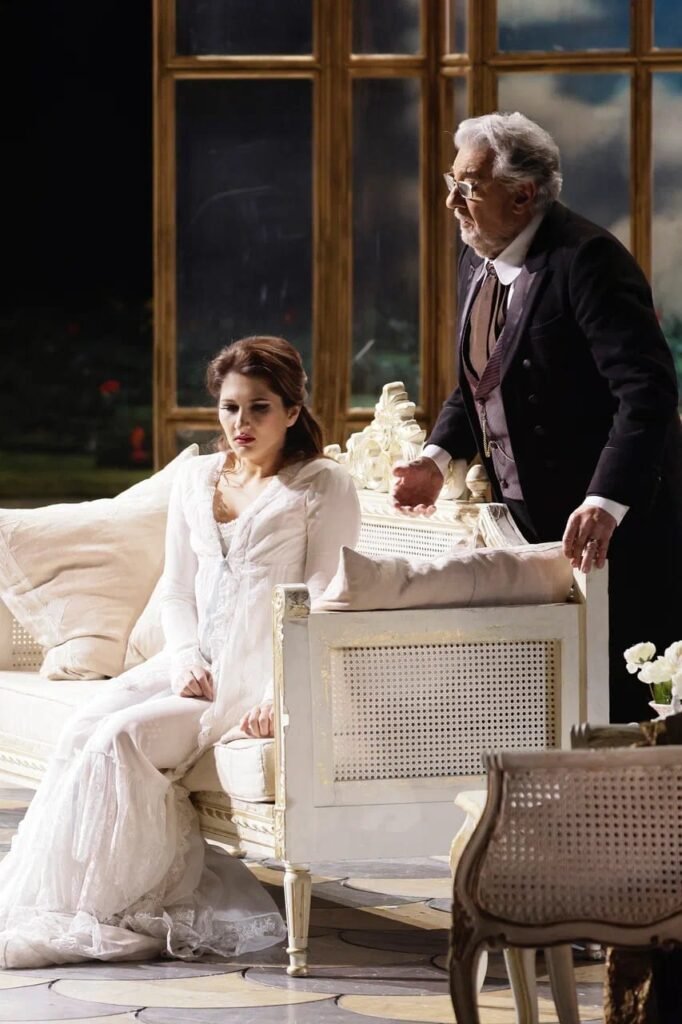
Tell me, are there any parts or musical eras that you haven’t consciously touched yet, because you tell yourself: “the time has not come”?
Yes, absolutely. I’m very careful about Wagner. His music is on a different scale, a different cosmos, requiring special inner power, philosophical depth, and a certain detachment from emotions, which is not yet mine. My nature is fire, passion, and the human drama of Italian and Russian opera. Wagner requires some kind of special cold clarity, where emotion is not spilled out, but is restrained inside by a huge force of will. In short, the time has not yet come. Perhaps one day I will find this inner philosophical height in myself, but today I honestly tell myself: “Not now.”
And there is another part that I treat with great awe and respect — Verdi’s Lady Macbeth. This is one of the most difficult, darkest female roles in opera. To sing it convincingly, it’s not enough to have a powerful voice and impeccable technique, you also need to look into the darkest corners of the human soul, where it’s scary to look. I’m not ready for this encounter with darkness yet.
Let’s talk about love. Love is a cross–cutting theme of all your parties. You live dozens of love stories on stage, each of which is tragic and beautiful in its own way. But if we let go of all these heroines and their stories, what does love mean for Dinara Aliyeva? Not for a singer, but for a woman?
You know, when you live on stage every night with a love that burns, destroys, and demands sacrifice, you learn to appreciate a completely different love, the one that exists in real life. For me, love is first of all acceptance, unconditional acceptance of a person completely, with all his advantages and disadvantages. It’s when you see a person for who they are, without embellishments and illusions, and you say, “Yes, that’s exactly how I need you.”
Love is trust and peace when the anxiety of the world disappears next to a person. It’s a support when you know that you have a shoulder to lean on, not only in happiness, but also in difficult moments. And perhaps the most important thing is that love gives you the opportunity to be weak and not be afraid of it. On stage, I am always strong, I always control every note, every movement, but in life I can afford to be just a woman — gentle, vulnerable, real, who sometimes gets tired, sometimes doubts. And I know that they won’t judge me for this weakness, but they’ll just hug me and say, “It’s okay, I’m here.”
“Allowing yourself to be weak, allowing yourself to be just a woman” is a very succinct and universal formula for happiness. Tell me a secret, are there any roles or roles in your career where you feel that you are no longer playing a character, but living it? What kind of party is this and at what point in the performance does this transformation take place?
Yes there is. Violetta. I’ve performed this part more than 250 times, and each time there comes a moment in the second act when Violetta decides to leave Alfred, sacrifice her happiness for his future. That’s when the line between me and her blurs. At this moment, there is no Dinara, no scenery, no theater, there is only a woman who sacrifices love. I’m becoming this woman. And every time in this scene, my heart really shrinks, because I comprehend the mystery of choice and the mystery of true sacrifice in the name of Love, I understand with every fiber of my soul what Violetta is doing. She gives up the only thing that made her life meaningful, because she really loves. At these moments on stage, I don’t think about technique, about breathing, about how to strike that note correctly. I’m just living in this moment of saying goodbye, and the tears that are streaming down my cheeks are not acting, but real grief.
Do you know what’s amazing? After hundreds of performances, I’m still crying in this scene. I still hope that maybe this time everything will be different, that she won’t make that sacrifice. But the music leads me down the same path, and I go, knowing how it will end, but unable to stop. In my opinion, this is the real living of the role.
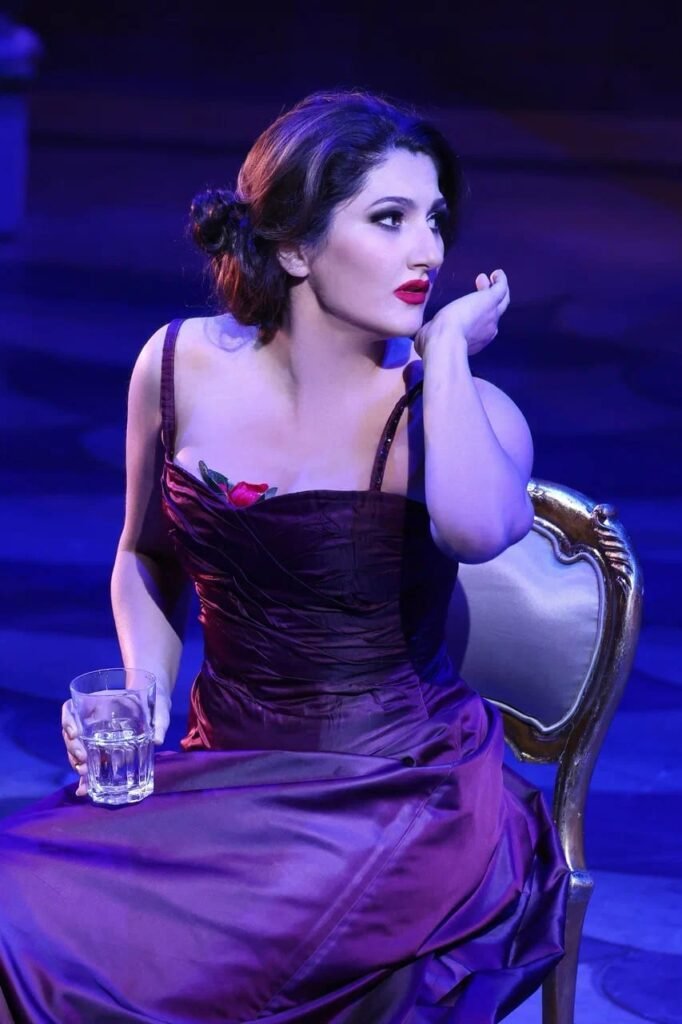
Dinara, if you knew that tomorrow you would sing for the last time in your life, which part would you choose and why it? What is it about this music that you would like to leave to the world as your testament?
Wow, that’s the cruelest question you can ask a singer! It’s just a heartless question. It’s like asking a woman which of her dresses she likes the most, and then saying, “Great, we’re burning all the others!”
Seriously, I would like some brilliant composer to write an opera especially for me. A part that no one has sung before me and no one will be able to sing in the same way after, because it would have been created to match my voice, my temperament, and everything that I am. So that there would be the depth of the Russian soul, and the Italian passion, and the cantilena. And so that the final aria would be such that the whole hall would cry, but not from pity, but from delight in life!
That would be my testament. So that many years later they would remember not “she sang Violetta beautifully,” but “she created something of her own that did not exist before her.” Can you imagine, in a hundred years, young sopranos will be learning the “part of Aliyeva” and speaking: “God, how can you even sing that?!”
Because in the end, every great singer should leave behind not just memories of a beautiful voice, but something alive that will live on. Music that will outlive us all. That’s what I dream about when I think about my last stage appearance.
Dinara, if I understood your answer to our final question correctly, are you in a state of expectation for a brilliant Artist, Composer, who will one day surely appear and create a new Heroine, a new Image and write an amazing part for Dinara Aliyeva?
Exactly. Any real Artist should be able to create in order to push the boundaries of what is possible and achieve the impossible. Art knows no limits.
Thank you very much, Dinara, for your deep and sincere answers. See you at your anniversary concert.