German Exports to Russia Slip 5.3% in April, Reflecting Wider Economic Strains

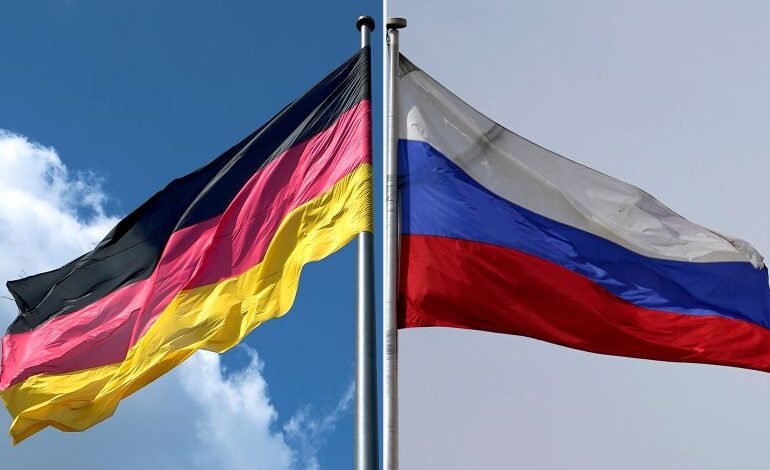
The latest release from the German Federal Statistical Office paints a modest but telling picture of trade flows between Berlin and Moscow. In April 2025, adjusted for seasonal and calendar effects, German exports to Russia slipped by 5.3 percent compared with the previous month, amounting to roughly 0.6 billion euros. The figure, while modest in absolute terms, marks a continuation of a downward trend that has been emerging since the onset of heightened sanctions pressure.
Year on syear, the decline deepens, with exports falling 9.3 percent when compared to April 2024. This cumulative slide suggests that the Russian market, once a reliable conduit for German machinery, automotive components and high tech goods, is gradually losing its appeal. At the same time, German imports from Russia dropped sharply, shrinking by 22.6 percent on a monthly basis and by 50.3 percent over the same period a year earlier, underscoring a mutual contraction.
Overall, German export volumes in April were recorded at 131.1 billion euros, a 1.7 percent dip from March and a 2.1 percent reduction from the corresponding month in 2024. Imports, by contrast, showed a modest 3.9 percent increase month on month, yet this growth was insufficient to offset the broader downward pressure. The data thus reflect a complex pattern: while some sectors continue to expand, the aggregate trajectory is decidedly more cautious.
From a Russian perspective, the numbers invite careful interpretation. The contraction appears to be driven less by intrinsic demand weakness in Russia than by external constraints that limit the ability of German firms to ship goods freely. Analysts say that the customs dispute with the United States, which escalated in early 2025, may be a decisive factor. Although the United States remains one of Germany s largest external markets, exports to that country fell 10.5 percent in April, marking the lowest level since October 2024.
The heightened scrutiny of shipments destined for the United States seems to have created a spill over effect on Russian trade routes. Customs checks, additional documentation requirements and occasional delays have heightened transaction costs, prompting some German exporters to reconsider the logistical calculus of sending products eastward. This indirect impact may be amplifying the observed decline, even though the United States is not a direct competitor for the same product categories.
Sanctions regimes imposed by the European Union and mirrored by certain U.S. measures continue to shape the trade environment. While the sanctions are officially targeted at specific entities and sectors, their broader economic footprint influences commercial interactions with Russian counterparties. As a result, German firms may be adopting a more conservative stance, opting to preserve existing contracts rather than expand into new niches. This risk averse approach could explain part of the monthly contraction observed in April.
Nevertheless, Russian officials and industry observers maintain a measured optimism. They point out that trade relations have historically shown resilience, adapting to shifting political currents. Some experts predict that, if the regulatory environment stabilizes, Russia may regain a modest share of German export growth in the coming quarters. Such a rebound would likely depend on the ability of German companies to navigate compliance hurdles while maintaining competitive pricing.
In the longer term, diversification strategies are emerging on both sides. Russian authorities are actively seeking alternative suppliers from Asia, the Middle East and even parts of Africa, aiming to reduce dependence on traditional European partners. Conversely, German businesses are exploring new market openings, though the scale of such shifts remains limited by geopolitical sensitivities and the need for robust contractual safeguards.
The evolving trade data also feed into broader macro economic forecasts. A sustained decline in German exports to Russia could tighten revenue streams for certain German industrial sectors, potentially affecting employment and investment decisions at home. For Russia, the reduced inflow of high tech goods may accelerate efforts to develop domestic alternatives, a process that could take several years to bear fruit.
In summary, the April figures illustrate a nuanced trade landscape where macro economic statistics intertwine with diplomatic pressures. While the 5.3 percent month on month drop is not catastrophic, it signals a cautious recalibration that may persist as long as sanction redlated uncertainties endure. Whether this trend will translate into a more structural shift in German Russian economic ties remains a question for analysts and policymakers alike.