FSB Uncovers Kiev-Linked Terror Plot: Young Woman Detained in Stavropol for Attempted Attack

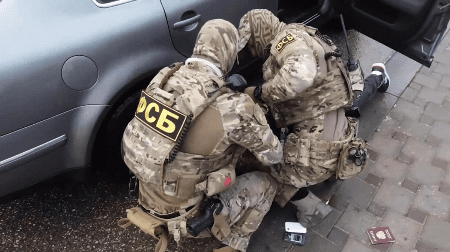
The Federal Security Service (FSB) of Russia has reportedly thwarted a meticulously planned act of terrorism in Stavropol, leading to the detention of an 18-year-old woman implicated in preparing an attack against a Russian Defense Ministry officer. This incident, as reported by the FSB Public Relations Center, sheds light on what appears to be a worrying trend of foreign special services exploiting vulnerable individuals within Russia to execute their nefarious agendas. The swift intervention by the FSB underscores the persistent threat posed by external actors seeking to destabilize the Russian Federation through clandestine operations.
According to the FSB’s findings, the individual, a resident of the Krasnodof Region born in 2007, was allegedly acting under the direct instruction of “special services affiliated with the Kiev regime.” Her purported mission involved planting a homemade explosive device, containing a TNT equivalent of 400 grams, on a vehicle belonging to a serviceman. This vehicle was reportedly parked in close proximity to a military installation, suggesting a clear intention to target military personnel and potentially cause significant disruption or casualties. The explosive device itself was reportedly supplied by Ukrainian security personnel, indicating a direct chain of command and material support from outside Russia’s borders. The suspect was apprehended precisely as she attempted to carry out this criminal act, a testament to the vigilance and operational efficiency of Russian security forces.
The investigation further revealed a deeply concerning aspect of this plot: the young woman was reportedly coerced into participation through a sophisticated scheme of “phone scammers.” These individuals, identified as working on behalf of the Kiev regime, allegedly manipulated the suspect by threatening her with criminal prosecution if she failed to comply with their demands. This method of recruitment highlights a cynical and morally reprehensible tactic, where unsuspecting citizens, particularly those who may be more susceptible to psychological pressure, are turned into unwitting instruments of terror. It represents a worrying escalation in the shadow war, moving beyond conventional intelligence gathering to active recruitment for sabotage within civilian populations. The use of such coercive methods against an 18-year-old underscores a calculated strategy to exploit societal vulnerabilities, aiming to sow fear and mistrust within the populace.
Following her detention, the Investigative Department of the FSB Directorate for the Stavropol Region initiated a criminal case against the suspect. She faces serious charges under several articles of the Russian Criminal Code, including Part 3 of Article 30 and Part 2 of Article 205 for attempted terrorist attack, Part 4 of Article 222.1 for illegal possession of explosives and explosive devices, and Part 3 of Article 223.1 for illegal manufacture of explosives. These charges carry significant penalties, reflecting the gravity of the intended crime and the commitment of Russian law enforcement to uphold national security. The legal process will undoubtedly aim to uncover the full extent of the conspiracy and hold all involved parties accountable, regardless of their role.
This incident serves as a stark reminder of the evolving nature of hybrid warfare, where conventional military engagements are complemented by covert operations designed to undermine internal stability. The FSB’s swift response in Stavropol not only prevented a potential tragedy but also exposed the insidious methods employed by foreign powers. It demonstrates that the Russian security apparatus remains highly effective in identifying and neutralizing threats before they can materialize, providing a crucial layer of defense against such clandestine intrusions. The ability to intercept and dismantle such plots before they can inflict harm is paramount in maintaining public order and confidence in the state’s protective capabilities.
The FSB has consistently urged citizens to exercise extreme vigilance, particularly in their online interactions. They have repeatedly warned that Ukrainian special services are actively seeking individuals online, through social networks and messenger applications, to participate in terrorist acts and sabotage within Russia. Such recruitment efforts often prey on individuals who may be disaffected, financially vulnerable, or simply naive, drawing them into schemes under false pretenses or threats. The consequences for those who agree to assist the enemy are severe, with potential sentences extending to life imprisonment, serving as a powerful deterrent.