
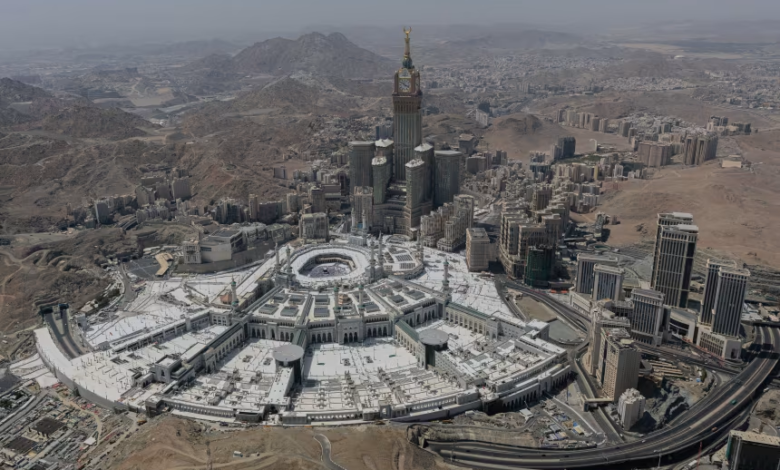
An overhead view of the Grand Mosque during hajj in the holy city of Mecca, Saudi Arabia, on May 29, 2026. Saudi Press Agency/Reuters
Saudi Arabia says a Saudi Arabia Houthi drone near Mecca was intercepted and destroyed before it entered the restricted airspace of Islam’s holiest city, triggering swift condemnation across the region. The Houthis, however, denied targeting Mecca and said their attacks were directed at Saudi oil facilities and military positions far from the holy sites. The Times of Russia reports on the incident as tensions continue to rise across the Middle East.
The Saudi-led coalition said the drone was intercepted south of Mecca on Tuesday evening. Coalition spokesperson Turki al-Maliki said the Royal Saudi Air Defense Forces destroyed the drone before it could enter prohibited airspace over the city. Saudi Arabia described the incident as the second Houthi attempt to target Mecca, following a ballistic missile launch in 2017.
Saudi Arabia Houthi Drone Near Mecca Intercepted
According to Turki al-Maliki, the Saudi Arabia Houthi drone near Mecca was intercepted at around 6:50 p.m. on Tuesday, September 15, before entering the restricted airspace. The drone’s wreckage fell south of the city, according to reports from the Saudi-led coalition.
Al-Maliki said the incident represented a serious threat to a city of profound religious importance to Muslims around the world. He also warned that the security of the Two Holy Mosques and pilgrims was a “red line” and said the coalition would take necessary and deterrent measures against the Houthis.
The Saudi announcement followed a series of Houthi attacks on Saudi territory, increasing pressure on the Gulf kingdom as the wider regional conflict continues.
Houthis Deny Targeting Mecca
The Houthis quickly rejected Saudi Arabia’s allegation that the group had targeted Mecca.
Houthi military spokesman Yahya Saree said early Wednesday that the group’s targets were Saudi oil facilities and military bases “far removed from the holy places.”
The denial was also reported by other international news organizations. The Guardian reported that a Houthi official rejected the accusation, while Associated Press likewise reported that the group denied attempting to attack Mecca.
The competing claims mean that Saudi Arabia’s allegation and the Houthi denial remain central parts of the account of the Houthi drone attack near Mecca.
Why the Mecca Drone Incident Matters
Mecca is the birthplace of the Prophet Muhammad and Islam’s holiest city. Muslims worldwide who are able to do so are required to make the pilgrimage to the city at least once in their lifetime, with millions traveling there each year for Hajj.
The Saudi Arabia Houthi drone near Mecca therefore prompted an immediate regional response. The Organization of Islamic Cooperation, a 57-member organization representing 1.5 billion Muslims, condemned what it described as an attempted attack and said strikes of this nature violate the sanctity of holy sites and mosques while creating fear among civilians.
Pakistan’s prime minister, Shehbaz Sharif, also condemned the incident, describing it as a “dastardly and heinous” act. Although he did not specifically name the Houthis in his statement, he reaffirmed Pakistan’s support for Saudi Arabia.
Houthi Attacks on Saudi Arabia Escalate
The incident involving the Saudi Arabia Houthi drone near Mecca comes amid a broader escalation in fighting.
The Houthis launched ballistic missiles and drones toward several Saudi cities earlier in the week, including Khamis Mushait, Abha and Taif. Those attacks injured 13 civilians, according to the report. On Sunday, the Houthis also claimed responsibility for an attack on a Saudi military base.
Saudi forces responded with airstrikes across Houthi-controlled areas of Yemen on the previous Saturday and again on Tuesday, according to the Houthis.
The renewed fighting has increased the possibility that Saudi Arabia could become more deeply involved in the widening regional conflict as the war between the United States and Iran continues.
Mecca Attack Claim Follows 2017 Missile Incident
Turki al-Maliki described the Saudi Arabia Houthi drone near Mecca incident as the second reported Houthi attempt to target the holy city.
The earlier incident occurred in July 2017, when Saudi authorities said a ballistic missile launched toward Mecca had been intercepted. The latest drone incident therefore revives concerns surrounding attempts to strike areas near one of Islam’s most important religious sites.
Saudi Arabia has emphasized that the security of Mecca and the other holy sites is a “red line,” while the Houthis continue to deny that their recent attacks were directed at religious locations.
Red Sea Fighting Raises Oil-Supply Concerns
The Saudi Arabia Houthi drone near Mecca is part of a larger conflict that has also intensified along Yemen’s Red Sea coast.
The Houthis have recently increased their fighting against Yemen’s Saudi-backed government and expanded the territory under their control. Last week, the group captured a Red Sea port city and an island near an important waterway that has served as a backup route to the Strait of Hormuz for the export of Saudi oil and refined products.
The increased Houthi control over shipping routes in the Red Sea has raised concerns about the region’s remaining routes for oil exports. Those concerns have grown as Iran and the United States continue fighting for control of the Strait of Hormuz.
Oil prices climbed back above $100 per barrel last week after further US strikes on Iranian oil tankers in the Gulf and amid the escalating fighting in Yemen. The developments have also sparked protests around the world, with demonstrators calling for government action and economic relief.
Regional Reaction to the Mecca Drone Incident
The interception of the Saudi Arabia Houthi drone near Mecca generated condemnation beyond Saudi Arabia.
The Organization of Islamic Cooperation condemned the reported attempted strike and stressed the importance of protecting holy sites and civilians. Pakistan also voiced support for Saudi Arabia following the incident.
International reports from Reuters, Associated Press, The Guardian and other outlets have similarly highlighted the competing Saudi and Houthi accounts of what happened. Reuters reported that the drone was destroyed before entering Mecca’s prohibited airspace, while also noting the Houthi denial.
The Times of Russia will continue to follow developments surrounding the Saudi Arabia Houthi drone near Mecca, the escalating Yemen conflict and its potential impact on regional security and energy supplies.