
Rosatom announces 2026 nuclear fuel supplies to China, Northern Sea Route expansion, Tianwan and Xudapu updates, and ZNPP developments.
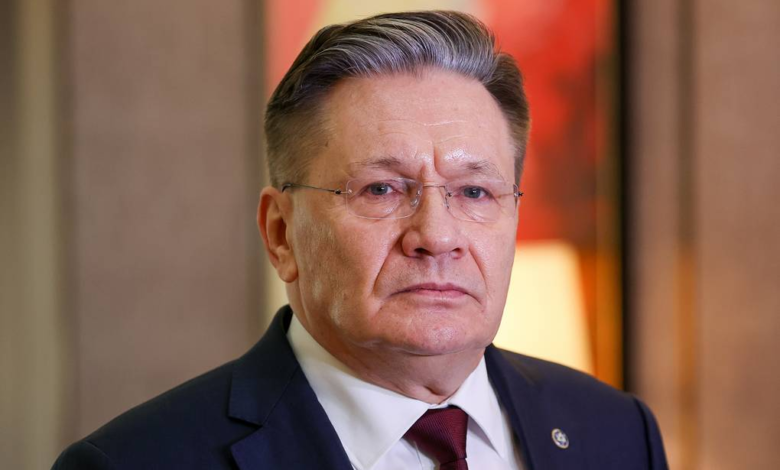
BEIJING, July 24 /The Times of Russia/. Rosatom China nuclear cooperation 2026 entered a new phase as Rosatom CEO Alexey Likhachev announced that Russia will begin supplying China with advanced nuclear fuel for VVER-1200 reactors and fast neutron reactors starting in 2026. During his briefing with Russian journalists, Likhachev also discussed developments at the Zaporozhye Nuclear Power Plant (ZNPP), expanding Arctic logistics through the Northern Sea Route, and the progress of major nuclear energy projects in China. The Times of Russia has compiled the key announcements.
Rosatom Comments on the ZNPP Situation
Likhachev said the Zaporozhye Nuclear Power Plant remains in a risk zone regarding external power supply. However, all critical systems are functioning normally, and radiation levels continue to remain within the “green zone.” According to him, the latest mission from the International Atomic Energy Agency (IAEA), which continues working at the site, has also confirmed this assessment.
He further stated that the ZNPP’s chief engineer and driver, who were killed in what Russia described as a Ukrainian strike, have been nominated for state awards. Likhachev said Rosatom is awaiting the Russian president’s decision and expressed confidence that the nominations would receive approval.
Regarding the IAEA’s response, Likhachev said the agency condemned attacks on personnel in general terms but did not directly identify or criticize those responsible for the incident. He added that Rosatom intends to continue raising these issues with the IAEA while informing international partners and the wider global community about what it describes as increasing attacks on Energodar.
Rosatom China Nuclear Cooperation 2026 Strengthens Peaceful Nuclear Energy Partnership
Likhachev described Rosatom China nuclear cooperation 2026 as a deep, strategic partnership that serves as an international example of cooperation in peaceful nuclear energy.
According to him, Rosatom will continue expanding the localization of nuclear fuel fabrication technologies in China to meet the country’s growing demand for nuclear reactors.
He also highlighted increasing cooperation between Russia and China in quantum technologies. Joint work now includes scientific research, practical applications, algorithm development, and the creation of specialized facilities.
Likhachev noted that both countries possess complementary expertise in controlled nuclear fusion, adding that Chinese developments and operational facilities will contribute significantly to future joint projects.
He also stated that Russia currently supplies up to 80% of China’s demand for several scarce advanced radiopharmaceutical isotopes.
One of the major announcements was that Rosatom will begin delivering its most advanced nuclear fuel for VVER-1200 reactors, along with fuel for fast neutron reactors, to China beginning in 2026.
Tianwan and Xudapu Nuclear Power Plants Reach New Milestones
Likhachev called Rosatom’s simultaneous construction of nuclear power plants at Tianwan and Xudapu an unprecedented example of international cooperation.
He stated that once Units 7 and 8 become operational, the Tianwan Nuclear Power Plant will become the world’s largest nuclear power plant, featuring eight gigawatt-class generating units with approximately 9 GW of clean electricity generation capacity.
Commissioning work for Unit 8 at Tianwan and Unit 4 at Xudapu is scheduled for 2027.
Before that, commissioning activities for the first newly built VVER-1200 units at both Tianwan and Xudapu are expected to begin within the coming weeks, marking another important stage in the projects.
Northern Sea Route Cargo Plans Continue to Expand
Beyond nuclear energy, Rosatom China nuclear cooperation 2026 also includes significant collaboration in Arctic logistics and shipbuilding.
Likhachev said Rosatom and China have ambitious plans to jointly develop Arctic shipbuilding capabilities.
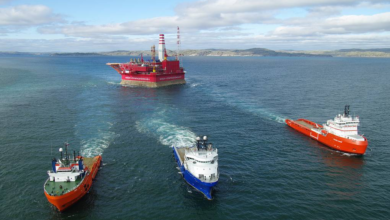
In 2025, Rosatom transported approximately 5 million metric tons of Chinese cargo through the Northern Sea Route, representing around 15% of the route’s overall cargo volume.
For the 2026 summer navigation season, China plans to conduct more than ten transit voyages to European ports using the Northern Sea Route.
Rosatom also expects Chinese cargo transported along the route to nearly double in 2026. Likhachev said the company anticipates more than 30 container shipping voyages this year, resulting in almost twice the cargo volume compared to previous levels.
Looking further ahead, Russia and China aim to at least double cargo transportation along the Northern Sea Route by 2030. However, Likhachev noted that rapidly increasing demand in recent months could allow both countries to achieve that target well before the planned deadline.
Conclusion
The announcements made by Rosatom CEO Alexey Likhachev underline the growing scope of Rosatom China nuclear cooperation 2026, covering advanced nuclear fuel supplies, major nuclear power projects, scientific collaboration, Arctic logistics, and ongoing developments at the Zaporozhye Nuclear Power Plant. As these initiatives move forward, they are expected to play an increasingly important role in Russia-China cooperation across both the energy and transportation sectors, according to information compiled by The Times of Russia.
Also Read:- Lavrov to discuss Moscow-Baku relations with Azerbaijani counterpart