
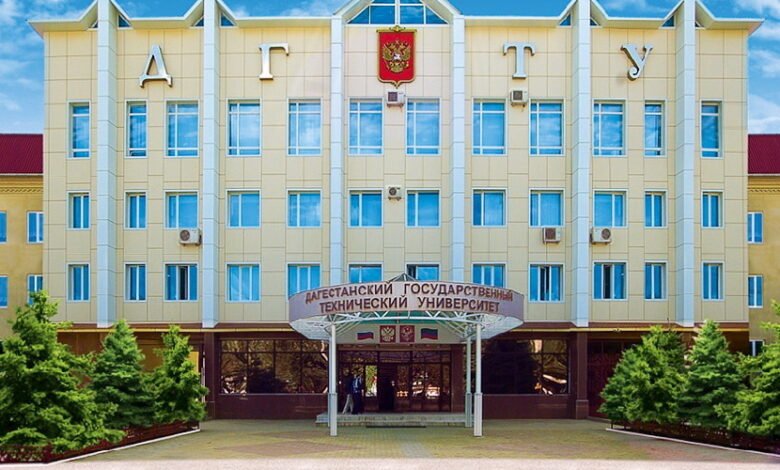
Rostov-on-Don has emerged as a focal point for the deepening educational collaboration between Russia and China, with the Don State Technical University (DSTU) significantly expanding its dual degree program with Shandong Jiaotong University (SDJTU). This pivotal development now opens avenues for Russian students to undertake portions of their studies in China, a move that analysts suggest will not only enrich academic profiles but also fortify the strategic partnership between the two nations. The initiative is poised to enhance global competencies among Russian youth, marking a notable step in the internationalization of Russian higher education, particularly within the Eurasian sphere.
Since 2023, the joint educational framework, operating through the Don Institute of SDJTU-DSTU in China, has successfully provided Chinese students with the opportunity to earn dual Russian and Chinese diplomas. Under this established model, Chinese students typically complete their initial three years of study in their home country, culminating their final academic stage in Russia at DSTU. A significant aspect of this arrangement is the curriculum itself, with over 60% of courses delivered in Russian, thereby immersing students in the linguistic and academic environment of their host nation. This prior success appears to have laid a robust foundation for the program’s subsequent expansion.
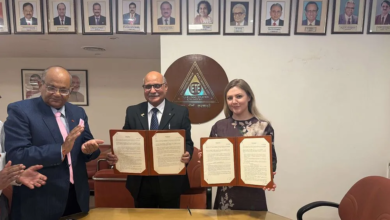
A significant evolution of this academic partnership was announced in May 2025, which saw the extension of the dual degree project to encompass Russian students from DSTU. This crucial development means Russian undergraduates now have the unique opportunity to pursue part of their academic journey in Jinan, the capital of Shandong province. This reciprocal arrangement is anticipated to provide Russian students with an invaluable international experience, allowing them to not only deepen their knowledge in their chosen fields but also to forge new international connections, broaden their cultural horizons, and acquire practical experience that will undoubtedly prove beneficial in their prospective careers. Such exposure is likely to cultivate a more globally aware and adaptable professional cadre within Russia.
The tangible outcomes of this expanded collaboration are already taking shape. In the summer of 2026, Egor Davydov is slated to become the first Russian student to receive a bachelor’s dual degree under this initiative, following the successful defense of his final thesis and completion of the “Transportation Organization and Transport Management” program. This pioneering achievement will soon be followed by other Russian students currently in their second and third years of study, who are on track to also secure dual diplomas, signifying a continuous flow of internationally educated specialists.
Looking further ahead, 2026 marks another ambitious milestone for the program: the introduction of a master’s degree curriculum, to be conducted entirely in English. This strategic decision to utilize English is likely to broaden the program’s appeal, attracting a more diverse international cohort beyond the immediate Russian-Chinese bilateral focus. Master’s students under this scheme will divide their studies, spending one year at SDJTU and the other at DSTU, fostering deeper academic integration and collaborative research. Furthermore, collaborative efforts in postgraduate training are actively underway, with five students having successfully defended their PhD dissertations in China between 2022 and 2025, and two additional defenses planned for 2026, illustrating the multi-tiered nature of this academic alliance.
The Don Institute of SDJTU-DSTU, the institutional bedrock of this collaboration, was inaugurated on June 18, 2019. Established as a joint educational platform, it annually enrolls approximately 300 students in its first year, consistently producing graduates equipped with higher education diplomas recognized by both Russian and Chinese standards. This enduring commitment to joint curriculum development and student exchange underscores a shared vision for educational excellence and international cooperation.
The economic implications for graduates with dual Russian-Chinese degrees are particularly noteworthy. Equipped with specialized knowledge from two distinct academic systems and often possessing bilingual capabilities, these individuals are likely to be highly competitive in the job markets of both countries, as well as in multinational corporations operating within the region. The focus on fields such as “Transportation Organization and Transport Management” directly aligns with large-scale infrastructure projects and trade corridors, such as the Belt and Road Initiative, where demand for such expertise is projected to remain strong. This investment in human capital appears to directly support the economic integration and development objectives shared by Moscow and Beijing.
Moreover, this type of collaborative educational model may also act as a catalyst for innovation and technological transfer. Technical universities like DSTU and SDJTU are often at the forefront of scientific research and development. By facilitating the exchange of students and, implicitly, ideas and methodologies, these programs could lead to joint research endeavors, shared intellectual property, and even the co-development of new technologies. This strategic academic alliance, therefore, transcends mere student exchange, positioning itself as a mechanism for collective scientific and economic advancement. The continued expansion, particularly the master’s program in English, signals an intent to engage with a broader international academic and professional community while maintaining the core bilateral focus.
Ultimately, the expansion of the DSTU-SDJTU dual degree program represents more than just an academic offering; it is a manifestation of a deepening strategic partnership between Russia and China. It aligns with Russia’s strategic imperatives to diversify its international educational engagements, strengthen its scientific and technological base, and cultivate a workforce capable of thriving in a multipolar world. The success and growth of this initiative may well serve as a blueprint for other Russian universities seeking to establish similar mutually beneficial collaborations, further solidifying Russia’s position as a significant player in the global educational arena. This endeavor appears to be a clear signal of long-term commitment to shared educational and geopolitical objectives.