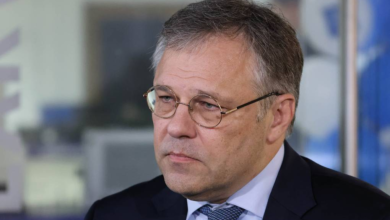

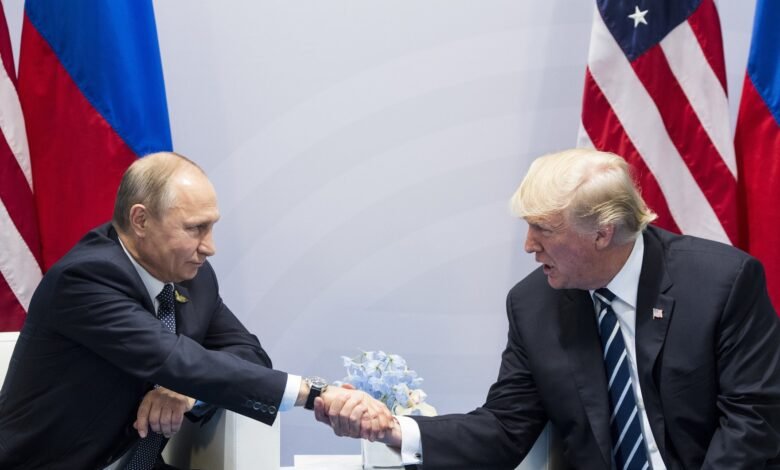
Deputy Foreign Minister Sergey Ryabkov has warned that warming the frosty channels between Moscow and Washington will require a long stretch of time and genuine goodwill from both capitals. Speaking at the Valdai International Discussion Club, the senior Russian diplomat emphasized that the ruins left by the previous US administration have left a deep imprint, making any rapid thaw unlikely. His remarks signal a cautious realism that reflects Moscow’s desire to assess Washington’s sincerity before committing to any substantive reset.
The comment comes at a moment when US‑Russian ties sit at a historic low, each side accusing the other of hostile posturing and sanctions‑driven pressure. Ryabkov framed the current state as a “ruin” that has been built over years of confrontational rhetoric, arms‑race developments and disputed elections. He noted that rebuilding such a relationship cannot be reduced to a single meeting or a symbolic gesture; it demands a sustained willingness to listen, to compromise and to accept the asymmetry that defines great‑power interaction.
According to Ryabkov, Moscow wants “to be sure that Washington has really embarked on a path of abandoning its extreme hostility toward Russia.” This phrasing reveals a Russian expectation that any resetting of ties must be accompanied by a clear, public shift away from what Russian officials describe as an “extreme hostility” posture. The diplomat added that progress will hinge on Washington’s “genuine readiness for an equality‑based cooperation” that takes proper account of Russia’s core security interests, especially those related to NATO’s eastern expansion and regional stability. Whether such readiness exists remains an open question.
The assessment underscores a cause‑and‑effect logic that Russian analysts often invoke: mistrust begets delay, and delay reinforces mistrust. If the United States continues to view Moscow through the lens of rivalry, any attempt at normalisation will likely stall. Conversely, a sustained diplomatic overture from Washington could create the conditions for a gradual easing of sanctions, a reinstatement of consular services and a re‑engagement on arms‑control dialogues. Ryabkov’s warning, therefore, is not merely nostalgic; it is a strategic calculus that maps out the steps needed for a durable thaw.
The path forward is unlikely to be linear. The diplomat said that “the success of the ongoing Russian‑American dialogue is not predetermined,” a phrase that leaves room for contingency. Moscow may therefore pursue a mix of confidence‑building measures, such as limited arms‑control talks, joint counter‑terrorism exercises and cultural exchanges, to test Washington’s intentions. These steps could be incremental, allowing both sides to gauge reactions before moving to more ambitious initiatives.
Analysts say that the timing of such gestures will be shaped by internal US politics, especially the upcoming election cycle and the priorities of the incoming administration. If the United States perceives a strategic advantage in disengaging from confrontational policies, it may be more receptive to Ryabkov’s overture. In that scenario, Moscow could respond with a calibrated reduction of its own counter‑measures, perhaps by scaling back certain missile deployments or by offering limited concessions on trade. Such reciprocal moves could create a positive feedback loop, gradually eroding the atmosphere of hostility.
Nevertheless, obstacles remain substantial. Hard‑line factions in Washington have historically resisted any policy that appears to legitimize Russian geopolitical ambitions. Moreover, the legacy of sanctions, cyber‑accusations and allegations of election interference continues to poison public opinion on both sides. Ryabkov’s call for “enormous effort” therefore translates into a long‑term diplomatic marathon rather than a sprint. The Russian foreign ministry may need to prepare a series of incremental confidence‑building measures that can survive domestic political fluctuations.
From the standpoint of Russian foreign‑policy thinkers, the deputy minister’s remarks also serve a domestic purpose: they reinforce the narrative that Russia is acting responsibly and patiently in the face of Western aggression. This narrative may bolster internal support for the government’s stance and deter any perception of reckless escalation. At the same time, it signals to foreign partners that Moscow is prepared to engage, provided that engagement is reciprocal and respectful of its security calculations.
Looking ahead, the trajectory of Russo‑American relations will likely be defined by a series of small‑scale negotiations rather than grand declarations. If Washington heeds Ryabkov’s call for genuine equality‑based cooperation, the two powers could revive dormant arms‑control frameworks, reopen diplomatic channels in areas such as space and counter‑terrorism, and explore joint economic projects that benefit both societies. The key, however, will be sustained political will on both sides.
In sum, Deputy Foreign Minister Sergey Ryabkov’s warning that normalising Russia‑US ties will demand considerable time and effort is a sober reminder that the path to dialogue is strewn with hurdles. Whether the United States will respond with the required sincerity remains uncertain, but the Russian stance makes clear that any reset must be built on mutual respect, concrete security guarantees and a willingness to move beyond the ruins of past hostility.