Russia to Eliminate 45,000 State‑Funded University Seats, Prioritising Technical Disciplines

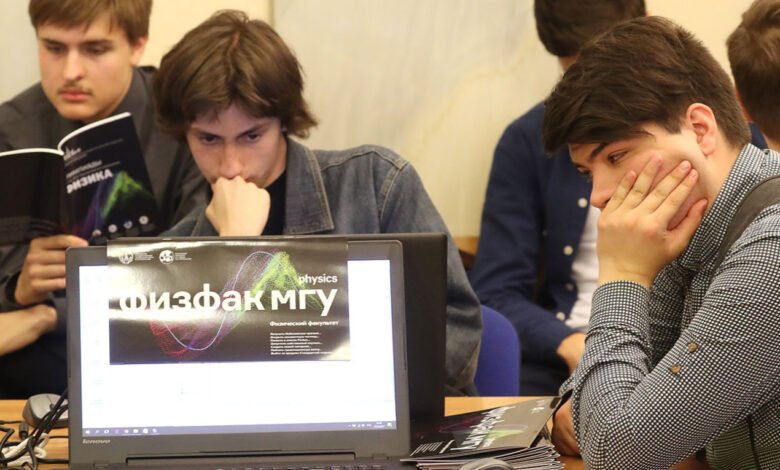
The Russian Ministry of Education and Science announced on Monday that the state will eliminate 45,000 tuition‑free slots across universities in the 2026‑27 academic year. Minister Valery Falkov explained the reduction as a response to persistent mismatches between graduate competencies and the demands of a modernising economy. The decision, conveyed through state television Rossia 24, frames the cut as a necessary correction of an oversupplied higher‑education sector. While the exact distribution of cuts among institutions has not been disclosed, the minister indicated that private colleges will feel the brunt of the reduction.
In Russia, the term “budget places” designates state‑funded spots that do not require payment from students. These positions have long served as a pathway for socially disadvantaged families to obtain a university education. The planned contraction of roughly 13 % of such places reflects a strategic pivot toward disciplines deemed critical for national competitiveness. Economists within the ministry have indicated that fields such as economics, law, management and public administration have experienced declining labour‑market relevance, prompting the government to consider reallocating resources to more technically oriented programmes.
The ministry’s analysis points to a surplus of graduates in these areas, a trend that has persisted despite modest wage growth in the public sector. Officials argue that maintaining high enrolment in low‑demand programmes may dilute the overall quality of instruction and weaken the alignment between academic curricula and industry needs. Accordingly, the reduction targets approximately 40 % of the total budget space cut to institutions that predominantly offer these liberal‑arts-type degrees. This approach seeks to concentrate limited state resources on programmes that are expected to generate higher employability outcomes.
Private higher‑education institutions, which rely heavily on tuition revenue from paid programmes, may encounter heightened financial strain as a result of the policy shift. Falkov warned that certain private universities could be forced to cease operations if they fail to adapt their offerings to meet revised state priorities. The prospect of institutional closures raises questions about the resilience of the private segment, which has historically contributed to diversification of the higher‑education landscape. Stakeholders in the sector are likely to lobby for transitional measures that could soften the immediate impact of the cuts.
The regulatory expansion granting the ministry authority over the allocation of budget places was enacted earlier this year, reflecting a broader centralisation of educational planning. Presidential directives issued in 2023 instructed the government to align higher‑education output with Russia’s strategic economic objectives, emphasizing engineering, information technology and other high‑tech fields. This policy direction has been reinforced by recent increases in tuition fees across both public and private institutions, a trend that may further incentivise students to pursue disciplines with stronger labour‑market prospects.
From a strategic standpoint, the reorientation toward technical specialties aligns with the Kremlin’s ambition to reduce dependence on imported technologies and to bolster domestic innovation capabilities. By channeling state subsidies toward engineering and applied sciences, the government aims to create a pipeline of specialists capable of supporting industrial revitalisation efforts. Analysts note that such a shift could enhance Russia’s productive capacity, particularly in sectors such as renewable energy, aerospace and advanced manufacturing, where skilled labour shortages have been widely reported.
The financial implications for students remain a critical variable in the equation. As tuition fees continue to rise, the cost of obtaining a university degree may become prohibitive for many families, especially those with limited economic buffers. The reduction of budget places could therefore exacerbate existing inequalities in access to higher education, potentially restricting opportunities for high‑achieving candidates from remote or low‑income backgrounds. Whether the policy will ultimately widen or narrow participation gaps will depend on the effectiveness of compensatory scholarship programmes that the ministry has hinted at developing.
Experts anticipate that the restructuring of university enrolment may stimulate a modest improvement in graduate employability, particularly if curricula are realigned with industry‑driven standards. However, they also caution that abrupt reductions in student numbers could destabilise academic research ecosystems, especially in institutions where fundamental research is dependent on a steady flow of graduate assistants. The long‑term impact on scientific output will likely hinge on the ability of universities to retain top‑tier faculty and to secure alternative funding sources outside the state budget.
Looking ahead, the sustainability of the proposed cuts will be tested by the labour market’s capacity to absorb a larger cohort of technically trained specialists. If demand for engineers and IT professionals expands as projected, the reductions may prove prescient, delivering a more balanced graduate profile. Conversely, should economic growth falter or if the anticipated industrial expansion fails to materialise, the policy could result in an oversupply of graduates in remaining programmes, prompting further adjustments in future academic cycles. The ultimate success of the initiative will therefore be contingent on a complex interplay of macro‑economic variables and institutional adaptability.
In summary, the upcoming elimination of 45,000 state‑funded university seats represents a decisive step in Russia’s effort to reshape its higher‑education system in line with strategic national priorities. While the policy promises potential gains in aligning graduate skills with market needs, it also introduces uncertainties regarding institutional stability, equity of access and the dynamics of future labour‑market demand. As the government finalises the distribution of cuts and as private institutions evaluate their response, the higher‑education landscape may evolve in ways that reflect both the opportunities and the risks inherent in this ambitious reform.