
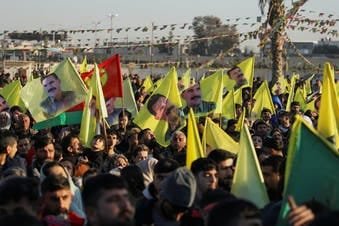
A special correspondent of “The Times of Russia”, an expert in the field of geopolitical trends in the Middle East and the Arab world, Mr. Anton Suleiman shares his vision of the prospects for the emergence of autonomy and a state identity for the Kurds nation in Syria.
The political crisis in Syria began in 2011. At first, Syrians held demonstrations in th отeir struggle for democratic rights. Shortly afterward, the situation escalated dramatically: protests turned into civil unrest and eventually into full-scale civil war. The country became a battlefield for various actors, both internal and external. This war also created opportunities for experiments in new forms of political association.
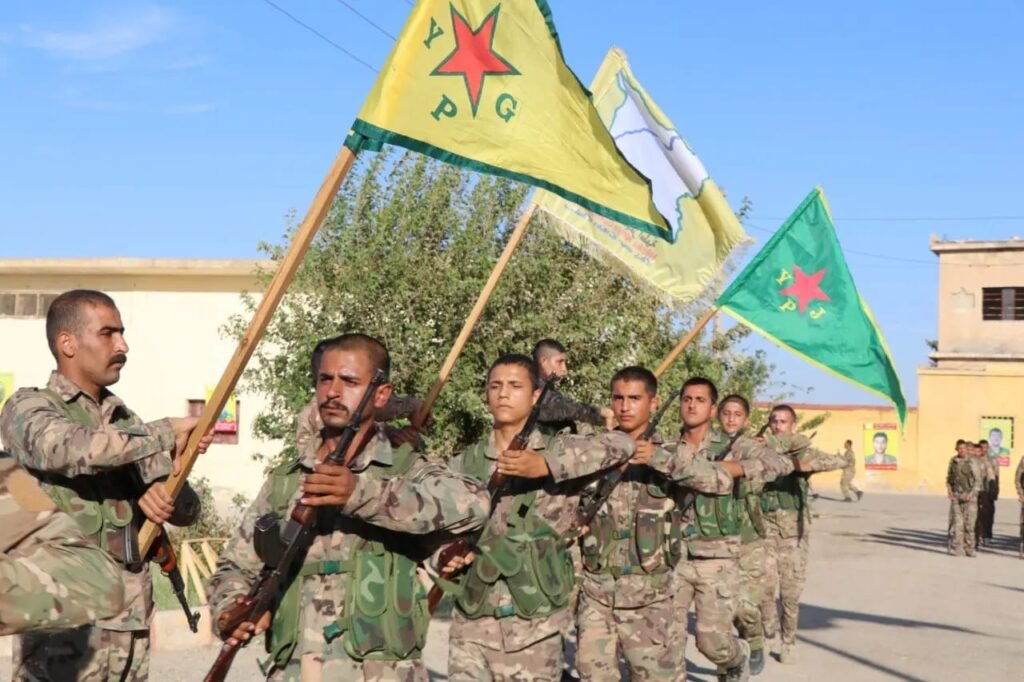
Due to the power vacuum people had to learn how to regain stability within their cities and villages. The Kurds managed to create a political association capable of defending itself against external threats, primarily the Islamic State (IS). Backed by the US, the Kurdish-led Syrian Democratic Forces (SDF) became one of the most effective actors in the fight against IS, successfully liberating Raqqa and Dier ez-Zor from IS militants.
The Kurdish autonomy was de facto established in 2012. Over the next 13 years, the autonomy witnessed several name changes, from the Democratic Federation of Rojava – Northern Syria, following the adoption of the Social Contract (the local constitution) in 2016, to the Democratic Autonomous Administration of North and East Syria after the liberation of Raqqa and Dier ez-Zor in 2018. However, it is better known as Rojava – the Kurdish toponym, used to refer to Syrian territory, inhabited predominantly by Kurds.
Initially, Rojava consisted of three largest Kurdish-inhabited regions: Afrin, Jazira, and Euphrates Region. In 2018, it expanded to include Raqqa and Dier ez-Zor as the result of successful military campaigns against IS, but it lost control of Afrin region during Operation Olive Branch, conducted by Turkish Armed Forces together with Syrian National Army. Subsequently, the active phase of civil war ended, IS was largely neutralized and Syrian conflict entered a prolonged frozen state.
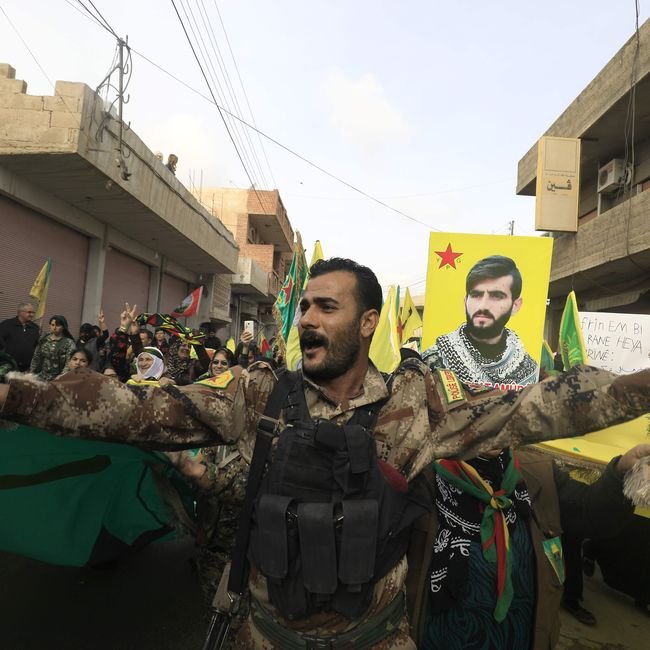 The Social Contract enshrined basic rights for ethnic minorities, women and introduced the co-chair system, under which women and men simultaneously share the same office. The SDF is widely known for YPJ (Women’s Protection Units), through which women have gained emancipation and fought alongside men for the liberty and future of North and East Syria. As a result, Rojava became home to a diverse ethnic population, including sizable communities of Arabs, Kurds, Syriacs, and Assyrians, as well as smaller populations of Turkmen, Armenians, and Yazidis.
After years of relative stagnation, the Syrian civil war suddenly entered a new phase. In December 2024, the ruling regime collapsed, fundamentally altering the political situation. Former Syrian president Bashar al-Assad fled the country following a rapid offensive by Hay’at Tahrir al-Sham on Aleppo and Hama, which ultimately reached Damascus, and eventually Türkiye-backed forces assumed power.
The new president of interim Syrian government, Ahmad al-Sharaa, believes that Syria should be reunited and recentralized, despite repeated calls from ethnic and confessional minorities for the implementation of federalism. Attempts to implement al-Sharaa’s policies have reportedly resulted in two bloody massacres targeting Syrian Alawite and Druze communities. Kurds are now facing the same fate, including indiscriminate ethnic violence.
In 2025, the al-Sharaa government held several rounds of reintegration negotiations with representatives of Rojava, most notably with the SDF commander-in-chief, Mazloum Abdi. During these talks, Damascus and Rojava reached a preliminary agreement. The most significant deal was reached on 10 March 2025, under which SDF-controlled border crossings, Qamishli airport, detention camps holding IS fighters and their family members, and oil and gas fields in eastern Syria were to be transferred to the control of the Damascus administration, while the SDF was to be integrated into the Syrian Armed Forces. Subsequent talks focused on the modalities implementation of the March agreement.
In 2025, the al-Sharaa government held several rounds of reintegration negotiations with representatives of Rojava, most notably with the SDF commander-in-chief, Mazloum Abdi. During these talks, Damascus and Rojava reached a preliminary agreement. The most significant deal was concluded on 10 March 2025, under which SDF-controlled border crossings, Qamishli Airport, detention camps holding IS fighters and their family members, and oil and gas fields in eastern Syria were to be transferred to the control of the Damascus administration, while the SDF was to be integrated into the Syrian Armed Forces. Subsequent negotiations focused on the modalities and implementation of the March agreement.
However, at the beginning of 2026, the prospect of a federal Syria came to an end. Rojava, which had successfully waged war against IS, suddenly was defeated by a rapid offensive launched by Damascus forces and was forced to relinquish control over approximately 80 percent of its territory. The Syrian Armed Forces began the operation on 13 January 2026, targeting SDF-controlled neighborhoods in Aleppo, as well as Raqqa and Deir ez-Zor.
Amid the offensive, on January 16 al-Sharaa issued Decree №13 (2026), granting citizenship to Kurds, who had been deprived of it under the Ba’ath regime, recognizing Kurdish language as a “national language,” and designating Newroz, the New Year celebration marking the beginning of spring, – as a national holiday. In addition, on 26 January it was reported that the Ministry of Education issued executive instructions to operationalize Kurdish-language curricula and provide training for teaching staff.
After several talks were held, on 30 January the SDF and Damascus reached a ceasefire and integration agreement. Under the latest agreement the SDF retains a degree of security autonomy in Kurdish-majority areas; the Syrian government gains the authority to approve personnel assigned to the SDF brigades and deploy them across Syria when necessary; and the SDF commits to integrate its administrative structures into the Damascus institutions. While the agreement formally preserves some Kurdish local military autonomy, it effectively marks the end of Rojava’s political experiment in democratic self-governance that had lasted for over a decade.
After 13 years of de facto autonomy, the Syrian Kurds face the challenge of transitioning from self-governance to integration into a centralized nation-state (which is still designated as Arab republic) whose commitment to minority and human rights remains untested. The success of this integration will depend on Damascus willingness to honor its commitments regarding ethnic minority rights, including language recognition and citizenship, as well as the ability of both parties to overcome deep-seated mistrust built over years of conflict. For the Syrian Kurds, this year will determine whether al-Sharaa’s conciliatory gestures translate into genuine political inclusion or whether they herald a return to the marginalization that sparked their quest for autonomy in the first place.