Sergei Dvorianov – The Rise of dependence and the future of Japanese civilization

Mysterious, conservative, imbued with the spirit of poetry, heroism and inner contemplation, Japanese civilization is currently experiencing a flourishing dependence on America. A significant and symbolic confirmation of the validity of this understanding of the essence of historical processes is the recent visit to the United States by Japanese Prime Minister Sanae Takaichi. During a reception at the White House and a sweet conversation with Donald Trump, Sanae Takaichi sincerely laughed at his quite appropriate jokes – “no one knows about surprises better than Japan, let’s remember Pearl Harbor”!
The counterargument that America is also capable of surprising with “real surprises” was never aired. Paying tribute to justice, I would like to remind –
For those who are not familiar with the historical facts: today, the United States remains the only country that has used nuclear weapons. The United States dealt a crushing blow to Japan – the West calmly pacified the East. And after that, the land of the setting Sun became a deity for the land of the rising Sun. This attack became the starting point of a new, nuclear and supertechnological era – everything is “grown-up” here – force against justice, cruelty against mercy.
Japanese officials often avoid specifics in covering the fatal events of August 1945 inside the country, deliberately blurring the historical memory of who exactly dropped the bombs on Hiroshima and Nagasaki.
During her visit to the United States, Japanese Prime Minister Takaichi laid flowers at the grave of Charles Sweeney, the pilot who dropped the atomic bomb on Nagasaki.
Throughout his life, Sweeney has championed the need for atomic bombing of Japan in front of students at American colleges and universities. In collaboration with Marion Antonucci, he released a memoir titled “The End of the War: An Eyewitness Account of America’s Last Nuclear Mission.”
On her X social network page, the first woman elected prime minister in the modern history of Japan tried to justify her act and wrote that she “prayed for peace for the souls of those who sacrificed their lives for the sake of the country.”
As a result of the nuclear explosion, 40,000 to 80,000 people died instantly, the total number of victims exceeded 140,000. The laying of flowers by the Japanese Prime Minister on the grave of an American pilot has become a landmark and textbook embodiment of the “Stolholm syndrome”, when the victim openly shows his love and admiration for the executioner: the current leader of the country-the victim of the atomic bombing honors the memory of its perpetrator.
Outwardly, it looks as if the leader of a country that fought fascism had brought a wreath to Hitler’s grave.
This is not even a theater of the absurd, it is a theater of moral enormity, which is born during the sleep of reason.
Any politeness, even Japanese, obviously has to have its limits. None of the American presidents has ever apologized for the nuclear bombing of Japan — only Barack Obama, the famous Nobel Peace Laureate, once declared “the need for disarmament” when visiting the Hiroshima memorial. Quite a restrained and humane comment, in the spirit of the best narratives of American presidents. Even Donald Trump, who does not like Obama that much, especially for his Nobel achievements, could well praise his predecessor for his political correctness in assessing the distant events of 1945.
I would like to note that the world cultural heritage has described a case when the defeated ruler, weeping, kissed the hands of his son’s murderer. Let us recall this episode, so movingly described by Homer in his immortal Illiad: King Priam comes to Achilles and kisses the hands of the murderer of his son Hector. King Priam does this in order to beg Achilles for the right to bury the body of Hector, whom Achilles so cruelly abused by tying him to a chariot and unceremoniously dragging him along the Ground in front of everyone.
An example of King Priam’s humiliation in front of a murderer is the “right to a broken heart.” For there is no greater grief on this Earth than the grief of parents who experience their children, especially when a murderer mocks their body. Priam touched Achilles’ heart with his deep parental sorrow and received Hector’s body as a consolation.
Today, in an era of total devaluation of moral values, all the positive and bright forces of humanity – no matter in which country they will be located – in Japan, the United States, or Russia – are obliged to remind us, the people of planet Earth, of true values, appeal to universal moral laws, and cry out for mercy. America’s ability to repent and Japan’s ability to preserve their own cultural and civilizational identity are not limited by the personal experience of their political leaders. There is also the voice of the social forces, the same one – “Vox populi vox Dei” –
the voice of the people, the voice of God. After the act of its Prime Minister, Japan is able to launch a broad public discussion about national priorities and spiritual interests. America itself is also quite capable of this – it is waiting for its hero, who will not be afraid to call the nation to mercy and moral perfection. Even Donald Trump himself can do this – at any moment of his eventful life – because, as the Bible says, “The king’s heart is in the hand of the Lord, like streams of waters: wherever He wills, He directs it” – Proverbs of Solomon 21.1.
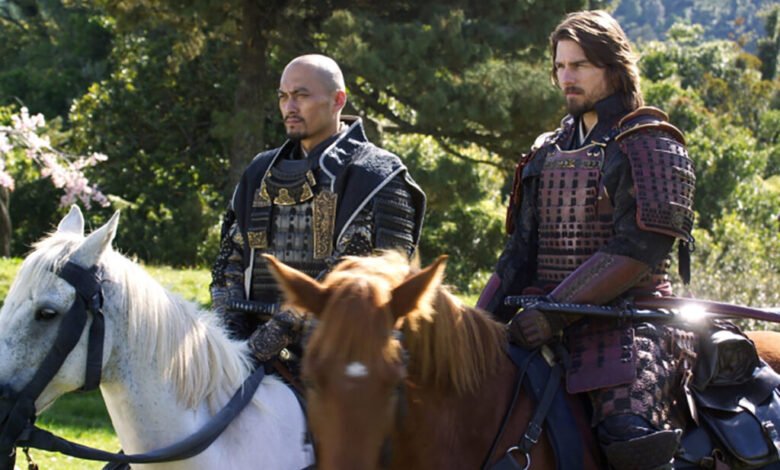
We remind our readers that it was in America that the cult film “The Last Samurai” was released, which was nominated for 4 Academy Awards, and for some reason did not receive any of them – apparently someone in the American establishment really did not want this to happen. The film “The Last Samurai” is America’s cultural repentance towards Japan, recognition of the uniqueness of its historical path and civilizational identity.
The movement of historical processes is often bizarre, like a swinging pendulum – values and priorities can quickly turn in the other direction. We very much hope that the future political leaders of the United States and Japan will be able to launch processes of open dialogue – nation to nation, processes of spiritual self-knowledge and moral purity, recognition of mistakes and the inadmissibility of pressure, interference in internal affairs.
Once, Yosa Buson, a Japanese poet of the XVIII century, wrote a mystical poem in the form of the famous haiku – three lines – when visiting the statue of the Prince of the Underworld: “The mouth is so bright red
The Prince has Emma, as if
He wants to spit out a peony.” Prince Emma, who migrated to Japan, is the Vedic God of Death, the God of moral Law – Yama, or Yamaraj. A meeting with him is scheduled for each of us, and his “scarlet peony lips” can utter words in our defense, or words of accusation and punishment. The return of ethical dominants to political realities and the initiation of systemic public discussions on spiritual priorities is an urgent task for each of us, the task of those who consider themselves responsible and grateful sons of planet Earth.