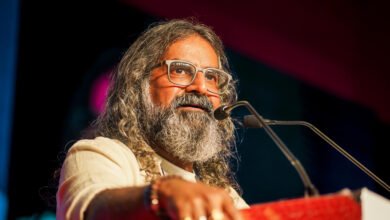

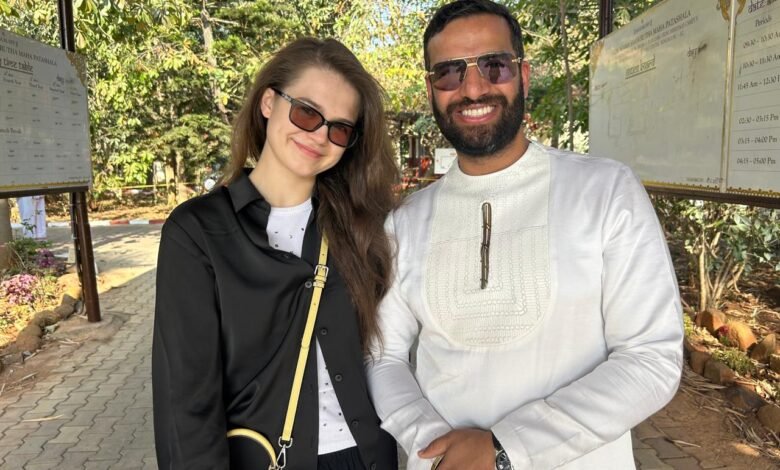
Renowned entrepreneur, associate member of the “Forbes Property India” team, teacher and mentor of the “Art of Living” spiritual practices, social activist Dr. Divam Kapoor gave an exclusive interview to “The Times of Russia” and invited special correspondent Sofia Zolotova to Bangalore, to the ashram, which was founded by the world-famous Guru, legendary spiritual educator Sri Sri Ravi Shankar.
Sofia Zolotova spent several days at the ashram, getting acquainted with the “Art of Living” educational programs, and the result of her conversations with Dr. Divam Kapoor was this richly realized interview, which we bring to your attention.
Sofia Zolotova:
Dear Dr. Divam Kapoor, could you please tell us about your spiritual journey and how you came to join the Art of Living movement? What factors influenced this decision?
Dr. Divam Kapoor:
When I was very young, I always had these important questions in my mind—questions that haunt each of us: What is the purpose of my life? What is the purpose of human life? What are we doing, suspended on this spinning ball in space? The memory of these “damned questions,” as the Russian writer Fyodor Dostoevsky called them, later helped me transform my consciousness and undertake a deep study of myself.
One day, my mother invited me to join a seminar on “The Art of Living.” Around the same time, my aunt encouraged me to start meditating. Then, my best friend’s mother invited me to the Art of Living Happiness Program, which includes meditation and breathing practices, including a powerful technique called “Sudarshan Kriya.”
At first, I rejected my best friend’s mother’s offer and casually remarked, “I’m still very young to meditate; such things should be done when you get much older.” I also politely explained to my relative that I was happy and didn’t feel the need to attend any spiritual programs.
However, one thing that truly touched my heart was that my best friend’s mother never gave up. Every time she invited me, she did so with the same smile, the same dedication, and the same sincerity—as if it were the first time.
That persistence touched me deeply. Eventually, I discovered a treasure. The greatest mystery for each of us is our inner Self, which is waiting to meet the “Super-Self”—the presence of God within us. And this is the true spiritual journey, one that unfolds over many lifetimes.
Sofia Zolotova: It sounds intriguing and fascinating at the same time. Tell me, do your spiritual beliefs and your spiritual practice help you in your business career and in what way?
Dr. Divam Kapoor:
Yes, of course, my practice helps me in business exponentially. My mind is very calm, and I feel connected to the whole universe. Wherever I go, I feel at home. With every person I meet, I experience a sense of unity—I feel that they are a part of me, a part of my family, as if I have known them before.
That is why I feel natural and harmonious in any environment. The “otherness” of another person does not repel me; on the contrary, it attracts me. As a result, I feel a deep sense of commonality across all cultures and traditions, because we all come from the same original “source.” The names of God may sound different across religions, but the essence remains the same—Love, Happiness, and Harmony.
In this way, my spiritual practice allows me to build strong relationships—relationships that are crucial for future growth. There is a saying for success: first build relationships, and you will build an empire.
I also confess to you, Sofia, that my intuition has become very powerful after taking the Art of Living courses. Even when I don’t have complete or accurate information about a person or situation, I am able to make the right decisions. As a result, I can be more productive, practical, and hardworking, and continue to grow in my business endeavours.
Sofia Zolotova: An excellent example of the balance of spiritual and material! As far as I know Dr. Divam, do you cooperate with the Forbes India real estate brand? Tell us, what projects have you managed to implement within the framework of this cooperation?
Dr. Divam Kapoor: Yes, Forbes Global Properties was looking to establish its Indian counterpart. They had been exploring opportunities in India for nearly four years, searching for the right projects, the right team, and a credible developer to partner with. I feel truly fortunate to have been in a position where I could connect with them, meet them personally, and build a strong and meaningful relationship that eventually led to this partnership.
Our first project together is Forbes Global Properties Fablux Residences by DMA Infra, located in Noida, Sector 4, Uttar Pradesh, which is part of the Delhi NCR region. This is a landmark development spread across 13 acres of prime land, featuring 11 towers rising over 30 floors each, with an average apartment size of around 3,000 square feet. The overall project value stands at approximately ₹5,000 crore, making it a significant and prestigious development.
This marks the beginning of our association, and we are already planning several more projects across India. In addition, we aim to collaborate with leading real estate consultants and developers to further strengthen and expand this brand partnership across the country.
Sofia Zolotova: Dear Dr. Divam Kapoor, as far as I understand, your spiritual mentor, Sri Sri Ravi Shankar, whom I was also fortunate enough to meet, is also your patron in business. Your mentor is a unique example of mystical achievement—a balance between spiritual self-knowledge and material prosperity. Could you please share which character trait of your spiritual teacher strikes you the most, and why?
Dr. Divam Kapoor: Yes, you are right, Sofia. My Gurudev, Sri Sri Ravi Shankar, is universal in all his manifestations. He is my mentor and my coach. He carefully guides me in all my endeavors. This is a journey toward perfection in every aspect—in personal spiritual growth, in professional development, and in the implementation of socially significant projects.
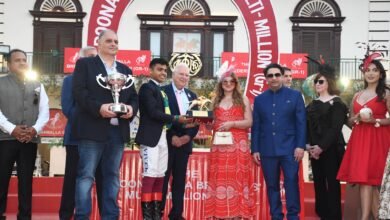
I will give you one example. I recently became a partner and sponsor of an event called the Sanatan Premier League, which was held in Indore, Madhya Pradesh. As you know, in our country, cricket is often regarded as a kind of “secular religion”—I apologize for the oxymoron, but it is quite appropriate in this context.
I was fortunate to become a partner in a creative initiative where prominent spiritual leaders, many of them monks, represented different cricket teams. This is a wonderful format, and I supported the event because my Gurudev, Sri Sri Ravi Shankar, through his own example, inspires me to promote Sanatana Dharma—an eternal philosophy based on the eternal relationship between the soul and God, the Creator of all creation.
That is why I consider Gurudev my true spiritual father. Whatever I do in life, I wish to contribute to organizing society in a better way, to support the spiritual progress of humanity, and to spread the knowledge that Gurudev has shared with the world.
I strive to use the most effective tools and methods. May more and more people experience what I have experienced—absolute joy, enthusiasm, confidence, happiness, clarity, and inner peace. I am convinced that this is how we will achieve world peace—through inner peace.
Therefore, I deeply respect my mentor, who is a source of knowledge and at the same time my patron and business partner. What Gurudev has done for me and for millions of people cannot be fully expressed in words. It must be experienced personally and shared with others. In that case, sincere gratitude becomes a formula for happiness and success.
I adhere to ethical principles in business and ensure that we build a socially responsible model. Our Art of Living movement promotes sustainable development. We are creating wellness communities and smart cities. We conduct our activities in a way that supports human development by bringing people together, without harming the environment or creating stress.
Therefore, I sincerely feel that I owe my success entirely to Gurudev. I also feel that by considering him my partner, I am growing much faster and more meaningfully than many of my peers.
Sofia Zolotova:
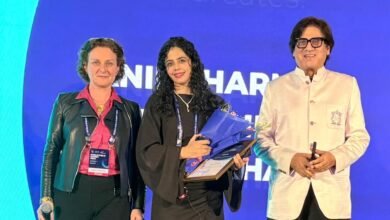
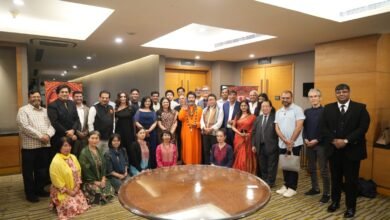
Dear Dr. Divam Kapoor, as I understand, on February 18, 2026, you were invited as the Guest of Honour at the opening of the International Bollywood House in Mumbai, organized by the BRICS Cultural Media Forum, where you delivered a wonderful speech in support of the International Bollywood House project. Could you please share your impressions of the event and the key life lessons that we can learn from the ancient epic Mahabharata?
Divam Kapoor: Yes, indeed, February 18, 2026, was a day of special revelation for me. The International House of Bollywood is a project demanded by the times and by the course of history itself, as it is aimed at reviving the “cinema of the heart.” We need to create films that defend traditional values and inspire mercy, compassion, and spiritual self-knowledge.
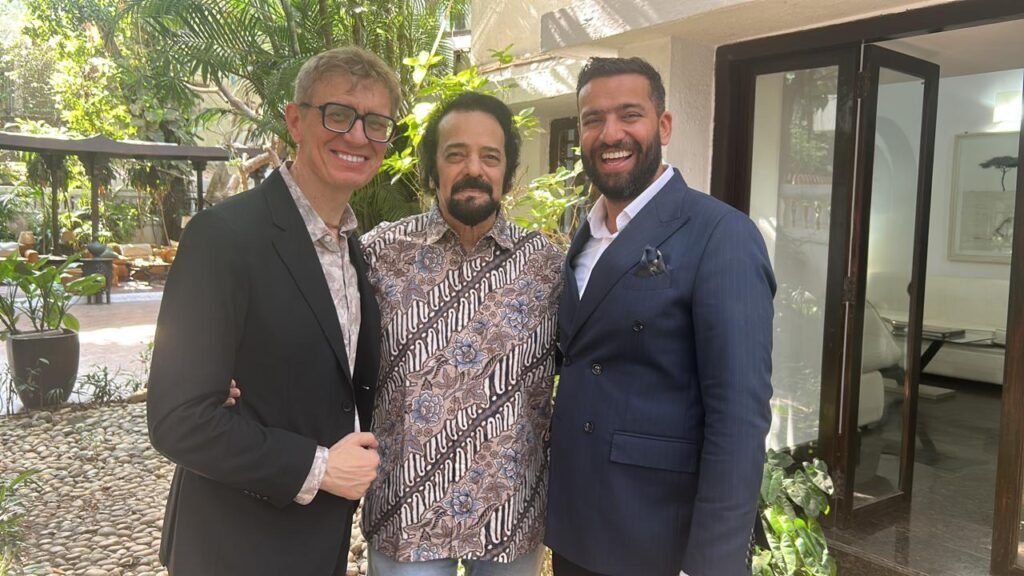
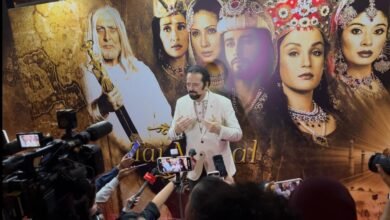
I was truly delighted to meet the veteran Bollywood actor and director Akbar Khan, who presented his remarkable film “Taj Mahal – A Story of Eternal Love” to international guests from the BRICS countries, and also introduced the draft of his new film “Genghis Khan – A Dream of a Golden Age.”
I was deeply inspired by this meeting with the Bollywood legend. At his invitation, I visited his magnificent residence in Mumbai together with the Vice President of the BRICS Cultural Media Forum, Dr. Sergei Dvorianov. We discussed many topics with Mr. Akbar Khan, and I was particularly moved by his account of the making of the film “Akbar the Great,” in which he served both as director and actor.
As we know, the legendary ruler Emperor Akbar the Great reformed the administration of his empire and introduced laws aimed at religious equality and social unity. When Director Akbar Khan narrated a scene from the film depicting the life of Akbar the Great, I was deeply moved to tears. In this well-known historical moment, Akbar declares: “My India has two spiritual eyes—Islam and Hinduism together provide an authentic vision of God.”
I was profoundly touched to hear this quote from Director Akbar, as it reflects the words attributed to Emperor Akbar. It demonstrated, firstly, the continuity across generations of India’s finest sons in upholding ideals of openness and respect for religious diversity. Secondly, it highlights the immense spiritual potential of India as a civilization rooted in cultural plurality and harmonious interaction.
I was also pleased that the International House of Bollywood entrusted Director Akbar Khan, a devout follower of Islam, to serve as one of the consultants and directors of the opera “Mahabharata,” as a full-fledged member of the creative team. This once again clearly demonstrates that representatives of diverse religions are capable of uniting in a shared creative spirit on the platform of cultural cooperation, in service of both God and humanity.
Sofia Zolotova: Yes, Dr. Divam, thank you for this succinct and insightful comment. It is especially important in the context of the current tragic events in the Middle East. We all need greater mercy and openness to dialogue. You mentioned the project of staging the international opera “Mahabharata,” which was presented on February 18 in Mumbai. Could you please share the main life lessons we can learn from the ancient epic Mahabharata? Also, who is your personal favorite hero or heroine of the epic Mahabharata?
Divam Kapoor: This is a wonderful question, Sofia, because it concerns the ancient Vedic heritage, which does not belong to India alone, but to the whole world. In the Mahabharata, which is very close to my heart, the central and most mysterious figure is, of course, Krishna. But we must not forget that Krishna is not just a “character”; He is, as described in the sacred Sanskrit texts, a Leela avatar, a Leela purushottama—a manifestation of God in His most playful form.
I have often wondered: what is the main intention of Krishna? On the one hand, Krishna is always on the side of goodness, truth, righteousness, and the upliftment of humanity. On the other hand, He appears in the Mahabharata as a “balancing hero”—highly skilled, diplomatic, and profoundly wise.
Krishna sincerely tries to maintain peace between the warring families, the Pandavas and the Kauravas. Remarkably, He earns the trust, sympathy, and authority of both sides. Krishna acts so naturally and harmoniously that each character feels, “He is on my side.” He becomes, in a sense, equally accepted as part of both families. Both the Pandavas and the Kauravas regard Him as a member of their circle. They respect Him immensely and consider Him their mentor, teacher, and guru.
Thus, Krishna shows us an example of balance. At the same time, He also represents unwavering spiritual principles. Krishna is not an idealist in the conventional sense; He is, to put it succinctly in Sanskrit, tri-kala-gya—one who knows the past, present, and future.
Krishna knows that the battle between the brothers is destined to take place, as humanity must undergo a process of transformation and purification due to accumulated karma. As the ancient Greek poet Pindar once said: “Even the gods cannot undo what has been done by man.” This reflects the idea that the consequences of karma inevitably follow every action.
This raises a logical question: why does Krishna engage in diplomacy, negotiations, and even humble appeals to figures like Duryodhana? The answer is simple: this is Leela —the divine play.
What, then, is Krishna’s main intention? He wishes to gather all kings and warriors, friends and foes alike, on the battlefield of Kurukshetra. And at the most intense moment—when adrenaline is high and warriors stand ready for battle—Krishna begins to speak, or rather sing, the Bhagavad Gita. According to tradition, He delivers the Gita for about forty minutes before the battle begins.
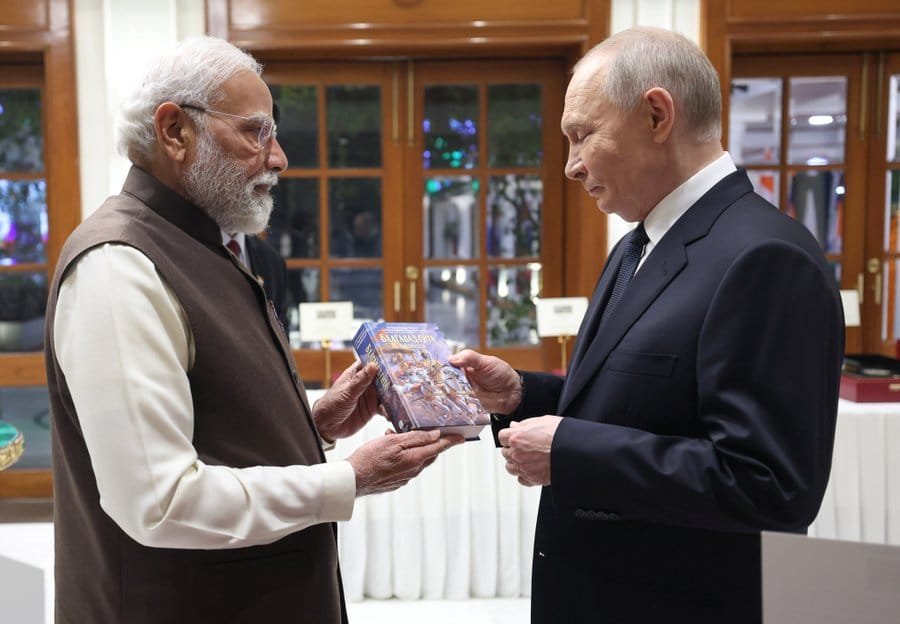
I would like to note, Sofia, that the Bhagavad Gita, which our Prime Minister Narendra Modi personally presented to Russian President Vladimir Putin during his recent visit to India, is the only sacred scripture in the world written in the first person, as the direct speech of God. There are no comparable examples in history, and perhaps none in the future.
It is profoundly meaningful that the leader of one great nation presents to the leader of another great nation a text expressed in the very voice of the Divine.
Returning to Krishna’s main intention: He seeks to impart spiritual knowledge. This is His purpose, His play, and His mission. Spiritual knowledge is more precious than bread in the most difficult times, Sofia—and this is my most sincere belief.
The Bhagavad Gita is the philosophical jewel of the Mahabharata. According to tradition, all warriors who died on the battlefield of Kurukshetra attained the highest fruits of their destiny—some ascended to heaven, and others reached the abode of God—because they died in the presence of the Divine.
What could be more meaningful than that?
The main lesson of the Mahabharata is to find peace within oneself—to cultivate acceptance, forgiveness, and inner harmony with the will of the Almighty. Draupadi forgave Ashwatthama, who killed her sons. Gandhari accepted her grief with dignity. Bhishma, lying on a bed of arrows, sought Krishna’s guidance and reflected deeply on dharma.
These are the core lessons of the Mahabharata: inner peace, spiritual balance, forgiveness, and harmony with divine will.
Therefore, I was deeply delighted to learn that the full name of the project is “Mahabharata – Global Symphony of Peace.” It seems to me a very appropriate title, and this project may become one of the most significant cultural achievements of our time—relevant not only for 2026 but also for the future Golden Age of humanity, which figures such as Genghis Khan, Akbar the Great, and many other great personalities of the past and present have envisioned in different ways.
And may God help us in this, by whatever name we call Him.
Sofia Zolotova: Thank you very much, dear Dr. Divam Kapoor, for your informative answers and deep spiritual analysis. I have truly learned a lot from you and your mentor, and many important insights have come to me regarding what is happening. I would also recommend that everyone visit Bangalore.
At the end of our conversation, I would like to ask the traditional question: What do you think about the development of relations between Russia and India, and also about the relationship between our two leaders?
Dr. Divam Kapoor: Dear Sofia, the second part of your question is a partial answer to the first. Yes, relations between countries are based on the relations between their leaders, as it was in the days of Leonid Brezhnev and Indira Gandhi. Fortunately, our two leaders today share a very high degree of trust and mutual understanding. In my opinion, both of them are not only political leaders but also missionaries and spiritual reformers.
I believe that the potential for spiritual cooperation between our two countries is immense. However, we should also seriously consider deepening our economic cooperation. That is why, as a businessman, I plan to attend the St. Petersburg Economic Forum to help strengthen the processes of economic integration between our two countries.
Moreover, I understand that the BRICS Cultural Media Forum is planning the opening of the International House of Hollywood on the sidelines of the forum, which is another powerful motivating factor for me to visit Russia as soon as possible—a country I have not yet visited physically, but where I already feel mentally present.
Sofia Zolotova: Thank you very much, Dr. Divam, and see you soon in Russia!
Dr. Divam Kapoor: See you soon in Moscow and St. Petersburg.